

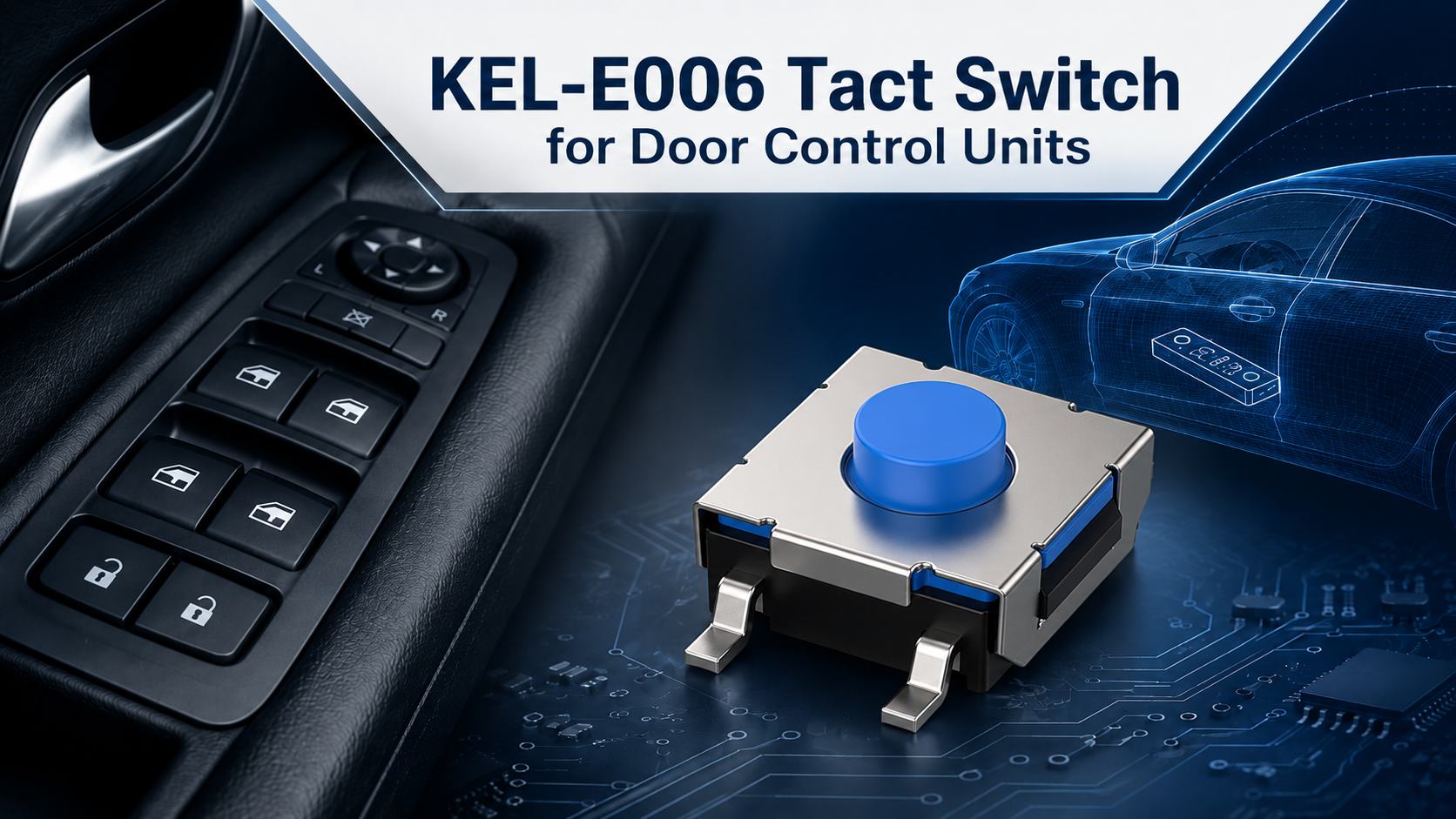
Door control units have become more than simple lock and unlock modules. In modern vehicles, they manage window lifting, mirror adjustment, central locking, child safety locks, trunk release, interior lighting, seat memory signals, and sometimes anti-pinch feedback. Behind these functions, a small tactile switch often decides whether the driver feels clear control or a loose, uncertain button response.
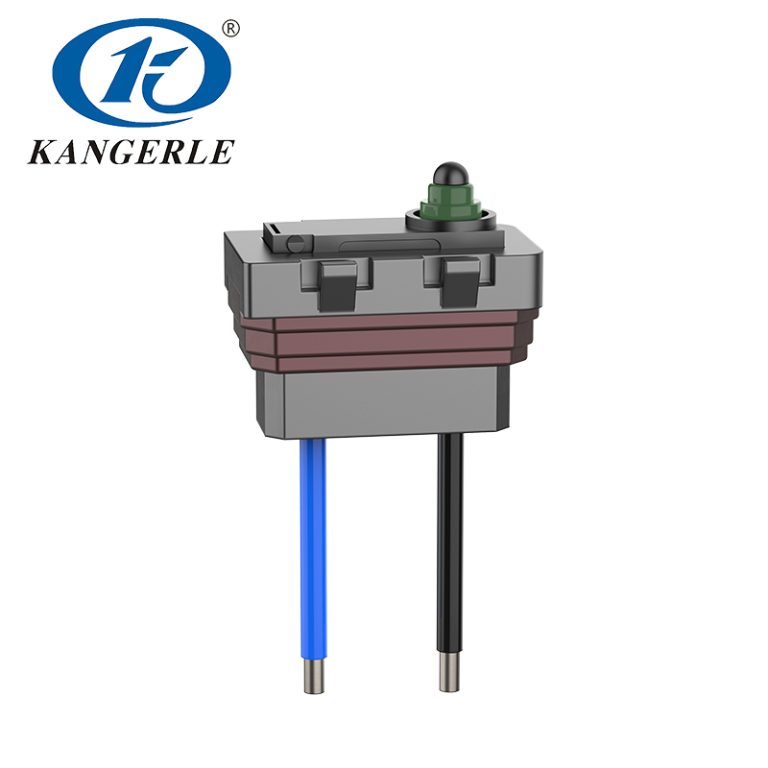
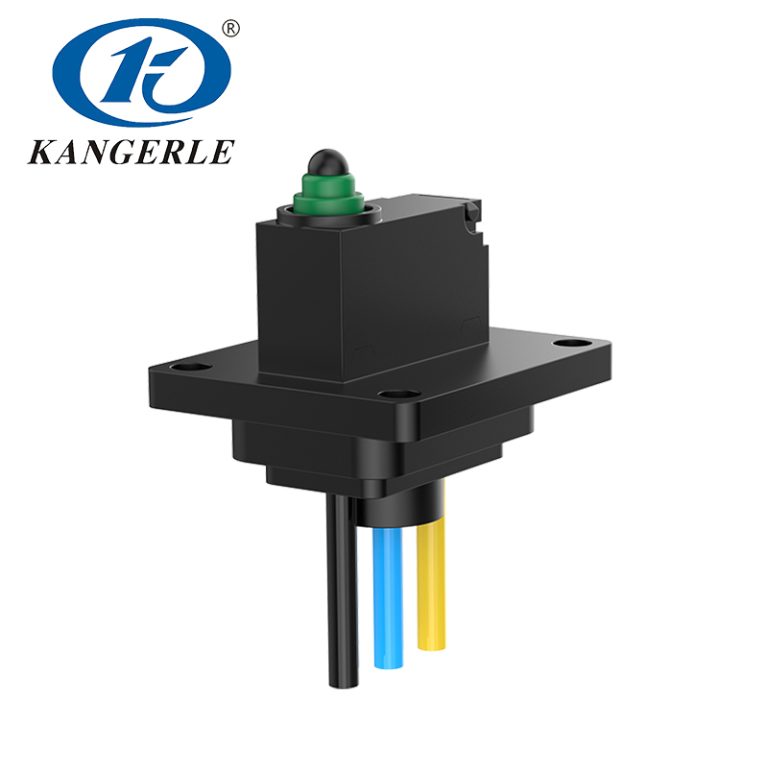
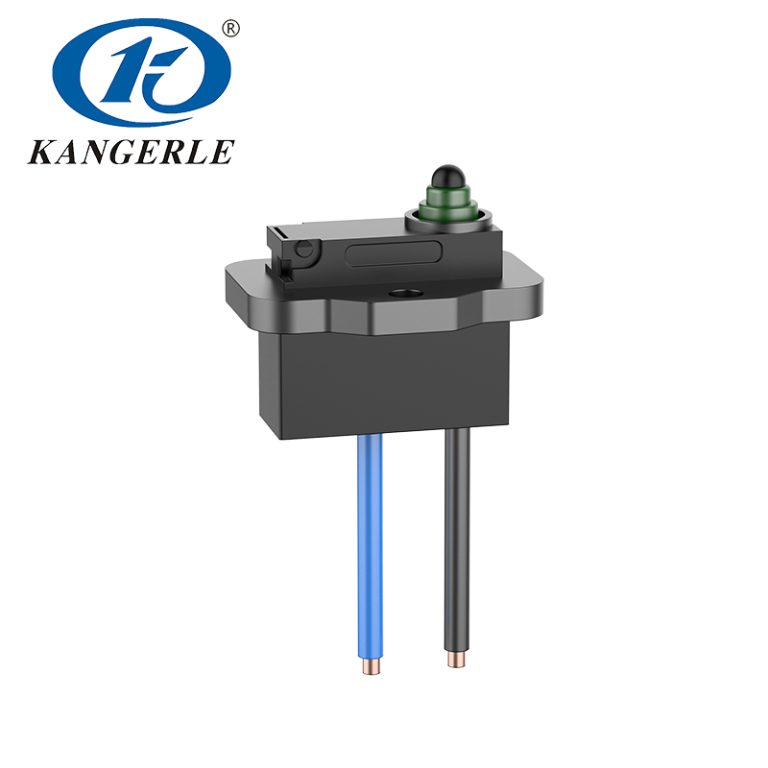
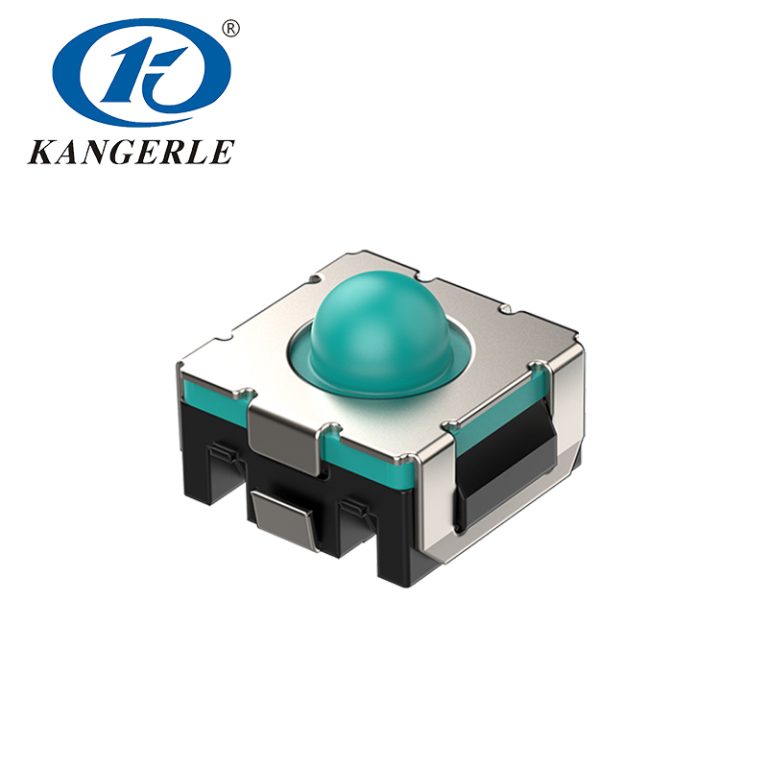
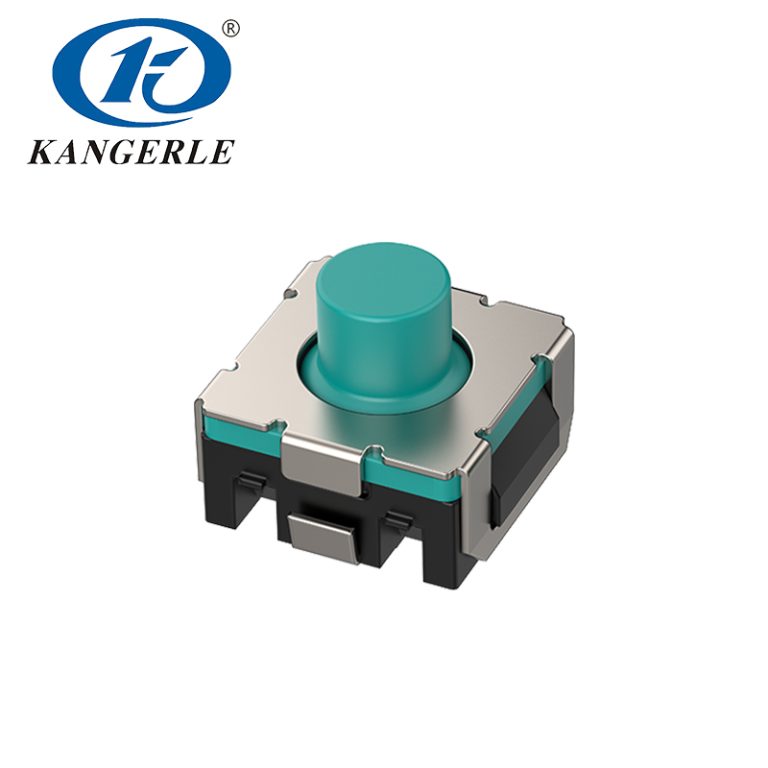
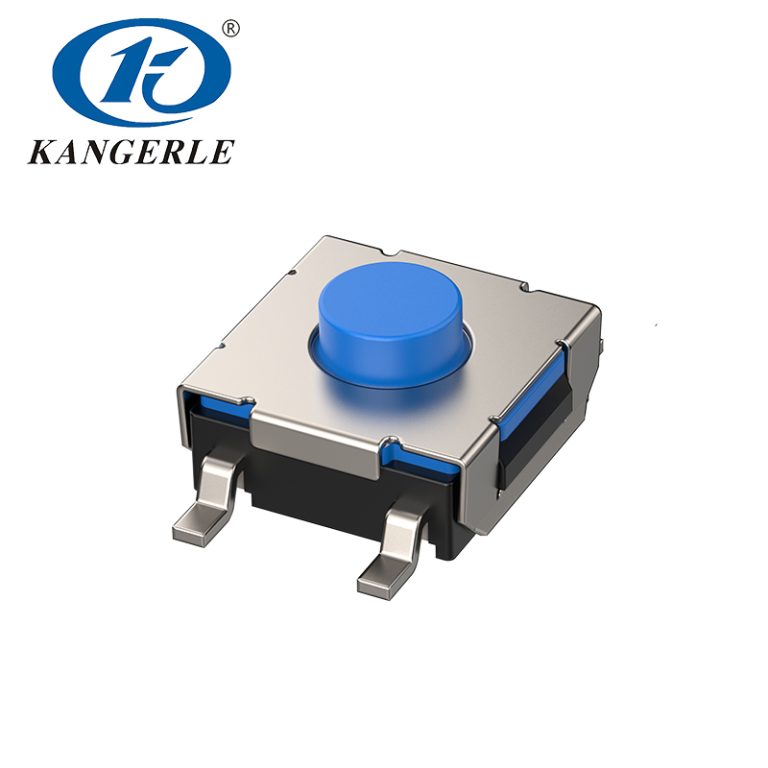
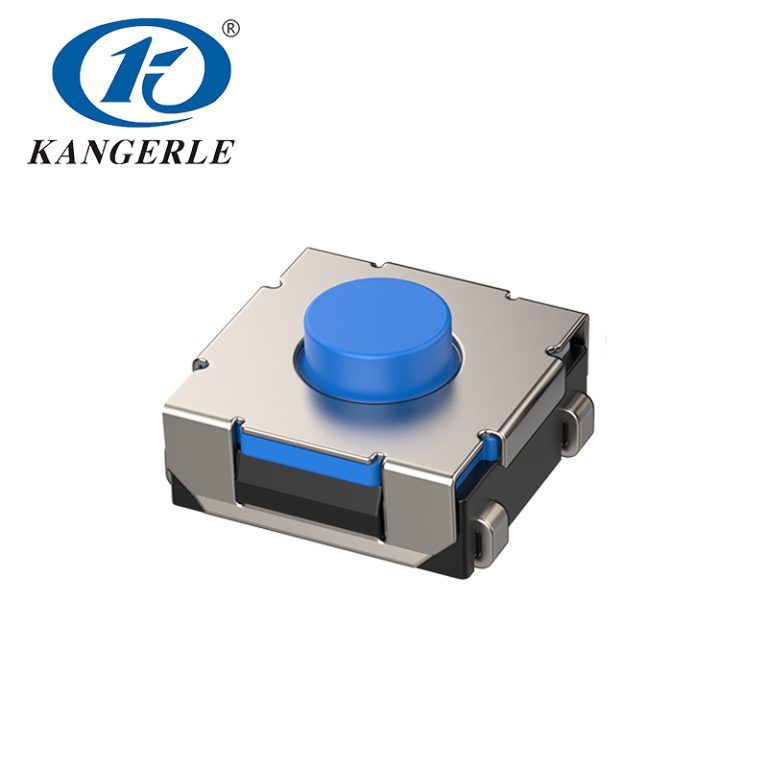
The Kangerle Tact Switch KEL-E006 is designed for automotive control modules that need stable signal output, compact structure, and dependable button feedback. With a rated load of 50mA DC12V, 250±40gf operating force, 0.4±0.2mm travel, contact resistance of ≤50mΩ, insulation resistance of ≥100MΩ, and 100,000-cycle mechanical life, it fits many door control unit designs where space, cost, lead time, and reliability all matter.
Why Door Control Units Need Reliable Tact Switches?
A door control unit is touched many times every day. The driver may press the window switch at toll gates, parking lots, drive-through lanes, rainy roads, or during short city trips. Passengers may use lock buttons or window buttons repeatedly without thinking about the electronics behind them.
Daily Door Control Functions Depend on Small Switches
Inside a door panel, the switch does not work alone. It sits on a PCB and sends a clear on/off signal to the control circuit. That signal may activate a power window motor, trigger a lock command, or communicate with the body control module.
Common door control unit applications include:
- Power window switch buttons
- Central door lock buttons
- Mirror folding and adjustment buttons
- Child safety lock buttons
- Trunk release buttons
- Interior dome light or reading light buttons
- Seat and door memory control buttons
For these functions, the switch must give a clear press feeling. It also needs stable contact after thousands of cycles. A weak switch may create delayed response, double triggering, or poor touch feedback. In a vehicle, even a small button fault can affect the user’s trust in the whole control panel.
What Makes KEL-E006 Suitable for Automotive Door Control Units?
A good automotive tactile switch should not only fit the PCB layout. It should also match the button structure, actuator height, expected force, electrical load, and service life target of the control unit.
Key Technical Features of Kangerle Tact Switch KEL-E006
| Item | KEL-E006 Specification | Value for Door Control Units |
|---|---|---|
| Rated load | 50mA DC12V | Fits low-current automotive signal circuits |
| Operating force | 250±40gf | Clear press feeling without being too stiff |
| Travel distance | 0.4±0.2mm | Short, direct actuation for compact buttons |
| Contact resistance | ≤50mΩ | Stable signal transmission |
| Insulation resistance | ≥100MΩ | Helps reduce leakage risk in PCB design |
| Mechanical life | 100,000 cycles | Suitable for repeated vehicle button use |
| Withstand voltage | 250V 50Hz for 1 minute | Supports safer electrical insulation design |
The 250±40gf operating force is useful in car door switches because it gives enough resistance to avoid accidental triggering. At the same time, it remains light enough for daily use. This balance matters for power window buttons, door lock buttons, and trunk release switches, especially when a plastic actuator or rubber key mat is placed above the tact switch.
The ≤50mΩ contact resistance also helps the circuit read the press action cleanly. In low-current automotive signal systems, unstable resistance may lead to poor signal recognition. KEL-E006 gives a practical answer for control boards that need simple, repeatable, and stable input.
Application of KEL-E006 in Door Control Units
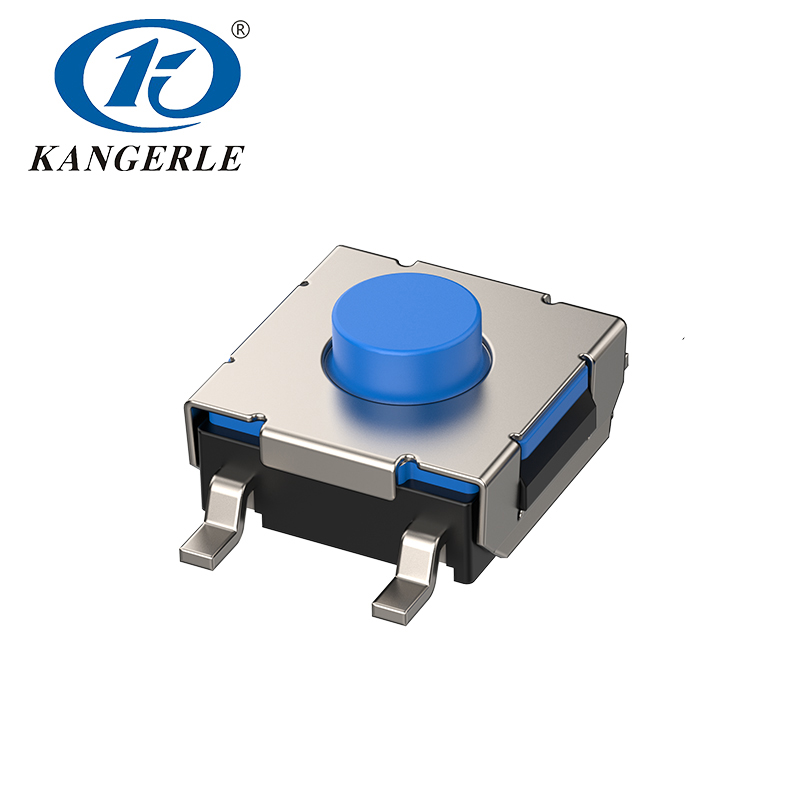
Door control units are usually placed in a tough position. They sit near the window, close to dust, moisture, vibration, and frequent hand contact. The switch must keep working even when the vehicle is used in hot summers, cold mornings, or humid parking environments.
Power Window Switch Modules
Power window buttons are among the most used controls on a car door. A driver may press them several times in one trip. The front driver-side door panel often carries four window buttons, a lock button, a mirror button, and child lock control. That means the PCB may need several tact switches with consistent force and height.
KEL-E006 can be used under the plastic window button cap to send a signal to the control circuit. Its 0.4±0.2mm travel allows a short and firm pressing feel. This helps the button return quickly after each press, which is important for window up and down commands.
Central Lock and Unlock Buttons
Central locking requires a clear signal. If the switch bounces, feels loose, or gives uneven feedback, users may press it twice. In some vehicle designs, the door lock button is placed near the inner handle or window switch panel, where it may be pressed by both the driver and passengers.
KEL-E006 provides a steady tactile response for this type of control. Its operating force makes the button feel more controlled, while the low contact resistance supports accurate signal output to the door control PCB.
Mirror Adjustment and Folding Controls
Mirror adjustment buttons are smaller and often arranged in a compact layout. They need a switch with a small footprint, clear click feeling, and stable actuation. For left, right, up, down, and folding functions, each button must respond quickly without taking too much PCB space.
In this kind of compact control board, KEL-E006 can support a neat switch layout. It is suitable for applications where engineers need a reliable automotive tact switch for door control units without using a larger mechanical switch structure.
Trunk Release and Interior Light Controls
Some vehicles place trunk release buttons or dome light buttons near the door side area. These switches may not be pressed as often as window buttons, but they still need steady performance. A trunk release button must not feel weak or uncertain because it controls a practical vehicle function.
KEL-E006 can support these low-current signal inputs with clear feedback and stable life performance. For door-related control boards, using one switch platform across several buttons can also make sourcing and assembly easier.
KEL-E006 vs Omron B3S/B3SL Series for Replacement Design
When a purchasing team or engineer searches for an Omron B3S replacement, B3SL tact switch alternative, or waterproof tactile switch for automotive control, the goal is usually clear: keep the same function, reduce supply pressure, and lower purchasing cost without changing the user experience.
Functional Comparison for Door Control Unit Projects
| Comparison Point | Kangerle Tact Switch KEL-E006 | Omron B3S/B3SL Series Replacement Needs |
|---|---|---|
| Application direction | Automotive door control, window switch, central control, dome light, trunk release | Similar compact tact switch functions in electronic control boards |
| Signal role | Momentary tactile input | Momentary tactile input |
| Contact performance | ≤50mΩ contact resistance | Requires stable low-current signal contact |
| Actuation feel | 250±40gf | Can match common medium-force tactile designs |
| Life target | 100,000 cycles | Suitable for many repeated button applications |
| Supply advantage | Shorter lead time, lower cost, customization support | Often selected as a large-brand reference |
| Replacement value | Can fully replace the functional role when dimensions, circuit, and force are confirmed | Used as a benchmark in many designs |
Kangerle Tact Switch KEL-E006 can fully replace the functional role of large-brand Omron B3S/B3SL series switches in door control unit projects when the PCB layout, actuator structure, operating force, travel, and electrical rating are matched during engineering confirmation. For vehicle door modules, the main requirements are stable momentary contact, suitable button feel, low contact resistance, proper life cycle, and dependable signal output. KEL-E006 covers these needs while giving buyers more room on price, delivery, and customization.
For many factories, the replacement decision is not only about the switch itself. It also includes sample speed, communication efficiency, engineering support, mold adjustment, and long-term supply stability. KEL-E006 gives a practical path for teams that want a large-brand alternative without changing the basic function of the door control unit.
Design Points When Using KEL-E006 in Door Control PCBs
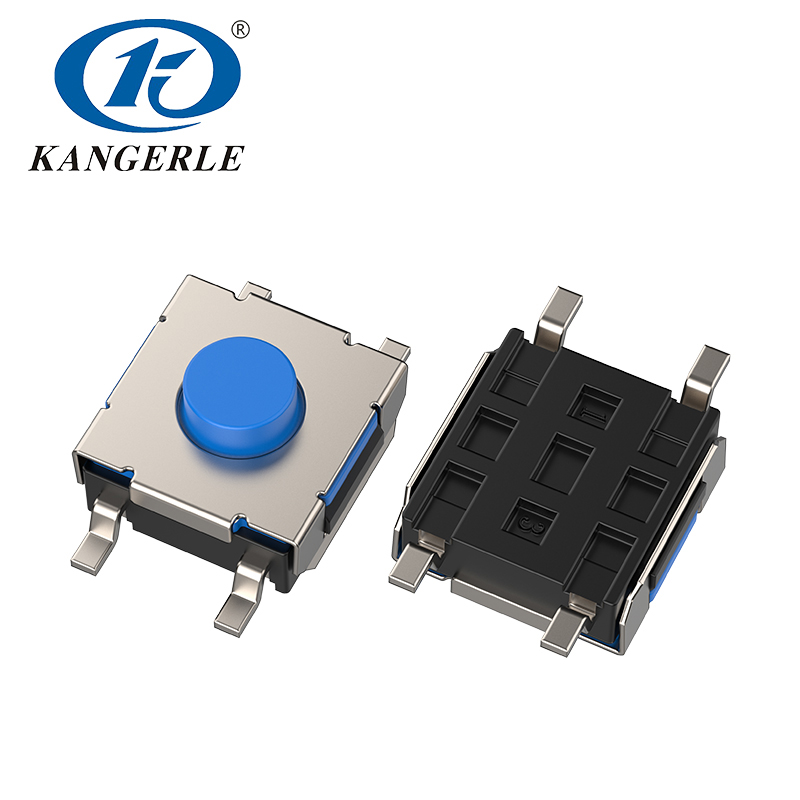
A tactile switch performs best when the surrounding structure is designed correctly. Poor button cap design, too much pressure from the actuator, or uneven PCB assembly can shorten switch life.
Match Operating Force With the Button Cap
The final user does not press the switch directly. The user presses a plastic key, rubber pad, or molded actuator. That part transfers force to the tact switch. If the actuator is too hard or too long, it may preload the switch. If it is too short, the user may feel empty travel before the click.
For KEL-E006, the 250±40gf force works well for many automotive buttons because it gives a clear click without feeling heavy. Engineers should test the complete button stack, not only the bare switch.
Keep Travel and Tolerance Under Control
The 0.4±0.2mm travel makes KEL-E006 suitable for compact door switch modules. Still, the plastic housing, PCB thickness, actuator height, and soldering position should be checked together. A small dimensional mismatch may change the button feel.
In mass production, the best result usually comes from testing several samples before final mold approval. This is especially important for power window switch panels where several buttons sit side by side and must feel consistent.
Consider Moisture, Dust, and Vehicle Use Conditions
Door panels may face moisture from wet hands, window gaps, cleaning liquids, and dust from outdoor use. For door control units, buyers often search for waterproof tact switch, sealed tact switch, dustproof tactile switch, and automotive tactile switch. The final protection level depends on the full module design, including switch selection, PCB coating, button structure, housing seal, and assembly process.
KEL-E006 is suitable for automotive electronic modules where stable actuation and protective design are both needed. For harsher positions, the switch structure should be tested with the complete door control assembly.
Advantages of ZHEJIANG KANGERLE ELECTRONICS CO. LTD
ZHEJIANG KANGERLE ELECTRONICS CO. LTD has long experience in manufacturing micro switches, tact switches, detector switches, rocker switches, slide switches, push button switches, and automotive switch solutions. The company serves applications such as automobile parts, household appliances, security equipment, medical devices, industrial equipment, consumer electronics, communication devices, and computer-related products.
Why Kangerle Fits Automotive Switch Projects?
KANGERLE ELECTRONICS gives buyers a useful mix of product coverage and engineering flexibility. For door control unit projects, the Tact Switch KEL-E006 can fully replace the function of large-brand switches such as Omron B3S/B3SL series after proper specification matching. It also brings practical sourcing advantages: shorter lead time, lower price, and customization support.
Kangerle can support custom needs such as material selection, dimensions, operating force, operating travel, current requirements, and special application conditions. This matters for door control unit manufacturers because one vehicle platform may need different button feelings for window lifting, mirror control, central locking, and lighting functions.
A large-brand switch may be easy to specify at the design stage, but purchasing teams often face high cost, long delivery time, or limited flexibility later. KEL-E006 helps reduce these risks while keeping the functional performance needed for automotive button modules.
Conclusion
Kangerle Tact Switch KEL-E006 is a practical choice for automotive door control units that need stable signal output, clear tactile feedback, compact assembly, and cost-friendly sourcing. Its 50mA DC12V rating, 250±40gf operating force, 0.4±0.2mm travel, ≤50mΩ contact resistance, and 100,000-cycle mechanical life match the needs of many power window switches, central lock buttons, mirror controls, trunk release buttons, and interior light controls.
For teams looking for an Omron B3S replacement or B3SL tact switch alternative, KEL-E006 can fully replace the functional role of large-brand switches after normal engineering confirmation. With shorter lead time, lower price, and customization support, KANGERLE ELECTRONICS gives door control unit manufacturers a stronger supply option for both new designs and replacement projects.
FAQs
What is the Kangerle Tact Switch KEL-E006 used for in door control units?
KEL-E006 is used as a momentary tactile switch in door control units. It can support power window buttons, central locking buttons, mirror adjustment buttons, trunk release buttons, and interior light control buttons.
Can KEL-E006 replace Omron B3S/B3SL series switches?
Yes. KEL-E006 can fully replace the functional role of Omron B3S/B3SL series switches when the PCB size, circuit rating, operating force, travel distance, and actuator structure are confirmed by engineering testing.
Why is 250±40gf operating force useful for automotive door switches?
A 250±40gf operating force gives a clear button feel without making the switch too hard to press. This helps reduce accidental triggering while keeping daily use comfortable for drivers and passengers.
Is KEL-E006 suitable for power window switch modules?
Yes. KEL-E006 is suitable for power window switch modules because it offers stable contact performance, short travel, clear feedback, and a 100,000-cycle mechanical life for repeated button use.
Why choose Kangerle for automotive tactile switches?
Kangerle offers automotive switch experience, OEM/ODM support, short lead time, lower price, and customization options. For door control unit manufacturers, these advantages can reduce sourcing pressure and help speed up product development.