
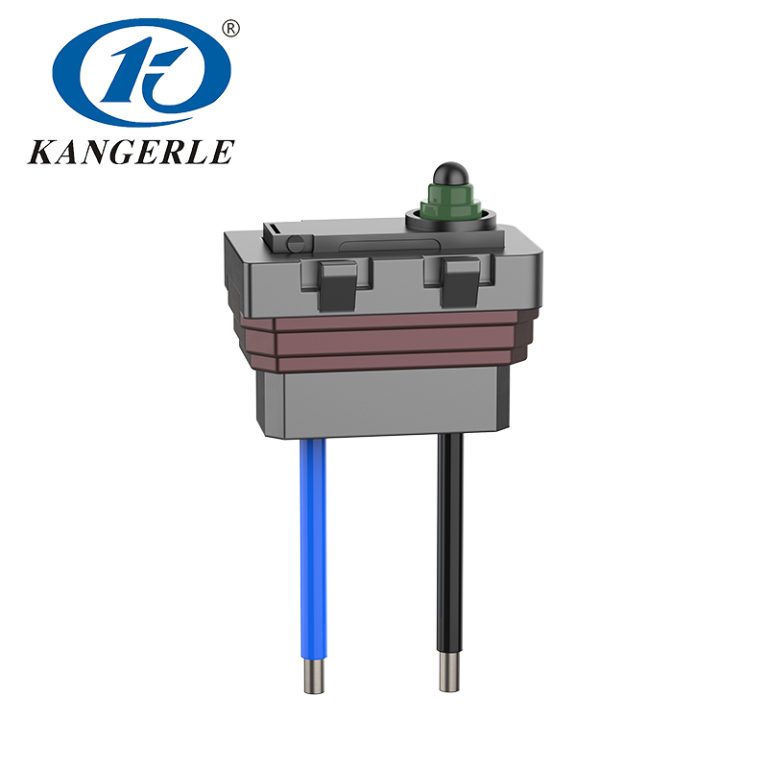
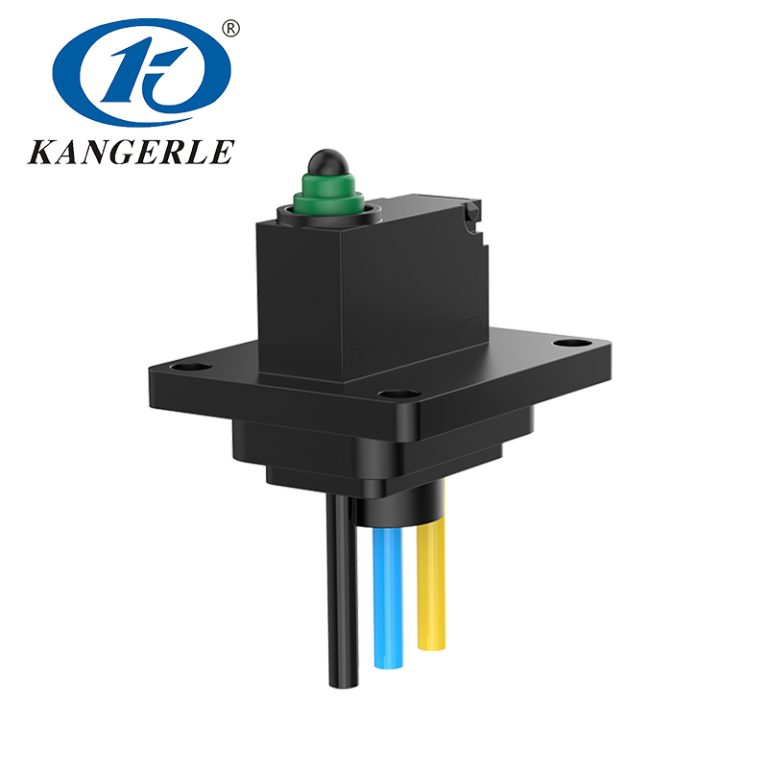
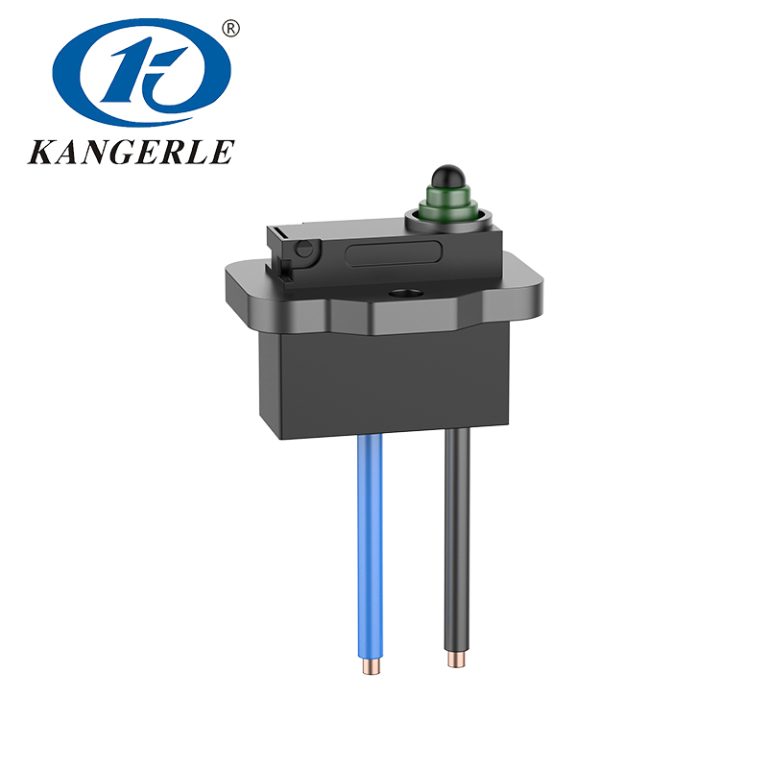

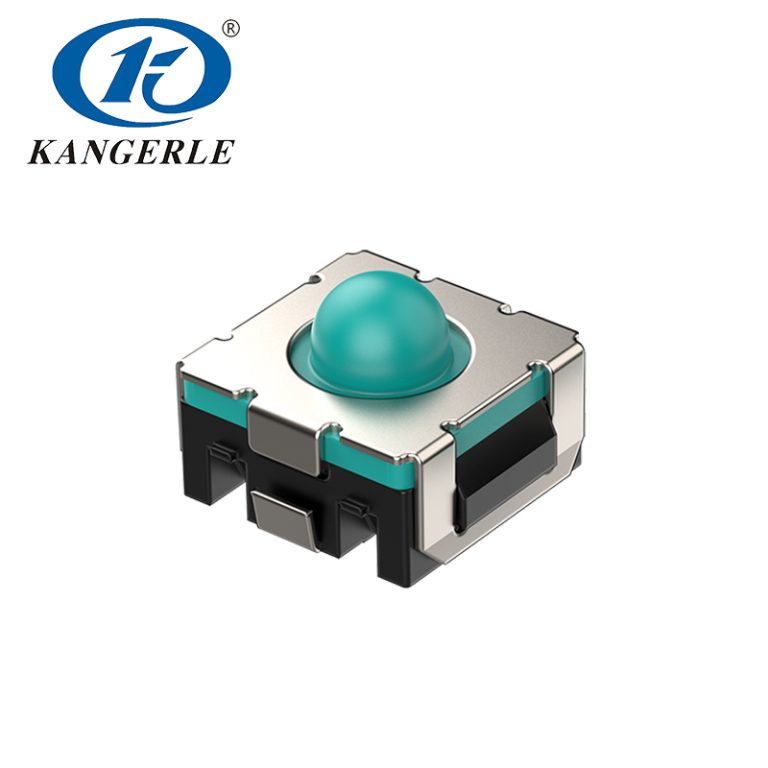
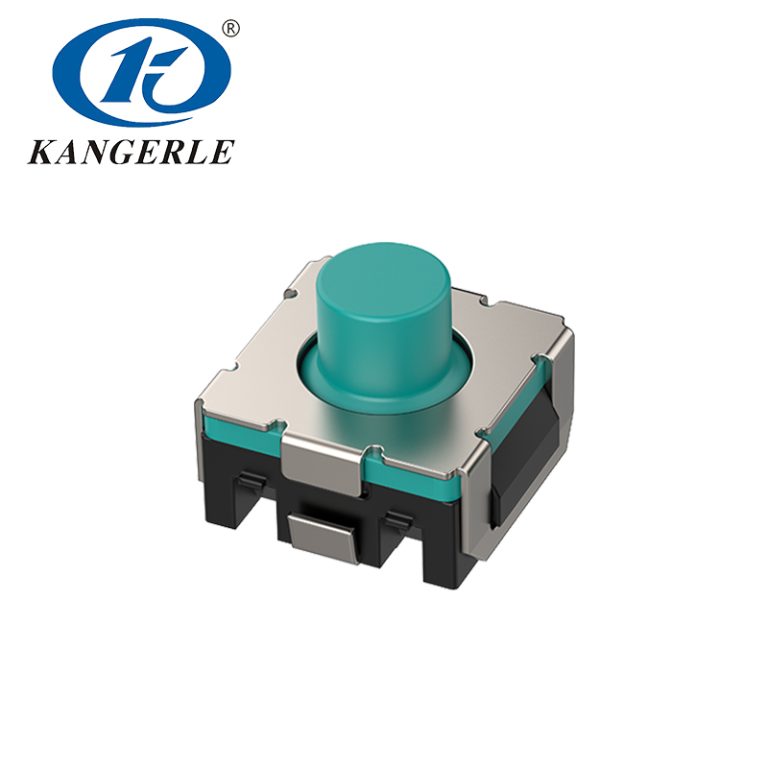
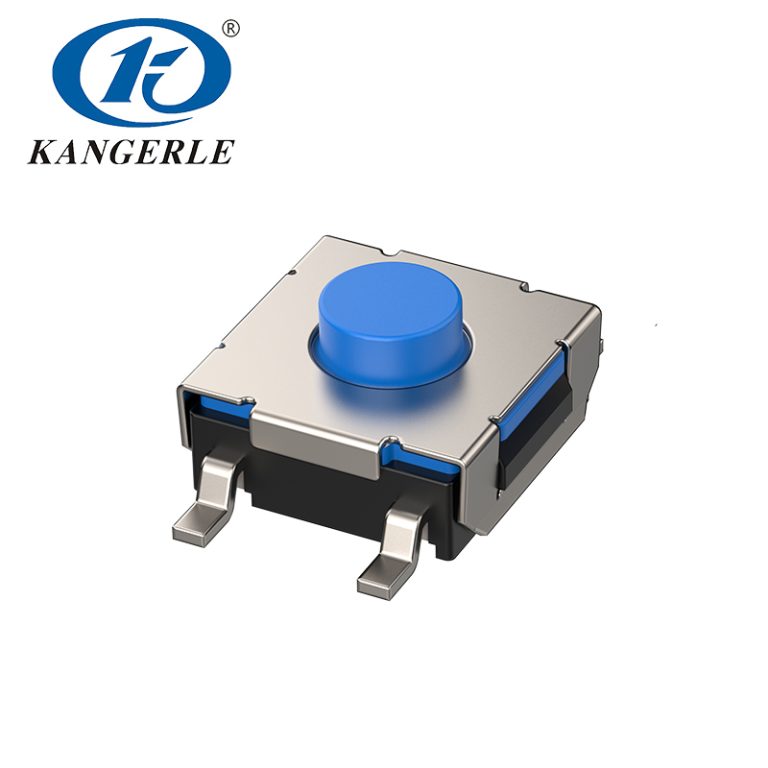
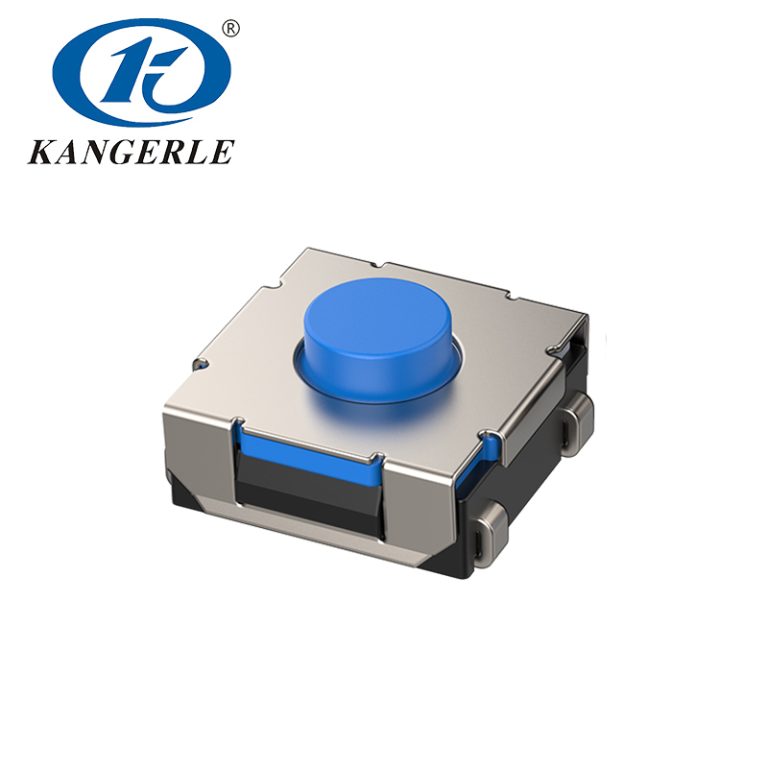
The button a user touches may hide a much smaller switch on the PCB. In a different design, the button and its switch mount through the panel together. For starting a function, changing a setting or confirming a choice, either arrangement may be relevant, but the mounting structure and circuit have to suit it.
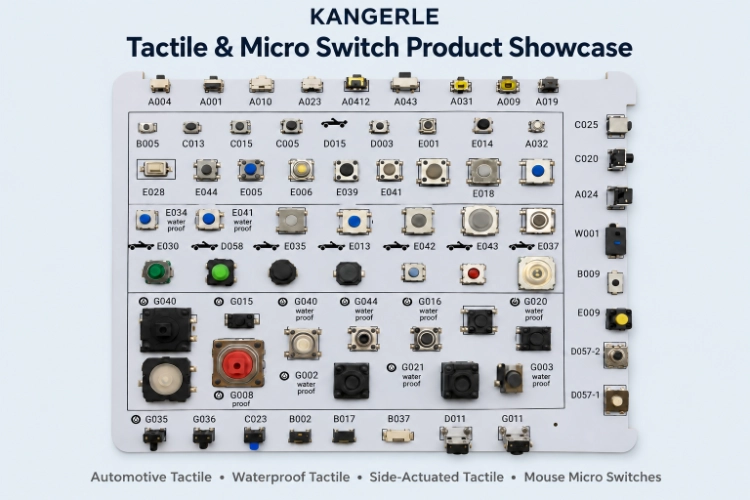
Among KANGERLE tactile switches and micro switches are silent, compact and waterproof options for cars, home appliances and consumer devices. The ten uses below put those options beside the key structure and circuit where they would be evaluated. The housing and button assembly remain part of the choice.
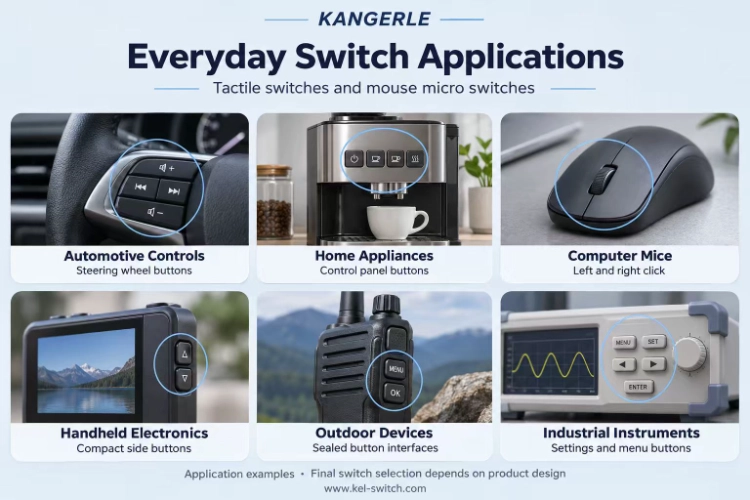
Push Button Switch Applications in Automotive Electronics
In the space behind automotive trim, the key’s movement must reach the small switch on the board. A typical tactile input only carries the command to a controller. There is still a mechanical job to resolve: the cap must reach the operating point without pushing the actuator sideways.
Steering Wheel Multimedia Controls
Volume, phone and voice buttons are grouped around the steering wheel, often beside the instrument-menu keys. If the press needs to be quieter, the KEL-E013 Silent Switch Series is an option to evaluate.
Another option is the KEL-E035 Tact Switch: travel is 1.2 ± 0.2 mm, with 250 ± 50 gf, 300 ± 50 gf and 350 ± 50 gf force options for different key responses.
Try the sample in the complete steering wheel module. A cap that is slightly off centre can put a sideways load on an otherwise suitable switch. If the plastic key reaches its stop too early, the press won’t reach the switch’s operating point.
Centre Console and Cabin Lighting Controls
For a climate-control key or cabin reading-light button, first measure the space between the key and the board. The KEL-E005 Tact Switch is a candidate for these inputs. The configuration considered here has a 50 mA, 12 V DC rating, 200 ± 50 gf operating force and 0.5 ± 0.2 mm travel. Other force options exist, so the complete part specification needs checking.
An overhead-console key may need a different response. The KEL-E041 Tact Switch is another candidate, provided the key mechanism suits its force and travel. An outline that looks similar on a drawing won’t settle the feel under the finished cap.
Power Window and Tailgate Buttons
Pressing a window or tailgate key normally requests movement from a separate motor-control circuit. KEL-E035 and KEL-E041 are candidates for that command input, after matching the particular configuration to the mechanism and signal load. The motor current belongs in a separately rated circuit.
During assembly checks, follow any path for condensation and watch the cap approach the actuator. There has to be enough movement left to trigger the switch before the plastic key reaches its stop. Side loading deserves attention here too.
Push Button Switch Applications in Home Appliances
The moulded key on an appliance needs clearance over the switch. Around that key, openings may admit dust or moisture; choosing a waterproof part doesn’t remove the need to inspect those openings.
Washing Machine and Smart Appliance Panels
On a washing machine, the same panel may carry programme selection, start/pause and setting keys. The 6×6 Tact Switch Series offers different heights and terminal arrangements to suit the board layout.
For a damp location, the choice may come down to KEL-G002, a 6×6 waterproof tactile switch, or KEL-G004 from the 8×8 Waterproof Tact Switch Series. For either IP67 option, retain the conditions specified for wiring and testing that model.
Water can reach the board through a key opening or past a panel gasket. Trace those routes with the complete panel assembled. A waterproof switch inside it cannot make up for a gap elsewhere in that panel.
Air Conditioner Remotes and Service Controls
Temperature, fan-speed and mode keys must fit a small remote-control PCB. KEL-A002 from the 3×6 Tact Switch Series provides a side-actuated option for a narrow layout. A top-pressed key may instead call for a suitable height from the 6×6 series.
Board space is only part of that decision: the external key must move in the direction the switch accepts. For service controls on outdoor equipment, inspect the enclosure against dust and condensation separately. An indoor remote and an outdoor service panel do not face the same exposure.
Security and Smart-Home Interfaces
For reset, pairing or a manual command on a security or smart-home panel, the space under the physical key may be shallow. The KEL-C005 4×4×1.5 mm Tact Switch offers a low-profile option to assess there.
In the panel, even a small alignment error matters at this size. Press the assembled key normally: it should trigger without needing a harder push or extra movement. Watch the release as well, since the cap has to leave the actuator free to return.
Push Button Switch Applications in Consumer Electronics
On a remote or handheld device, frequently used keys sit close together on a small board. Fit the board into its housing before comparing their feel. The position of the case keys relative to the switches affects that comparison.
TV Remotes and Audiovisual Equipment
Power, volume and menu buttons need compact switches beneath the key mat. KEL-A020 from the 3×5 Smile Tact Switch Series is a candidate for these uses.
The 3×5 mm outline saves space on the board only if the key above it can reach the actuator properly. Try several samples in the housing with the rubber mat or plastic keys fitted. With the mat in place, the finger presses through the same parts that it will encounter on the finished remote.
Portable Communication and Handheld Devices
For power, pairing or menu operation, a handheld device may have little room beneath the key. The KEL-A002 side press can suit a narrow board; KEL-C005 is an option where height is limited. The external key’s movement decides which arrangement to assess.
Put the pad layout beside the assembly drawing and check the gap under the key. If that gap is too small, the housing can hold the actuator partly down even when nobody is pressing it. Both the next press and the release can suffer.
Computer Mice and Game Controllers
Mouse clicks use a different mechanism from a conventional tactile key, so evaluate the KEL-W001 Mouse Micro Switch against the actual click assembly. For its 50 mA, 12 V DC configuration, the figures to compare are 70 ± 20 gf for the press and at least five million cycles for electrical life. That life figure needs to be checked against the full part number and the test load for the sample under consideration.
Fit the sample in the intended direction and watch a complete click, including the return. The trigger has to reach the actuator and let it come back freely. An identical outline and nominal rating won’t establish that fit.
Push Button Switch Applications in Industrial Equipment
Industrial Panels and Operator Modules
Reset, menu and mode buttons in a compact operator module usually provide low-current controller signals. The 6×6 series can be evaluated for the internal PCB. Where moisture or dust is expected, assess samples of KEL-G002 or KEL-G004 in the enclosure that will actually be used.
Reset and menu buttons provide ordinary commands. A tactile switch that breaks one of those signals cannot therefore be treated as an emergency stop; that function needs an appropriate certified component.
Watch the fitted cap through a press and release before fixing the stop position. There should be enough movement to operate the switch, without forcing it sideways. Resolve that position while changes to the PCB are still possible, alongside the review of voltage, current, circuit form and terminals.
Selecting and Sourcing a Push Button Switch
Check Electrical Duty and Mechanical Fit Together
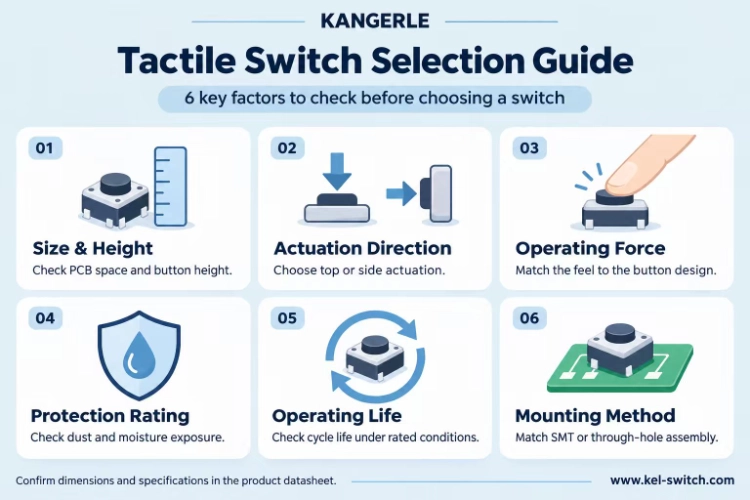
Begin with signal load, circuit form and the expected frequency of use. Then compare the outline and terminals with the board drawing, and the force and travel with the key. The life figures belong to different tests. Mechanical life covers repeated movement; electrical life covers contact operation under a defined load. The corresponding test conditions belong beside both life figures.
For KEL-E005, KEL-E035, KEL-G002, KEL-G004, KEL-A002 and KEL-A020 alike, specify the agreed version in full on the order. Attach its drawing and use the dimensions and ratings for that configuration. Another version’s figures may not apply.
Validate Replacement Parts in the Assembly
Compare drawings before ordering samples. Check the existing PCB pads and pin positions, then load, travel and key feel. The proposed replacement may look right but need a different pad or key-cap shape.
With samples fitted to the product, observe the press and return under the intended load. A drawing comparison alone cannot show whether the assembled key releases properly.
Define Custom Requirements Before Volume Orders
KANGERLE can discuss OEM requirements for actuator dimensions, force, travel, terminal direction and the operating environment, with drawing review, sample validation and production coordination.
For a restricted space, unusual key structure or uncertain sealing requirement, send the drawing together with the load, expected use and working conditions. The approval sample should be tested with that PCB, key and housing before the volume order is placed.
Domande frequenti
How Does a Tact Switch Differ from a Panel-Mounted Push Button?
A tact switch sits on the PCB beneath a separate key. A panel-mounted button fastens through the enclosure. Before substituting either type, review the mounting, operating mechanism and permitted load.
What Matters When Selecting an Automotive Push Button Switch?
Check signal duty and temperature requirements against the proposed part. Its travel and force must also work with the PCB or connector layout and the key mechanism. Use the real cap and trim for the sample evaluation, so the assembly fit is part of the approval.
Can a Waterproof Tact Switch Be Used in a Washing Machine Panel?
Yes, once the particular model has been checked against the panel’s load, key mechanism and moisture exposure. Include the surrounding panel in the sealing test. If a key opening lets water in, fitting a waterproof switch doesn’t close that opening.