
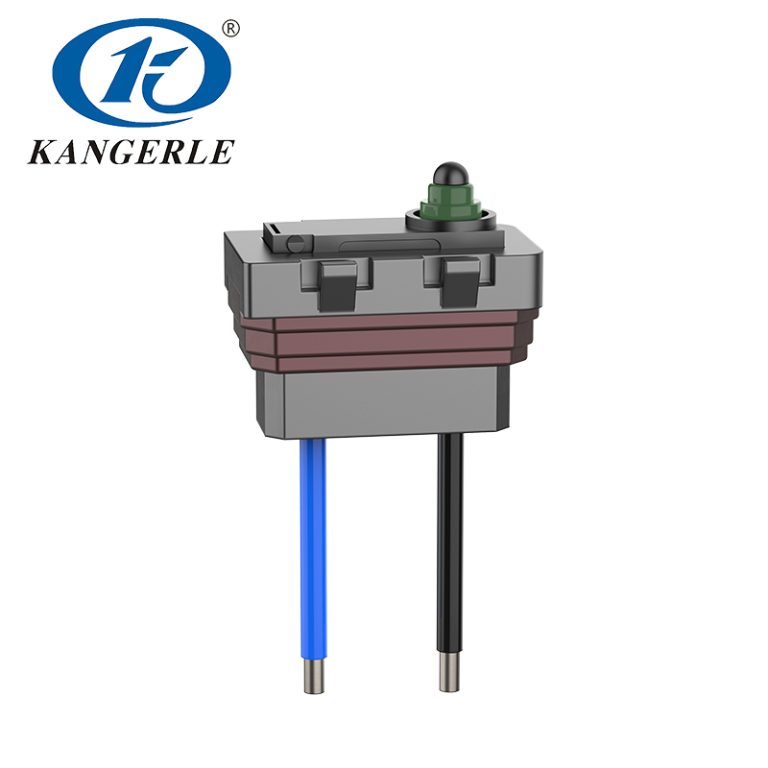
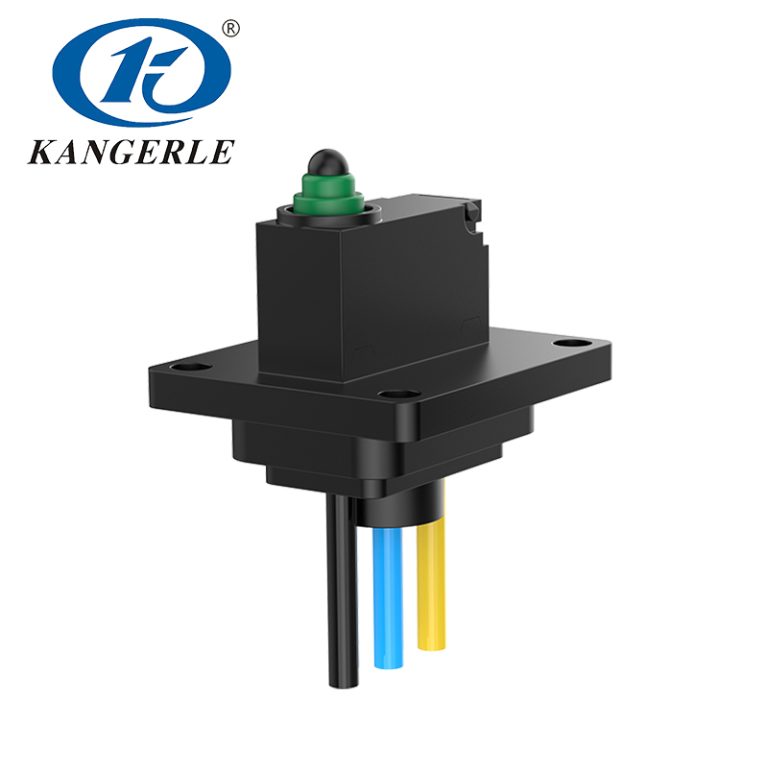
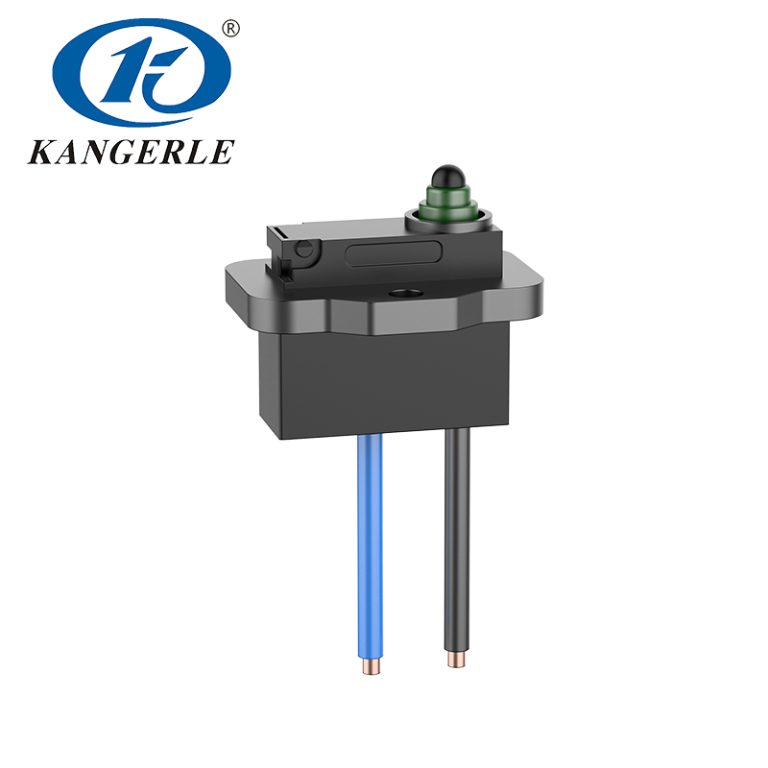

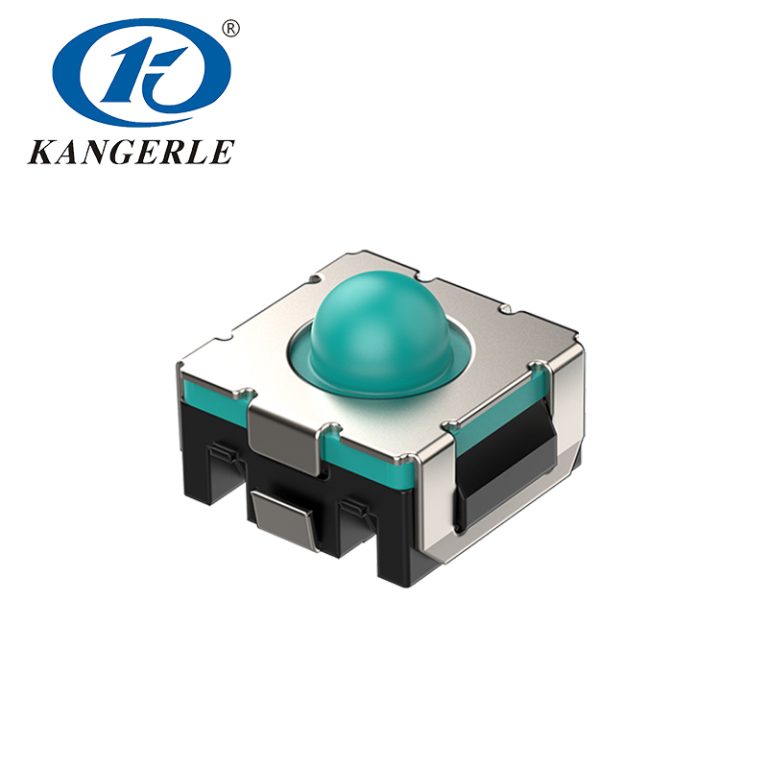
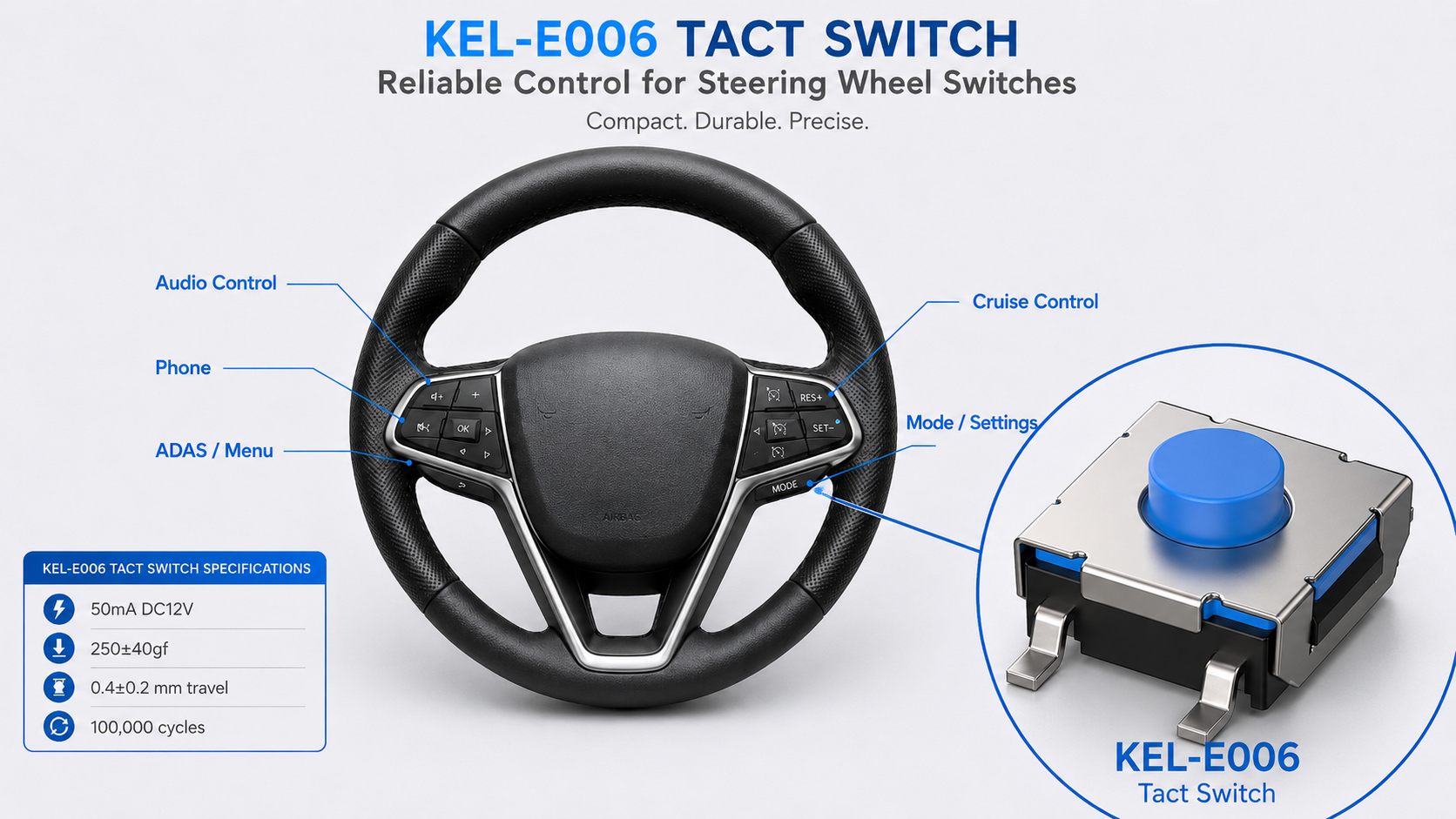
Commandes au volant Ce sont de petits composants qui jouent un rôle essentiel. Ils permettent au conducteur de régler le volume, de répondre aux appels, d'activer la commande vocale, de paramétrer le régulateur de vitesse, de changer de page de menu et de confirmer les commandes ADAS sans lâcher le volant. Sous chaque bouton, l'interrupteur tactile doit offrir une pression nette, envoyer un signal stable et résister à des années d'utilisation intensive au sein d'un module de commande au volant compact.
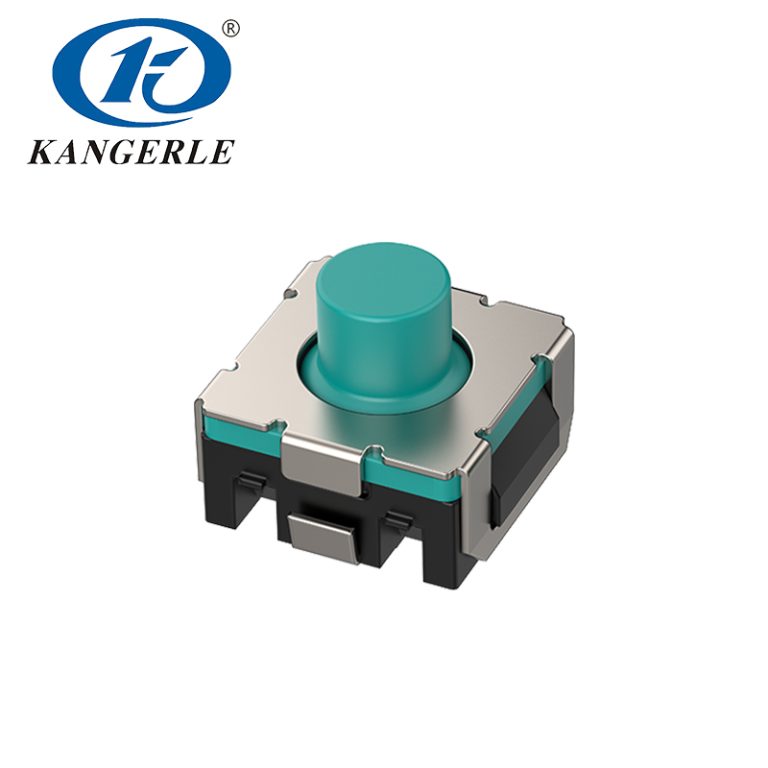
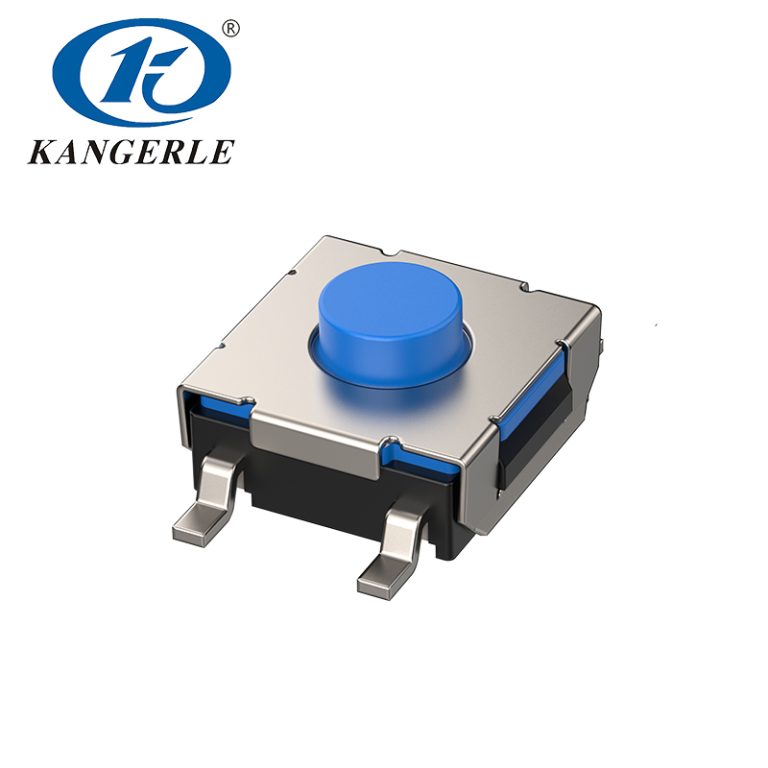
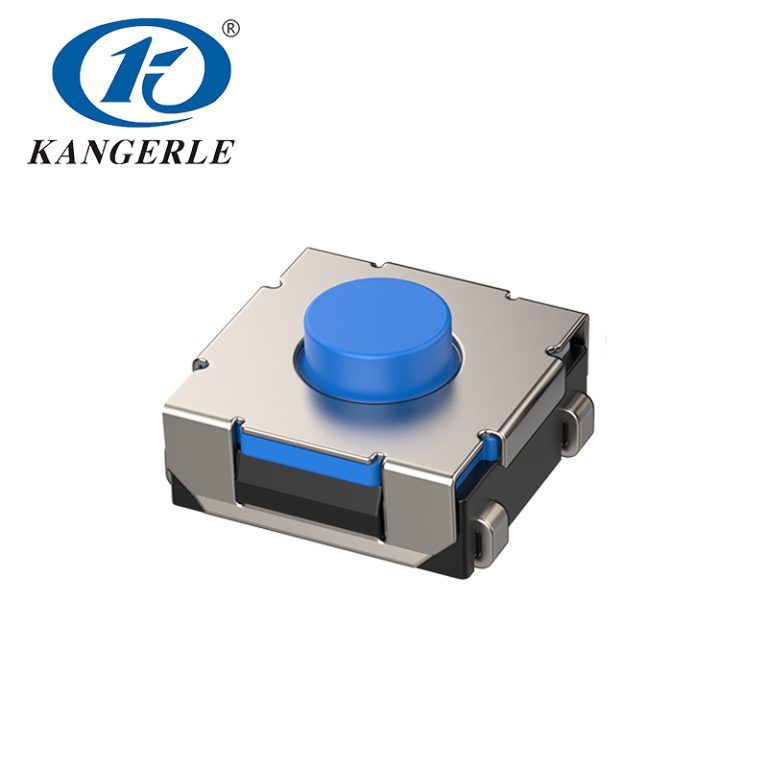
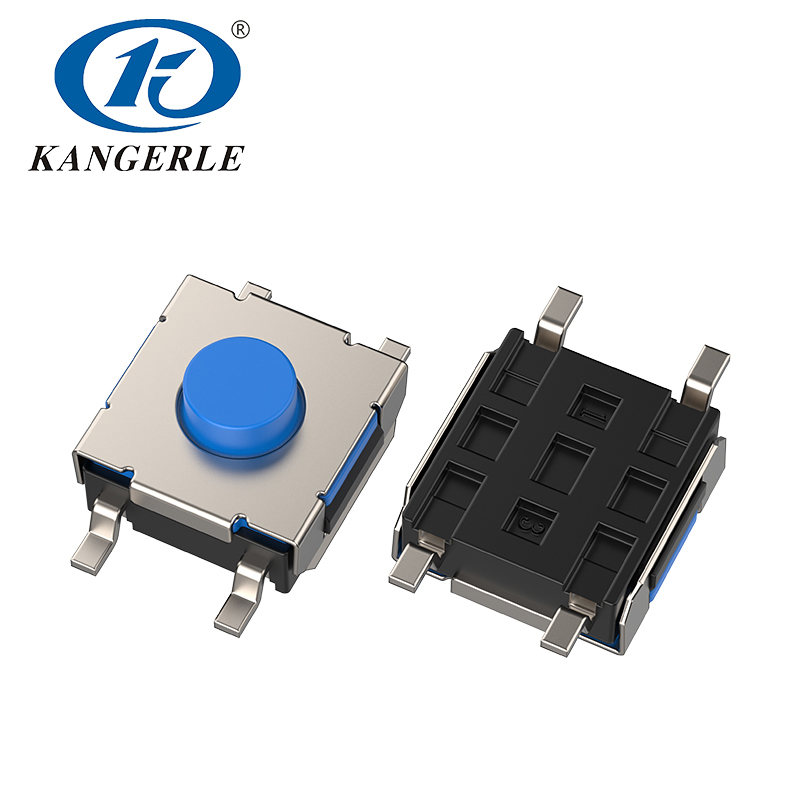
Pour ce type d'application, l'interrupteur tactile Kangerle KEL-E006 offre des possibilités de conception optimales. Il s'agit d'un interrupteur tactile momentané pour circuits imprimés automobiles, avec une charge nominale de 50 mA sous 12 V CC, une course de 0,4 ± 0,2 mm, une force d'actionnement de 250 ± 40 gf, une résistance de contact ≤ 50 mΩ, une résistance d'isolement ≥ 100 MΩ et une durée de vie mécanique de 100 000 cycles. Ces caractéristiques le rendent idéal pour les projets de commandes au volant nécessitant un retour tactile précis, une commande de signal stable à faible courant et un coût maîtrisé.
Pourquoi les boutons du volant ont-ils encore besoin d'un interrupteur tactile ?
Un bouton sur le volant n'est pas qu'une simple touche en plastique sur un panneau de garniture. Il fait partie intégrante de l'interface homme-machine du conducteur. Ce dernier l'utilise fréquemment en conduisant, en tournant le volant ou en présence de vibrations de la route. Son activation doit donc être intuitive et prévisible.
Un bon interrupteur tactile automobile présente trois avantages. Premièrement, il confirme la pression par le toucher, évitant ainsi au conducteur de consulter systématiquement le tableau de bord ou l'écran. Deuxièmement, il prévient les commandes accidentelles en exigeant une force précise. Troisièmement, il confère au module de commande au volant une structure électrique simple et éprouvée.
Fonctions typiques des commandes au volant
Les cas d'utilisation courants comprennent :
- Boutons de réglage du volume audio et de changement de piste
- Touches de réponse/fin d'appel Bluetooth
- Assistant vocal et boutons de confirmation de menu
- Touches de réglage, de reprise, d'annulation et de distance du régulateur de vitesse
- Commandes de sélection du menu ADAS et d'affichage des informations
Dans ces positions, l'interrupteur situé sous le capuchon fonctionne généralement comme un bouton-poussoir à course courte, normalement ouvert. L'utilisateur appuie sur le capuchon, l'actionneur transmet la force à l'interrupteur tactile et le circuit se ferme pour la réception du signal. Le principe paraît simple, mais la sensation au toucher doit rester constante malgré des milliers d'utilisations quotidiennes.
Compatibilité technique KEL-E006 pour les interrupteurs de volant
Le KEL-E006 est conçu pour les commandes au volant à faible courant, où une transmission stable du signal et une sensation de clic nette sont essentielles. Sa force d'activation de 250 ± 40 gf est suffisamment ferme pour les boutons du volant qui ne doivent pas s'activer trop facilement. Sa course de 0,4 ± 0,2 mm réduit la course du bouton, ce qui est utile pour les volants compacts où la hauteur des boutons, le dégagement du cache d'airbag et l'agencement du circuit imprimé sont des contraintes importantes.
| Article | Valeur KEL-E006 | Signification des commandes au volant |
|---|---|---|
| Charge nominale | 50 mA CC 12 V | Convient aux circuits de signaux automobiles à faible courant |
| Distance parcourue | 0,4 ± 0,2 mm | Mouvement court et direct du bouton |
| Force opérationnelle | 250±40 gf | Sensation tactile ferme, contribue à réduire les erreurs de pression |
| résistance de contact | ≤50 mΩ | Prend en charge une entrée de signal stable |
| résistance d'isolation | ≥100 MΩ | Contribue à la fiabilité électrique à long terme |
| Durée de vie mécanique | 100 000 cycles | Convient à une utilisation répétée des boutons en cabine |
| Tension de tenue | 250 V 50 Hz 1 min | Ajoute une marge de sécurité dans la validation électrique |
Un module de commande au volant peut comporter plusieurs boutons dans un espace réduit. Si certains boutons nécessitent une pression trop forte et d'autres semblent trop lâches, leur utilisation peut s'avérer inconfortable. Une force d'appui de 250 gf représente souvent un bon compromis pour les fonctions fréquemment utilisées telles que le volume, le téléphone et les touches de menu. Elle offre au conducteur une pression précise sans fatiguer le bouton lors d'une utilisation répétée.
Faible résistance de contact pour une entrée de signal stable
Les commandes au volant communiquent souvent avec le module de commande de la carrosserie, le système d'infodivertissement ou l'électronique du volant via des lignes de signal à faible courant. Une résistance de contact élevée ou instable peut entraîner des erreurs de saisie, des déclenchements doubles ou un délai de réponse. Le KEL-E006 utilise une résistance de contact cible ≤ 50 mΩ, ce qui contribue à maintenir un signal propre lors de la pression sur le bouton.
Course courte pour les blocs de boutons compacts
Un bloc de boutons de volant peut comprendre la touche extérieure, le guide de lumière, le tapis ou l'actionneur en caoutchouc, le corps du commutateur, le circuit imprimé et le boîtier. Un commutateur tactile avec une course de 0,4 ± 0,2 mm permet aux concepteurs de contrôler la hauteur totale du bloc. Il offre également une action rapide d'appui et de relâchement, essentielle pour la navigation dans les menus et le réglage fréquent du volume.
Où le KEL-E006 fonctionne le mieux : dans un module de volant
Un volant n'est pas un panneau de commande plat. Il bouge, vibre, chauffe au soleil et se trouve à proximité d'éléments essentiels à la sécurité. La commande doit fonctionner dans une structure moulée où l'espace est limité et où la sensation tactile dépend de l'ensemble du mécanisme.
Boutons de volume et de menu
Les touches de volume sont fréquemment utilisées. Un interrupteur trop souple peut devenir imprécis après une utilisation prolongée. Un interrupteur trop dur peut donner une impression de fragilité ou de fatigue au volant. Le KEL-E006, avec sa force d'activation de 250 gf, offre une pression stable pour les commandes fréquentes telles que le volume, le changement de piste, le défilement des pages et la confirmation des menus.
Boutons vocaux et téléphoniques
Les boutons d'appel et de commande vocale sont souvent actionnés sans quitter la route des yeux. Le conducteur attend une commande simple et précise. La faible résistance de contact et la course réduite du bouton KEL-E006 garantissent une réponse électrique claire et un point de contact net.
Commandes de régulateur de vitesse et ADAS
Les boutons du régulateur de vitesse et des systèmes ADAS doivent offrir une sensation de maintien ferme. Un interrupteur tactile précis permet de limiter les activations involontaires lorsque le pouce du conducteur effleure la zone du bouton. Le modèle KEL-E006 peut être utilisé dans ces groupes de commandes lorsque la conception du module requiert un interrupteur tactile compact à force moyenne pour les commandes au volant.
Points de conception que les ingénieurs devraient vérifier
Choisir un commutateur tactile pour volant de voiture Les boutons ne doivent pas se limiter à la référence catalogue. Le système de boutons complet détermine la sensation finale et la fiabilité.
Forcer l'alignement avec le capuchon du bouton
La force ressentie par l'utilisateur ne dépend pas uniquement de la force d'activation du bouton tactile. Elle dépend également de la forme du capuchon, de la hauteur de l'actionneur, de la rigidité du plastique, de la couche de caoutchouc et des tolérances d'assemblage. Un bouton tactile de 250 gf peut paraître légèrement plus léger ou plus lourd après la transmission de la force par le capuchon. Des tests sur prototype devraient confirmer la sensation finale en main.
Disposition du circuit imprimé et enveloppe de montage
Avant de remplacer un commutateur tactile B3W/B3F existant, l'équipe d'ingénierie doit vérifier la disposition des pastilles, la position des bornes, la hauteur du commutateur, le point de contact du capuchon et l'alignement de l'actionneur. Si ces points correspondent, le KEL-E006 peut remplacer intégralement la fonction de commutateur dans le module de commande du volant.
Exposition environnementale
Les modules du volant sont situés dans l'habitacle, mais ils restent exposés à la poussière, à l'humidité, à la transpiration, aux produits de nettoyage et aux variations de température. La structure des commutateurs, la conception du boîtier et le système d'étanchéité doivent être vérifiés conjointement. Pour les applications exigeant une étanchéité à la poussière ou à l'eau plus stricte, les commutateurs tactiles étanches et les solutions sur mesure de Kangerle peuvent être envisagés.
Comparaison des séries KEL-E006 et Omron B3W/B3F
Les commutateurs tactiles des séries B3W et B3F sont des pièces de référence largement utilisées dans de nombreuses évaluations techniques. Pour les acheteurs de commutateurs de volant, la question pratique ne se limite pas à la notoriété de la marque. L'essentiel est de savoir si un commutateur tactile de remplacement peut remplir la même fonction dans le circuit et le module de boutons.
Le commutateur tactile Kangerle KEL-E006 peut remplacer intégralement les commutateurs des séries Omron B3W/B3F dans les projets dont les caractéristiques électriques, la force d'actionnement, la course, la forme des contacts, le montage sur circuit imprimé, la structure de l'actionneur et les exigences de validation correspondent à la conception cible. Il doit être soumis aux contrôles d'ingénierie habituels, mais ses fonctionnalités répondent aux exigences essentielles d'un commutateur tactile de volant : entrée de signal momentanée, retour tactile, commutation à faible courant et stabilité des contacts.
| Point de comparaison | KEL-E006 | Plage de référence Omron B3W/B3F | Signification pratique |
|---|---|---|---|
| classe de charge nominale | 50 mA CC 12 V | Plage de signaux CC à faible courant | Même utilisation générale de la signalisation |
| Force opérationnelle | 250±40 gf | Plusieurs options de force, y compris des types de force moyenne/élevée | Le KEL-E006 convient aux boutons de volant fermes |
| Voyage | 0,4 ± 0,2 mm | Plage de pré-déplacement courte | Comportement similaire des boutons à course courte |
| résistance de contact | ≤50 mΩ | Valeur initiale maximale de 100 mΩ dans les données répertoriées | KEL-E006 offre une position de résistance de contact élevée |
| Fonction de contact | Utilisation de l'interrupteur tactile momentané | Utilisation de l'interrupteur tactile SPST-NO | Même logique de contrôle de base |
| valeur d'approvisionnement automobile | Délais courts, prix inférieurs, personnalisation | Catalogue standard | KEL-E006 offre une plus grande flexibilité d'approvisionnement |
Pour les projets de réduction des coûts, les programmes de localisation et le développement à partir de sources secondaires, le KEL-E006 constitue une solution de remplacement sérieuse pour les commutateurs tactiles B3W/B3F. Il permet aux équipes d'achat et d'ingénierie de conserver les mêmes fonctionnalités de base tout en bénéficiant de délais de livraison plus courts, de coûts réduits et d'une prise en charge des exigences personnalisées.
Avantages de la société et des produits Kangerle
Zhejiang Kangerle Electronics Co., Ltd. L'entreprise possède une longue expérience dans le domaine des micro-interrupteurs, des interrupteurs détecteurs, des interrupteurs à bascule, des interrupteurs à glissière, des interrupteurs tactiles, des boutons-poussoirs et des composants électroniques associés. Ses produits sont utilisés dans les secteurs de l'automobile, de l'électroménager, de la sécurité, de l'électronique grand public, des dispositifs médicaux, des équipements industriels et autres. L'entreprise détient également les principales certifications de qualité et de produits, notamment ISO 9001:2015, IATF 16949:2016, UL, TÜV, CE, CB, RoHS et CQC.
Pour les systèmes de commandes au volant, la solution Kangerle est pratique et performante. Le commutateur tactile KEL-E006 remplace avantageusement les commutateurs de grandes marques, tout en offrant des délais de livraison plus courts, un prix plus bas et des options de personnalisation. Pour les projets OEM/ODM, Kangerle prend en charge la conception des moules, la modification des produits, les tests d'échantillons et la production en série. Les produits sur mesure peuvent concerner les matériaux, les dimensions, la force d'actionnement, la course, les exigences en matière de courant et les environnements d'utilisation spécifiques.
Cela a toute son importance lors du passage d'un prototype à la production. Un module de commande au volant peut nécessiter de légères modifications au niveau de la hauteur de la tige, de la force d'actionnement, de l'emballage ou de la méthode d'assemblage. Un fournisseur proposant des services de personnalisation peut résoudre ces problèmes plus rapidement qu'un fournisseur se limitant à un catalogue standard.
Pourquoi les acheteurs choisissent le KEL-E006 pour leurs projets de commutateurs automobiles
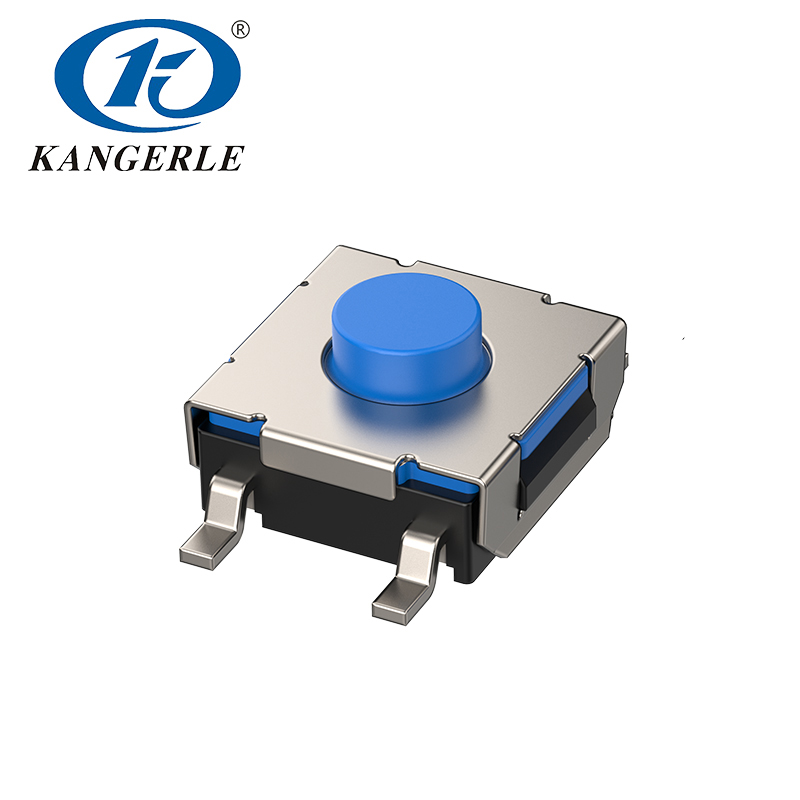
Le KEL-E006 ne se positionne pas uniquement comme un composant à bas coût. Sa valeur réside dans l'équilibre entre ses spécifications, la flexibilité de son approvisionnement et son adéquation à l'application.
C'est une option intéressante lorsqu'un projet nécessite :
- Interrupteur tactile 12 V CC pour boutons de voiture
- Interrupteur tactile de 250 gf à course courte
- Un interrupteur tactile à faible résistance de contact pour une entrée de signal stable
- Interrupteur tactile de remplacement fonctionnel B3W/B3F
- Fabricant de commutateurs tactiles personnalisés pour la conception de circuits imprimés automobiles
- Un commutateur tactile au volant économique pour les boutons de volume, de téléphone, de régulateur de vitesse ou d'ADAS
On obtient les meilleurs résultats lorsque les équipes d'ingénierie et d'approvisionnement évaluent le commutateur dès le début. Une modification, même minime, peut avoir un impact sur la sensation des condensateurs, l'agencement du circuit imprimé, l'outillage du boîtier et l'homologation. Vérifier ces détails en amont permet de réduire les travaux de reconception ultérieurs.
Conclusion
Le commutateur au volant est l'une des commandes les plus fréquemment utilisées dans un véhicule. Les conducteurs s'attendent à une réponse franche et précise, à une commande stable et à une sensation identique même après une utilisation prolongée. Le commutateur tactile Kangerle KEL-E006 répond à ces exigences avec une charge nominale de 50 mA sous 12 V CC, une course de 0,4 ± 0,2 mm, une force d'actionnement de 250 ± 40 gf, une résistance de contact ≤ 50 mΩ et une durée de vie mécanique de 100 000 cycles.
Pour les fabricants de commutateurs de volant, le KEL-E006 est un commutateur tactile automobile pratique pour modules PCB compacts. Il remplace avantageusement les commutateurs des séries Omron B3W/B3F dans les applications compatibles, tout en offrant aux acheteurs des délais de livraison plus courts, un prix plus bas et une prise en charge de la personnalisation. Pour les nouveaux modèles, les programmes de réduction des coûts et les projets de sous-traitance, le KEL-E006 garantit des performances fiables pour les boutons de volant.
FAQ
Quel est le meilleur interrupteur tactile pour les commandes au volant ?
Le meilleur interrupteur tactile pour les commandes au volant Le choix du KEL-E006 dépend de la force d'actionnement, de la course, de la disposition du circuit imprimé, de la charge électrique et du toucher du bouton. Grâce à son intensité nominale de 50 mA sous 12 V CC, sa force de 250 ± 40 gf, sa course courte et sa faible résistance de contact, il convient à de nombreux modules de commande au volant.
Le KEL-E006 peut-il remplacer les commutateurs Omron B3W/B3F ?
Oui. Le KEL-E006 peut parfaitement remplacer les interrupteurs Omron des séries B3W/B3F lorsque les exigences de montage, de force, de course, de circuit et de validation sont conformes au projet. C'est un interrupteur tactile de remplacement idéal pour les boutons de volant automobile.
Pourquoi une force d'actionnement de 250 gf est-elle utile pour les boutons d'un volant de voiture ?
Un interrupteur tactile de 250 gf offre une pression ferme et précise. Il contribue à réduire les activations accidentelles tout en restant confortable pour une utilisation répétée des boutons de volume, téléphone, menu, régulateur de vitesse et ADAS.
Le KEL-E006 convient-il aux circuits imprimés automobiles à faible courant ?
Oui. Le KEL-E006 est conçu pour un courant continu de 50 mA sous 12 V et possède une résistance de contact ≤ 50 mΩ, ce qui le rend adapté à la commande de signaux à faible courant dans les assemblages de circuits imprimés automobiles.
Kangerle peut-il personnaliser les interrupteurs tactiles pour les modules de volant ?
Oui. Kangerle propose des solutions personnalisées pour les dimensions, les matériaux, la force d'actionnement, la course, les besoins en courant et les environnements d'application spécifiques. Ceci est particulièrement utile lorsqu'un module de commande au volant nécessite une sensation, une hauteur ou une structure d'assemblage particulières.