
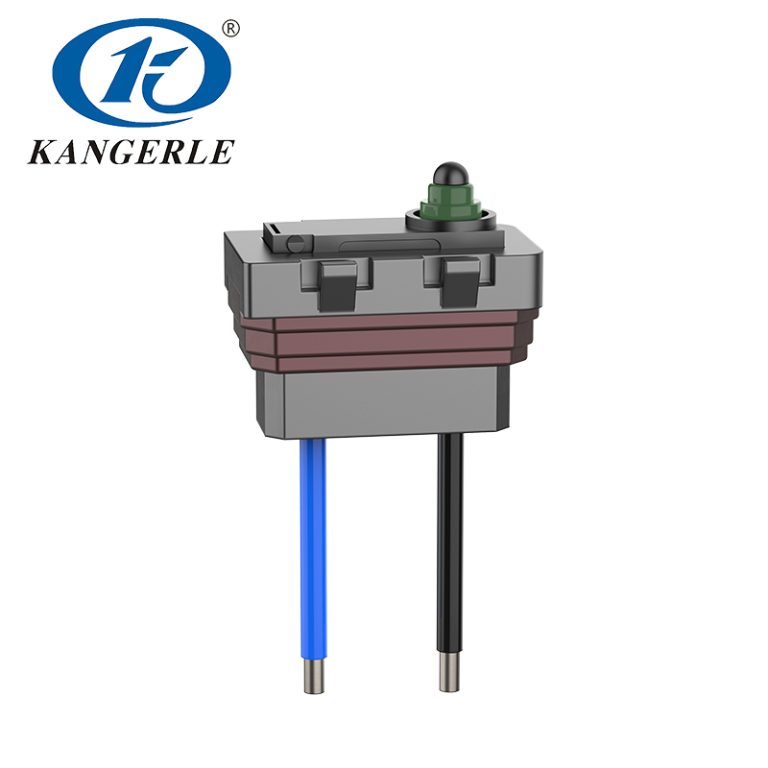
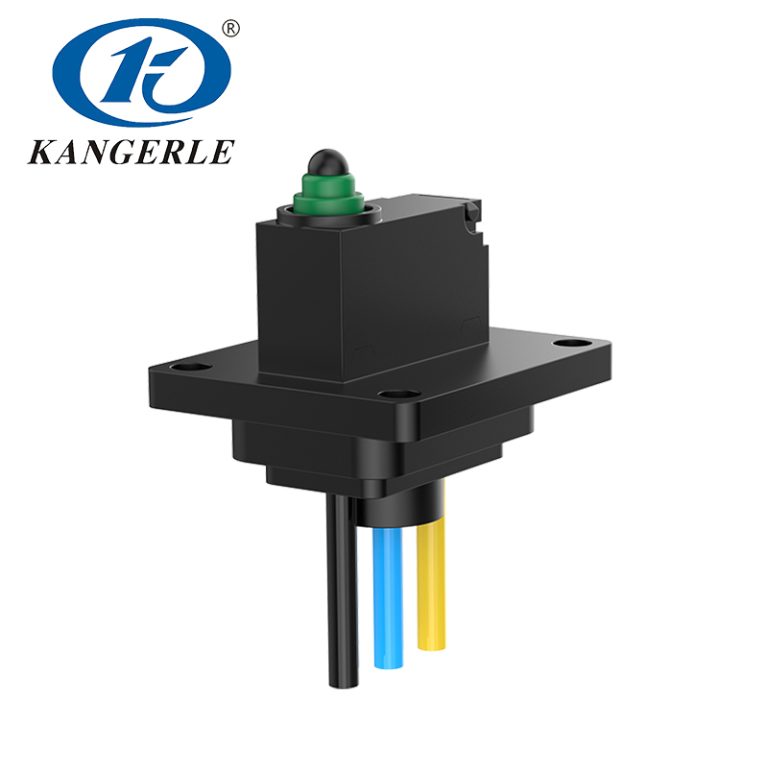
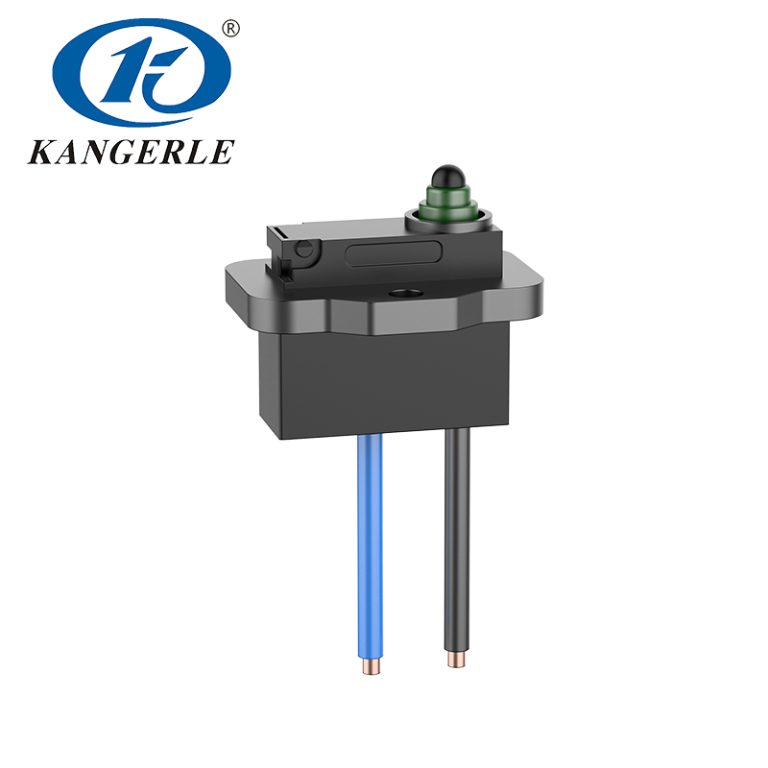

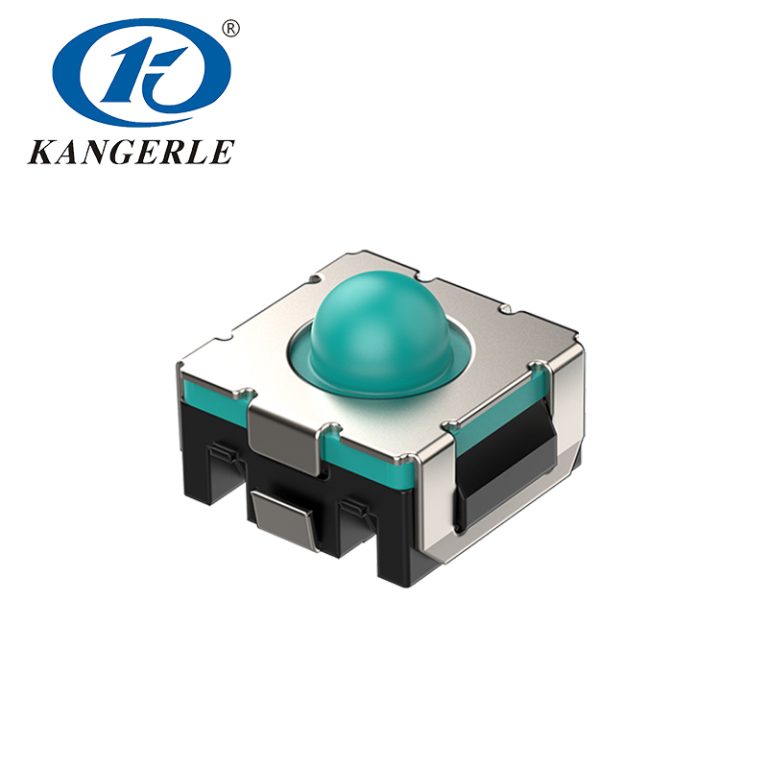
Micro switch selection involves more than dimensions. Consider load, space, travel, terminals, circuit and life. A mismatch may cause false triggering, wear or redesign. Based on the “2026 Chinese Micro Switch Selection Catalog,” this article compares KANGERLE KW3, KW12 and KW10 and introduces KW3 self-locking, anti-tip and dual-switch types before sampling.
What Parameters Matter When Selecting a Micro Switch?
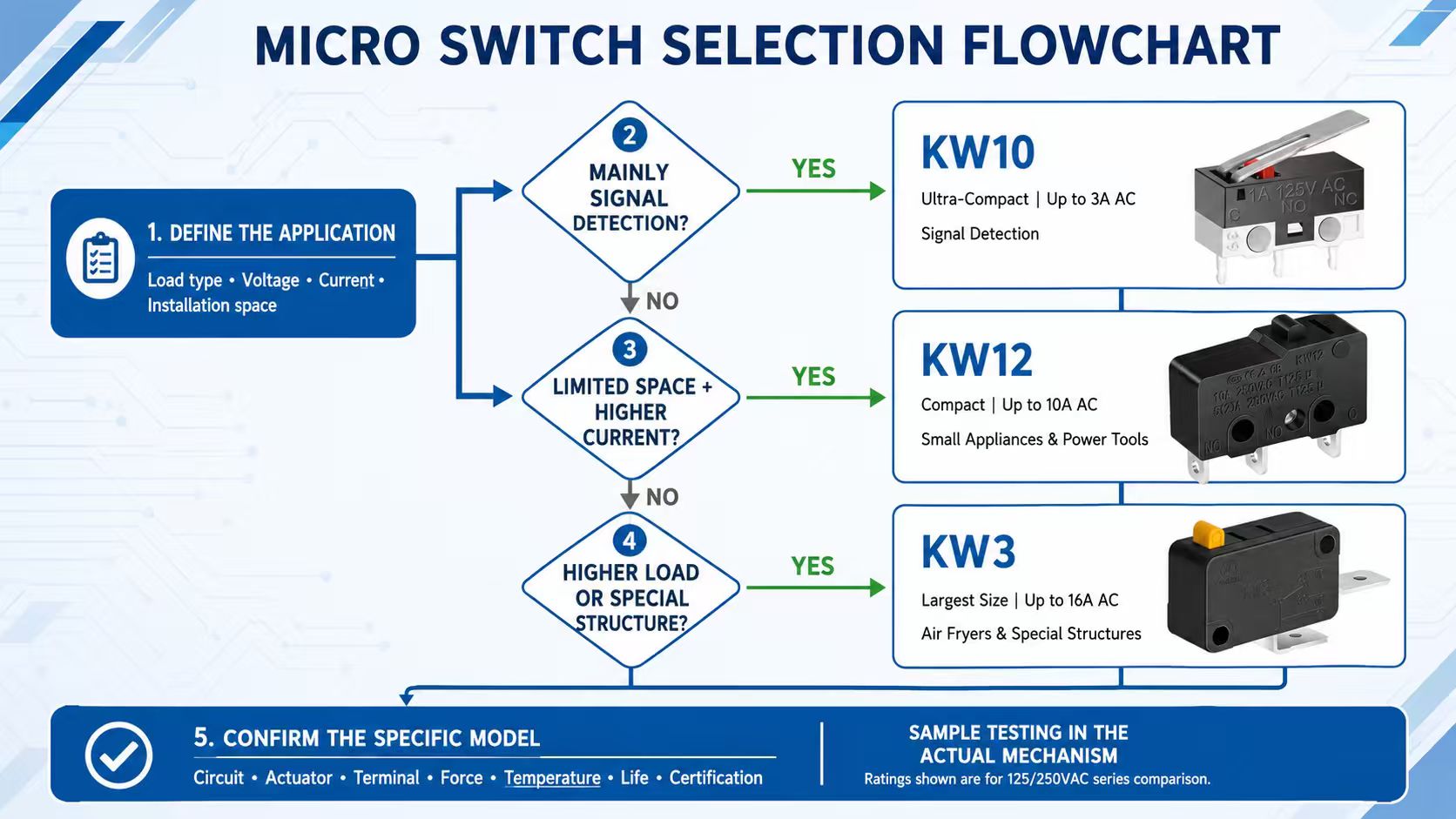
A snap-action micro switch must meet mechanical and electrical requirements. Define the required action first to avoid unnecessary high-current switches in low-signal circuits or miniature switches that cannot carry the load.
1. Rated Current and Voltage Must Match the Actual Load
Confirm voltage, current and load type. AC and DC ratings are not interchangeable. Motors, heaters, solenoid valves and lamps may have high inrush current. Ratings: KW3, 0.1–16A 125/250VAC and 0.1–10A 36VDC; KW12, 0.1–10A 125/250VAC and 0.1–5A 36VDC; KW10, 0.1–3A 125/250VAC.
Do not select by series maximum alone. Contact circuit, terminal or actuator differences may mean different specifications. Before mass production, confirm exact model, actual load, installation and sample-test results.
2. Select SPDT, SPST-NO or SPST-NC According to Circuit Logic
SPDT has COM, NO and NC contacts and switches two states with one action. It suits position detection, safety interlocks and designs needing both states. If only one state is needed, use SPST-NO or SPST-NC.
3. Check Actuator Structure, Travel and Operating Force
Provide enough actuator travel for reliable operation without excessive overtravel. Plungers suit direct pressing; straight levers accept wider displacement; roller levers suit cams or sliding parts passing over the switch.
Operating force also matters. A light plastic mechanism may not reliably drive a high-force switch; poor mechanical positioning can cause false triggering even with a low-force switch.
4. Terminal Type Also Affects Mechanical Design
Terminal type affects assembly, maintenance and layout. Confirm harness, solder or PCB mounting and check interference with the housing, PCB or other parts. Main terminal forms are compared below.
5. Operating Temperature Must Cover the Product Environment
The catalog marks KW3 as T105/25T125, KW12 as 25T125 and KW10 as -10 to 60°C. Besides ambient temperature, consider internal heat, low-temperature startup and long continuous operation.
6. Distinguish Electrical Life from Mechanical Life
KW3: electrical life ≥50,000, mechanical ≥1,000,000. KW12: electrical ≥10,000 or ≥50,000 by specification, mechanical ≥1,000,000. KW10: electrical ≥10,000 or ≥50,000, mechanical ≥500,000. Actual life also depends on load, frequency and installation.
7. Confirm Certifications by Target Market and Exact Model
The catalog lists UL, TUV, CQC and CE for KW3 and KW12; KW10 has no separate listing. For export or certification, confirm exact-model documents during selection.
Quick Comparison of KW3, KW12 and KW10 Micro Switches
The three series suit different space and load needs. Table data is from the “2026 Chinese Micro Switch Selection Catalog” for preliminary screening; confirm exact-model specifications and load before production.
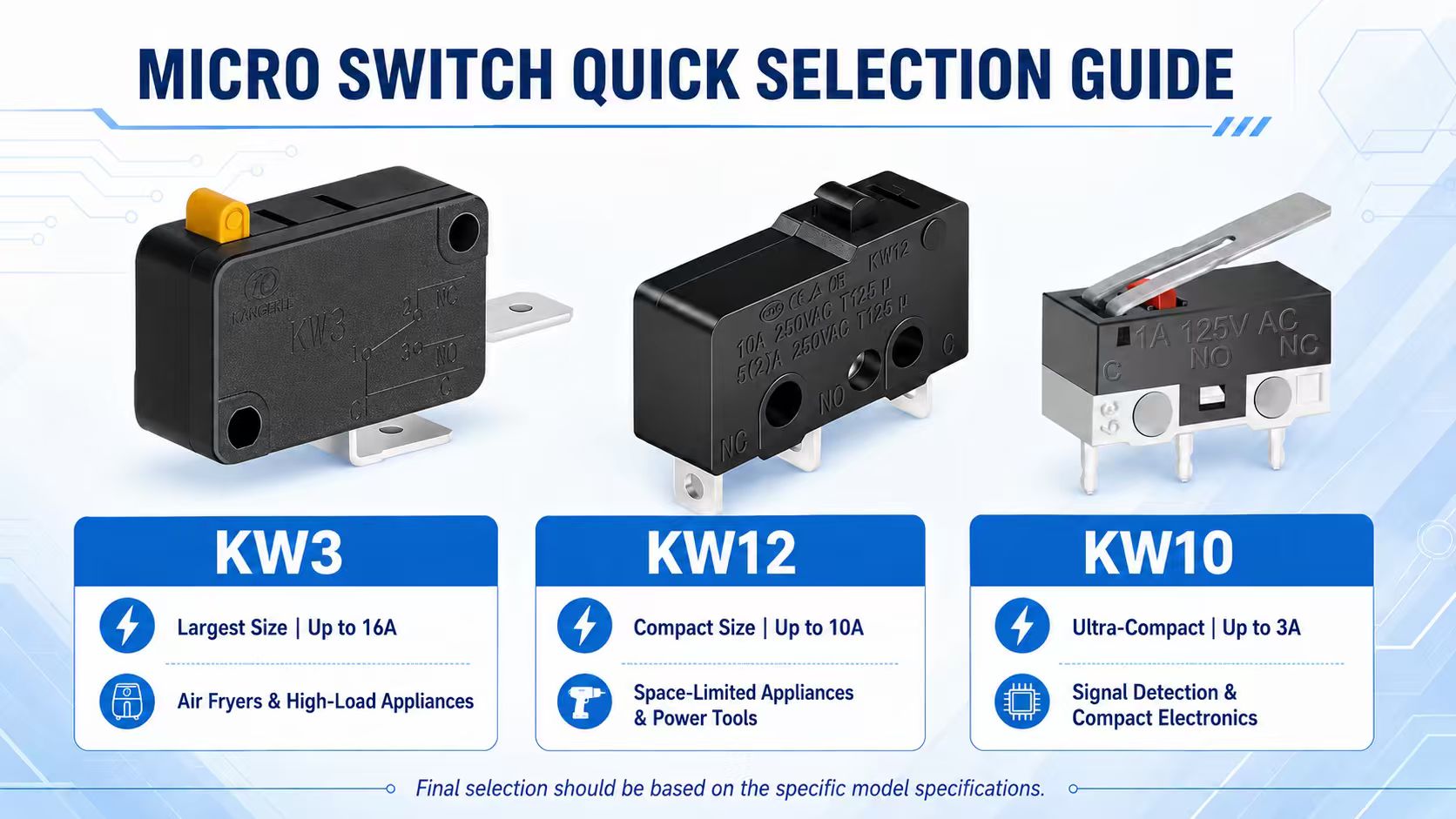
Quick selection: higher-load appliances with enough space: KW3; compact appliances or power tools needing higher current: KW12; signal detection: KW10. Final selection must verify exact-model ratings, dimensions and actuation.
| Series / Type | Rating | Leben | Main Selection Features |
| KW3 | 0.1–16A 125/250VAC; 0.1–10A 36VDC |
Electrical ≥50,000; Mechanical ≥1,000,000 |
T105/25T125; 30–350 gf; UL/TÜV/CQC/CE |
| KW12 | 0.1–10A 125/250VAC; 0.1–5A 36VDC |
Electrical ≥10,000/50,000; Mechanical ≥1,000,000 |
25T125; ≤200 gf; UL/TÜV/CQC/CE |
| KW10 | 0.1–3A 125/250VAC | Electrical ≥10,000/50,000; Mechanical ≥500,000 |
-10 to 60°C; ≤200 gf; Certification: confirm exact model |
| KW3 Anti-Tip Type | Confirm exact model | Confirm exact model | Detects equipment tilt or position changes |
| KW3 Dual-Switch Type | Confirm exact model | Confirm exact model | One mechanical action operates two switches |
KW3: Largest of the Three, Commonly Used in Appliances Such as Air Fryers
KW3 is rated 0.1–16A 125/250VAC and 0.1–10A 36VDC, supporting SPDT, SPST-NO and SPST-NC. Force options are 30, 60, 100, 150, 200 and 350 gf, with plunger, lever, curved and roller actuators.
KW3 is marked T105/25T125; electrical life ≥50,000 and mechanical life ≥1,000,000. UL, TUV, CQC and CE are listed. The largest series, it is used for air-fryer doors, heater anti-tip protection, washing-machine lids, water-tank detection and special structures.
KW12: Smaller than KW3, for Limited Space and Relatively High Current
KW12 is rated 0.1–10A 125/250VAC and 0.1–5A 36VDC, with force ≤200 gf. It supports SPDT, SPST-NO and SPST-NC, with solder, 110 quick-connect, PCB and side PCB terminals, plus plunger, lever, curved and roller actuators.
KW12 is marked 25T125. Electrical life is ≥10,000 or ≥50,000 by specification; mechanical life ≥1,000,000. UL, TUV, CQC and CE are listed. Smaller than KW3, it suits compact appliances and power-tool limit, interlock or position detection.
KW10: Ultra-Miniature Structure, Generally for Signal Detection
KW10 is rated 0.1–3A 125/250VAC, with force ≤200 gf, supporting SPDT, SPST-NO and SPST-NC. Options include PCB, side PCB and solder terminals, plus plunger, lever, curved and roller actuators.
KW10 operates at -10 to 60°C. Electrical life is ≥10,000 or ≥50,000 by specification; mechanical life ≥500,000. The smallest series, it is mainly for signal detection in ETC, mice, toys, smart locks and small controls; certification depends on model.
How to Select Terminals and Pin Configurations for KW3, KW12 and KW10?
Terminal forms are also called “pin configurations.” Width, length and exit direction affect harness connection, PCB layout and assembly. The table lists main choices.
| Serie | Main Terminal / Pin Options | Quick Selection Tips |
| KW3 | 187 quick-connect (0.8/0.5 mm), 250 quick-connect (straight/bent), solder, bent, side-exit and T-type terminals, etc. | Many terminal directions; for harnesses or internal routing. For air fryers, check terminal width, wiring position and housing clearance. |
| KW12 | Solder (3.5/3.2), 110 quick-connect, PCB and left/right side PCB terminals, etc. | For compact appliances or power tools. Use PCB terminals for direct mounting; if height is limited, compare side PCB terminals. |
| KW10 | PCB, long PCB, left/right side PCB and solder terminals, etc. | Mainly for signal detection and small PCBs. Select by PCB direction, board thickness, pad position and installation height. |
Common Terminal Forms
Quick-connect terminal: connects easily to matching receptacles or wire harnesses and suits products requiring efficient assembly and maintenance.
Solder terminal: suitable for directly soldering wires; reserve working space and control soldering temperature and time.
PCB terminal: mounts directly on the PCB and suits batch assembly; check pin pitch, hole diameter and terminal length.
Left/right side PCB terminal: suits height-limited structures or side-oriented PCB layouts and reduces space required above the switch.
Upward-bent, downward-bent or side-exit terminal: mainly used to avoid housings, fasteners or other components and better match internal wiring direction.
Selection note: terminal name alone is insufficient. One type may differ in width, thickness, length and direction; the part number may depend on circuit, force and lever structure. Verify dimensions and confirm by sample installation.
Quick Micro Switch Selection by Application
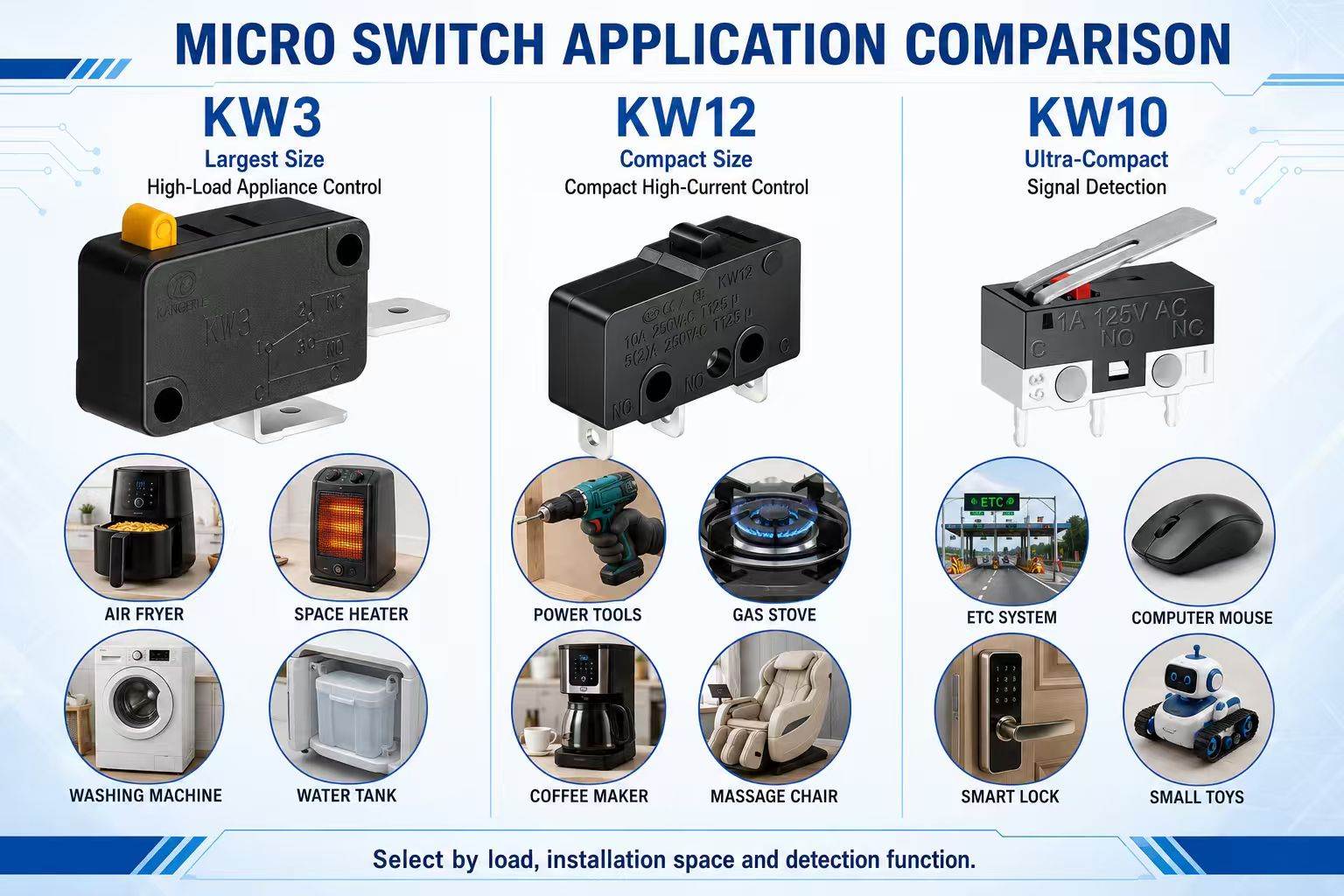
If the customer provides the application first, use load, space and actuation to narrow options. The table is for preliminary communication and does not replace exact-model drawings or sample tests.
| Serie | Gängige Anwendungen | Quick Selection Tips |
| KW3 | Air-fryer door control, heater anti-tip protection, washing-machine lids, water-tank position, coffee machines, higher-load appliance control | Largest; often used in air fryers; for sufficient space, higher loads or special structures |
| KW12 | Compact-appliance door control, gas-stove ignition, massage-chair position control, power-tool limit or safety interlock | Smaller than KW3; for compact appliances or power tools needing relatively high current |
| KW10 | ETC equipment, computer mice, small toys, parcel lockers, smart locks, small control mechanisms | Smallest; generally for signal detection |
Application note: one device may use different series because voltage, current, mounting position or control logic differs. For quotations or samples, provide load, dimensions, terminals and actuator requirements.
Further Narrowing by Detection Function
- Appliance door control and power interlocks: for higher-load structures with enough space, check KW3; for compact appliances or power tools needing higher current, check KW12.
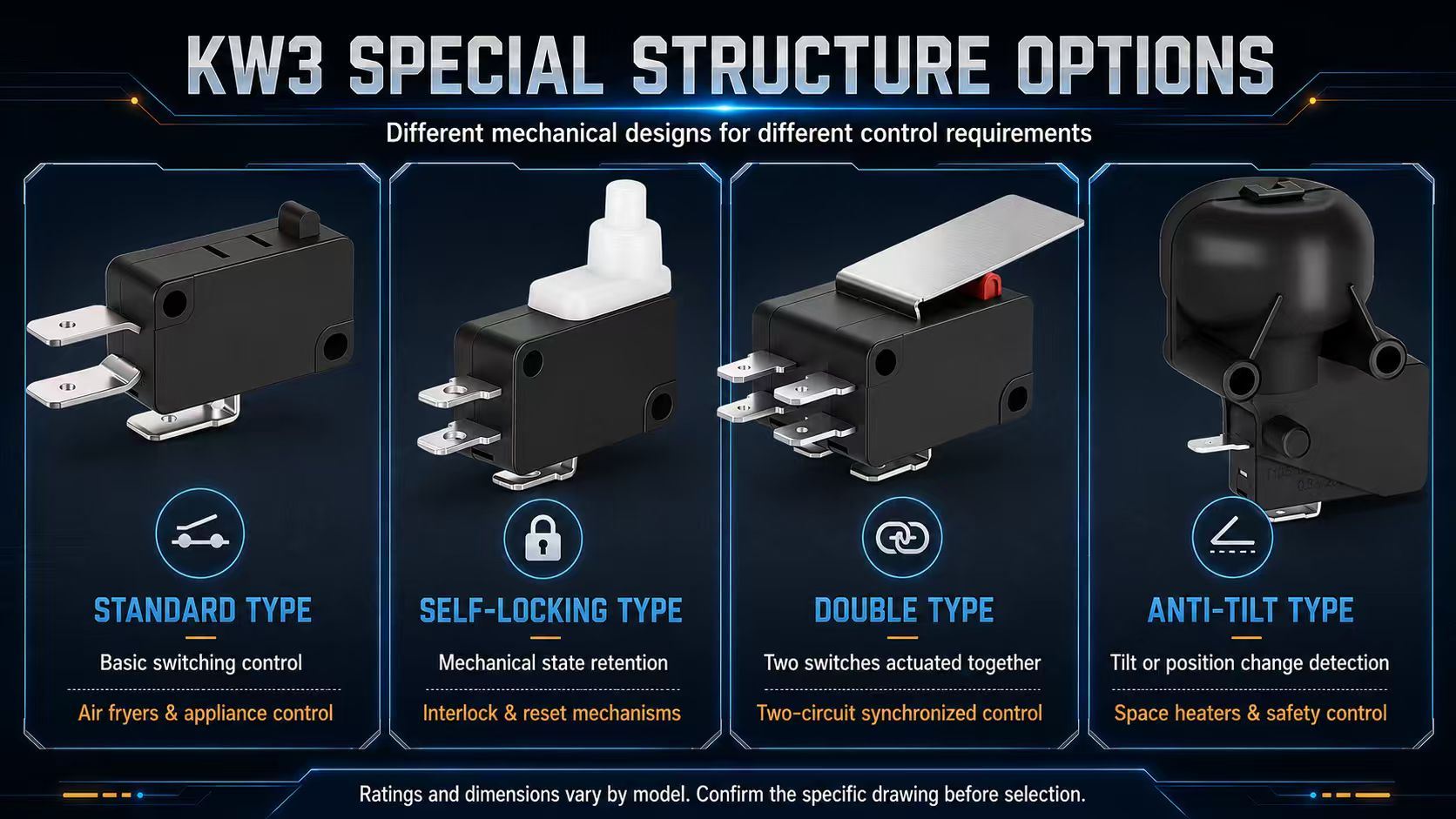
- Tip-over or position-change detection: for heaters and other equipment requiring tip-over detection, check the KW3 anti-tip type first and confirm mounting direction, trigger angle and control circuit.
- Two circuits switching together: if one mechanical action must operate two switches, check the KW3 dual-switch type and verify contact timing and terminal layout.
- Signal detection: ETC equipment, computer mice, toys, smart locks and small controls can start with KW10, then confirm load, travel and life for the exact model.
KW3 Anti-Tip Type: for Tip-Over Detection in Heaters and Similar Equipment
The KW3 anti-tip type uses a dedicated mechanism to detect tilt or position changes in equipment such as heaters. It must match mounting position, travel and control circuit.
Confirm trigger angle, mounting direction, electrical load and safety circuit. Use catalog drawings and sample tests for dimensions and operating range to avoid unstable triggering.
KW3 Dual-Switch Type: One Mechanical Action Operates Two Switches
The KW3 dual-switch type uses one shared actuator for two switches when two contact groups must switch together. Confirm circuit and terminal arrangement from the model drawing.
Compared with installing two independent switches, the dual structure can reduce alignment work. During design validation, still check contact timing, insulation requirements, installation space and terminal layout.
Practical Micro Switch Selection Checklist
Before requesting samples, drawings or quotations, prepare the following information:
- Supply voltage and maximum switching current
- AC or DC load, and whether it is resistive, motor, lamp, heater or inductive
- Required circuit: SPDT, SPST-NO or SPST-NC
- Available installation space, switch dimensions and mounting-hole positions
- Actuation method, movement direction, travel and operating force
- Solder, quick-connect or PCB terminal requirements
- Operating temperature and dust, humidity or vibration conditions
- Mechanical-life and electrical-life targets
- Safety certifications required by the target market
Complete information improves matching. “SPDT, 250VAC, straight lever, quick-connect terminal, for appliance door interlock” matches more easily than “a 5A micro switch.”
Zhejiang KANGERLE Electronics: Supplier of KW3, KW12 and KW10 Micro Switches
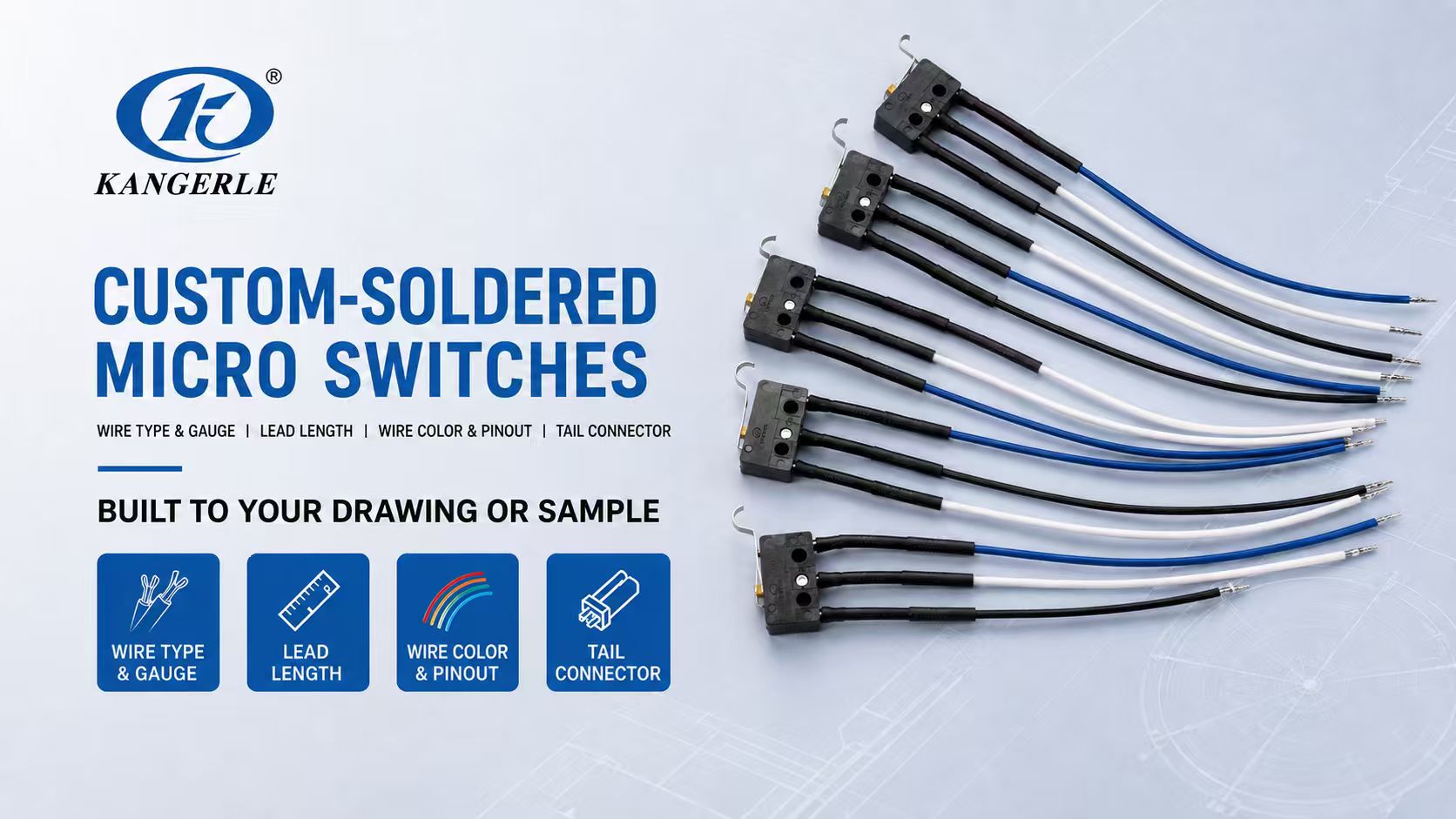
Zhejiang KANGERLE Electronics Co., Ltd. supplies KW3, KW12 and KW10 series micro switches. The catalog covers ratings, operating force, terminal types, actuator forms, contact circuits, life, certifications and main dimensions.
Depending on the installation structure, customers can select standard plungers, levers of different lengths, curved levers, roller levers, and quick-connect, solder, PCB or side-PCB terminals. KANGERLE microswitches can be customized with wire bonding, including wire length, wire number, and specified connectors. Before mass production, confirm the exact model drawing and test travel, operating force and load in the actual mechanism.
Summary: How Should KW3, KW12 and KW10 Be Selected?
Select by application, not model number. KW3 is largest with the widest current range, commonly used in air fryers; KW12 is smaller for compact appliances or power tools needing higher current; KW10 is smallest and mainly for signal detection.
Once load type, actuator structure and terminal requirements are clear, options narrow quickly. Before production, test samples in the actual mechanism.
Häufig gestellte Fragen (FAQ)
Which Micro Switch Should Be Used for 250V Appliances?
Consider current, load type, space and actuator structure. KW3 is 0.1–16A 125/250VAC, KW12 0.1–10A 125/250VAC and KW10 0.1–3A 125/250VAC. Select by load and verify the exact-model rating.
When Is an SPDT Micro Switch Needed?
Use SPDT when one actuator must provide normally open and normally closed states. It is commonly used for position detection, safety interlocks and changeover control.
Can KW10 Be Used in 125V or 250V AC Circuits?
Yes. KW10 is rated 0.1–3A 125/250VAC, but confirm actual current, load type and exact model. Do not exceed the rating or select only by the series maximum.
What Does the KW3 Anti-Tip Type Do?
The KW3 anti-tip type detects tilt or position changes and sends a signal to the control circuit. Confirm trigger angle, mounting direction and control logic from catalog drawings and product design.
What Structures Suit the KW3 Dual-Switch Type?
The KW3 dual-switch type suits structures where one mechanical action operates two switches. Confirm both contact circuits, operating timing, terminal layout and installation space.
How Should Terminals Be Selected for KW3, KW12 and KW10?
Confirm wiring and mounting direction: for harnesses, use quick-connect or solder terminals; for direct PCB mounting, use PCB terminals; if height is limited, compare side PCB terminals. Final selection should follow the drawing, PCB layout and sample test.
How Do the Operating Temperatures of KW3, KW12 and KW10 Differ?
KW3 is marked T105/25T125, KW12 25T125 and KW10 -10 to 60°C. Select according to internal temperature and environment and confirm the exact model.
Do KW3, KW12 and KW10 All Have UL Certification?
Do not assume certification by series. UL, TUV, CQC and CE are listed for KW3 and KW12; KW10 has no separate listing. If required, confirm exact-model documents.