

Ein Mikroschalter is small, but it directly affects position detection, safety interlocking, and operating reliability. Standard micro switches are suitable for dry, protected environments. When a switch may be exposed to moisture, dust, splashes, or contaminants, a waterproof micro switch is usually a safer choice.
Both types use a snap-action mechanism. Once the button, plunger, or lever reaches the operating point, the internal contacts switch rapidly. Selection should therefore consider not only waterproofing, but also current, voltage, load type, installation space, operating travel, terminal type, and service life.
What Is a Standard Micro Switch?
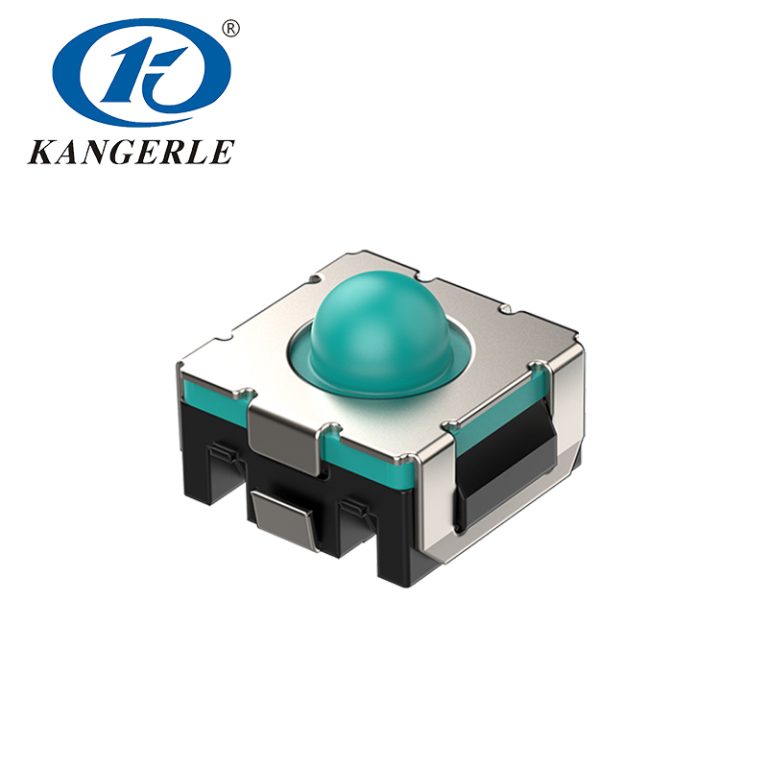
A standard micro switch, also called a snap-action switch, changes its internal contacts quickly at the operating point even when the external lever or button moves slowly. It is widely used for position detection, door control, safety interlocking, and limit control.
Common actuator types include push buttons, plungers, straight levers, bent levers, and roller levers. Each design affects operating force, travel, and installation method.
Where are standard micro switches suitable?
They are generally sufficient when installed inside a product enclosure in a dry area without direct exposure to water, oil, or heavy dust. Typical applications include:
- Door detection in microwave ovens, air fryers, and sterilizers
- Position or travel detection inside printers and vending machines
- Safety interlocks for cabinets, covers, and protective doors
- Limit control in indoor panels and enclosed equipment
- Switching in small appliances and power tools protected by housings
If the equipment enclosure already provides adequate protection, using an IP67 waterproof switch may increase cost and installation complexity without providing a significant benefit.
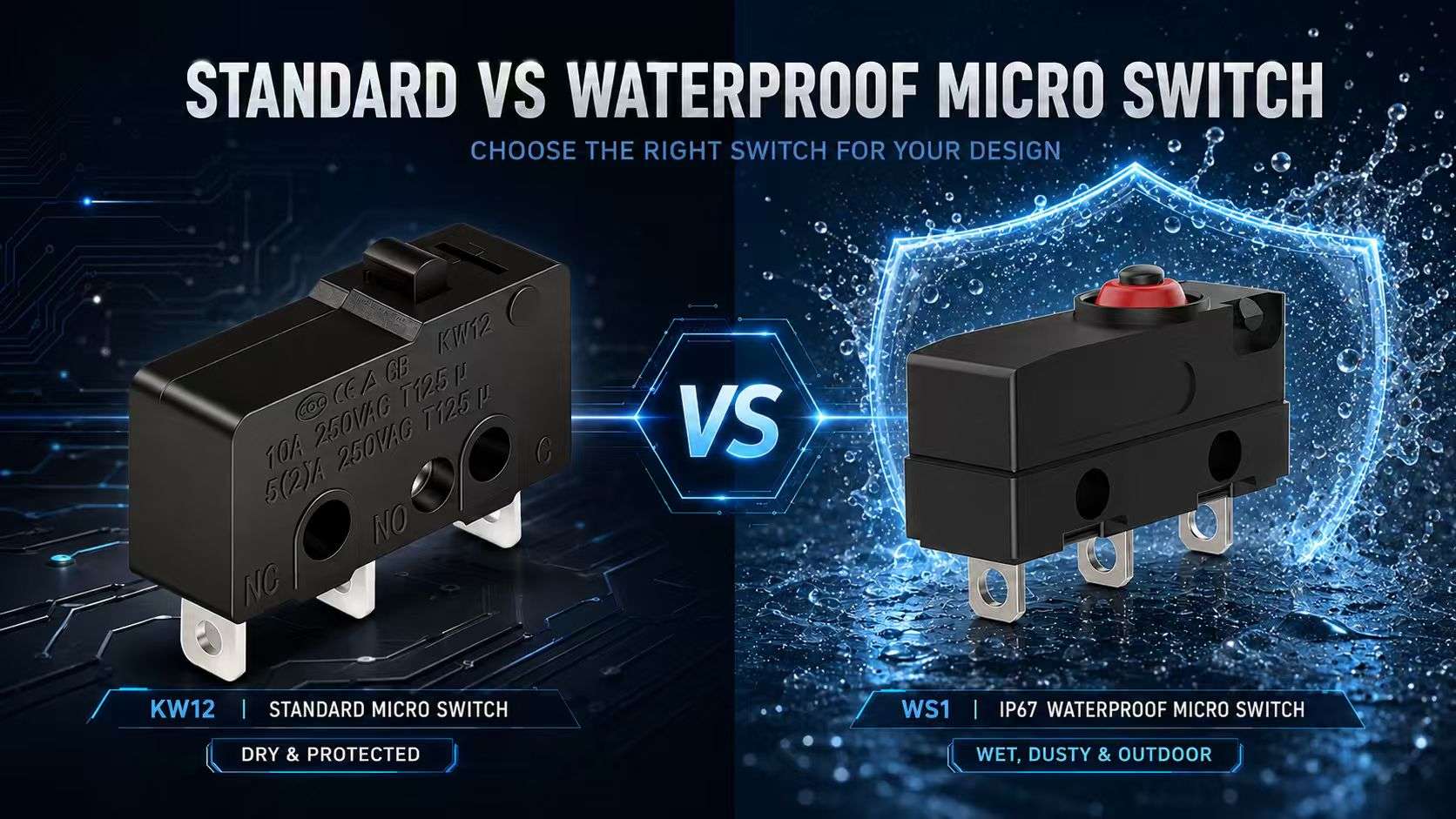
KANGERLE’s KW3 is a relatively large standard micro switch with current ratings up to 21A, commonly used in air fryers, heaters, and other appliances requiring higher load capacity. The smaller KW12 supports up to 10A and is suitable for compact appliances and power tools. Final specifications should always be confirmed in the relevant datasheet or selection catalog.
Was ist ein wasserdichter Mikroschalter?
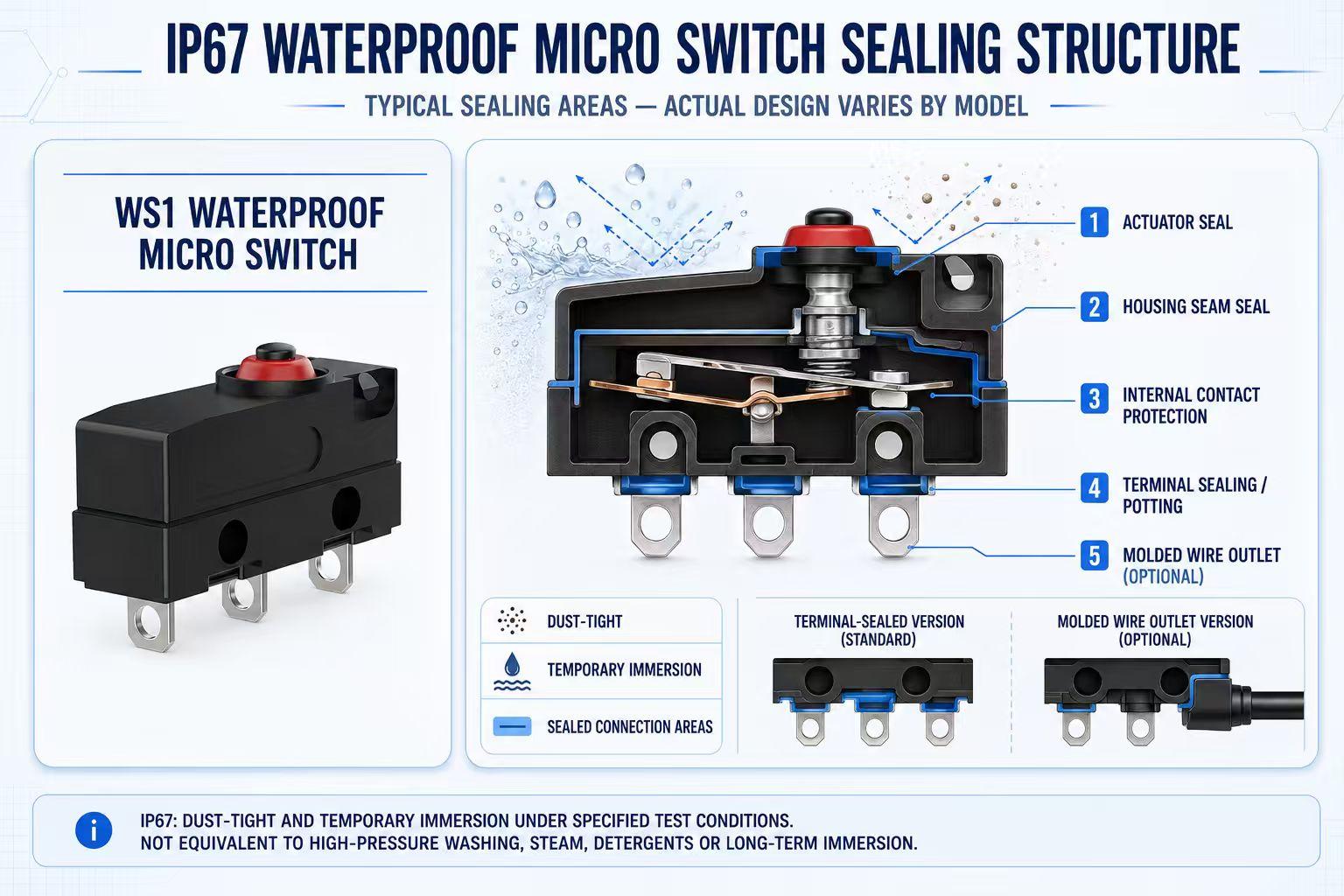
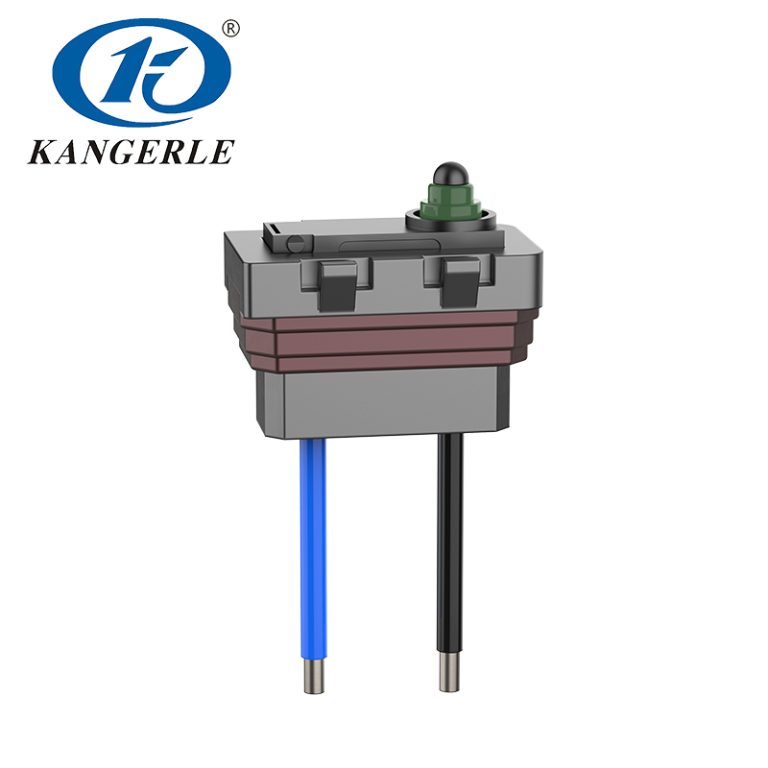
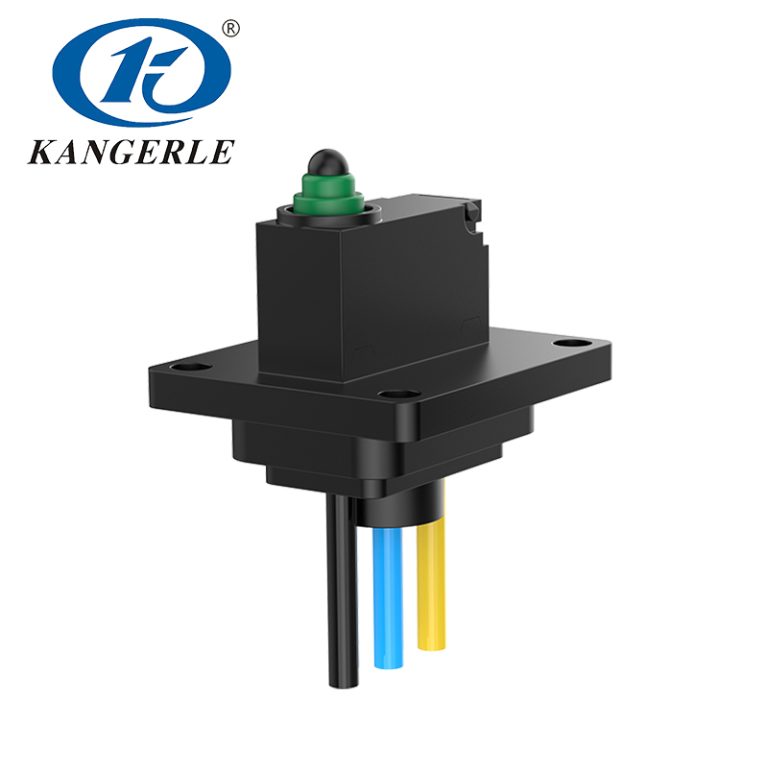
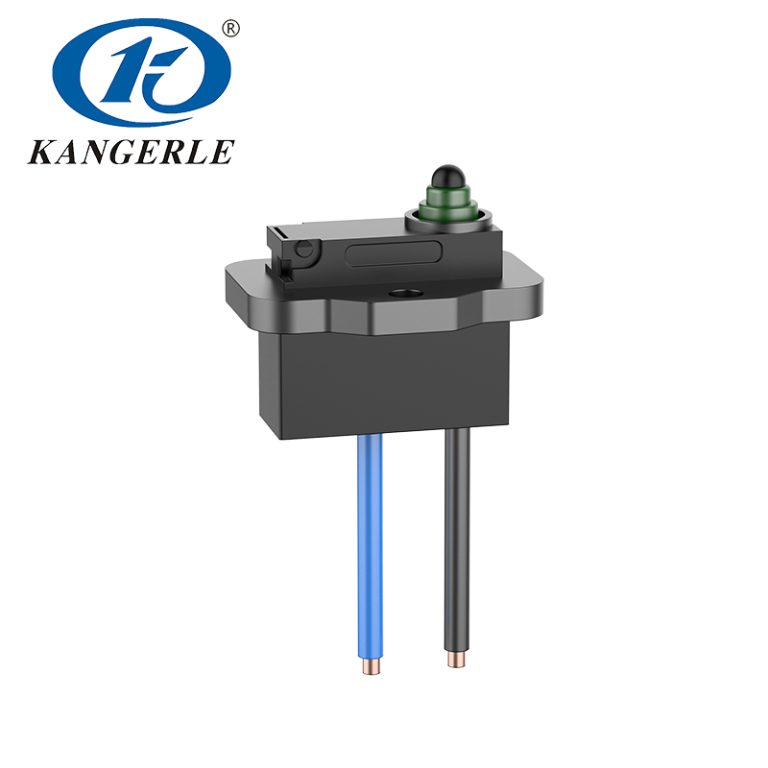
A waterproof micro switch works on the same principle as a standard micro switch, but incorporates sealing around the housing, actuator, terminals, or cable outlet to reduce the entry of water, dust, and other contaminants.
Depending on the design, sealing may be applied to housing joints, the actuator area, terminals, or wire exits. Potted cables or molded sealed leads can also reduce moisture and dust entering through the connection area.
What does IP67 mean?
The IP rating describes protection against solid particles and water under specified test conditions. In IP67, “6” indicates dust-tight protection, while “7” indicates resistance to temporary immersion under defined conditions.
IP67 does not mean the switch can be used indefinitely in every wet environment. Detergents, oil, steam, high-pressure washing, vibration, and repeated temperature cycling can create additional requirements. Actual protection also depends on connectors, cable routing, mounting brackets, and lever preload.
Where should waterproof micro switches be considered?
They are generally preferred when:
- The switch may contact water or condensation, such as in washing machines, dishwashers, ice makers, pumps, or areas near water lines.
- Equipment requires frequent cleaning, such as floor scrubbers, robotic cleaners, cleaning machines, or food-processing equipment.
- The switch is used in automotive or outdoor equipment, including door locks, tailgate locks, charging connectors, brake-light switches, and outdoor controls.
- Dust or particles are common in the operating environment.
- The mechanism is exposed to vibration and frequent operation.
- Terminals or cable outlets also require sealing.
If the switch is always installed in a dry, enclosed position protected by the product housing, a standard micro switch is usually more economical. Selection should be based on the actual installation point, not simply on whether the equipment is used indoors.
Main Differences Between Standard and Waterproof Micro Switches
| Artikel | Standard-Mikroschalter | Wasserdichter Mikroschalter |
| Schutz | Mainly relies on equipment housing | Built-in sealing structure |
| Typical protection | Usually no specific water-ingress rating | IP67 options commonly available |
| Terminals | PCB pins, solder terminals, quick-connect tabs | Sealed terminals, potted cables, molded leads |
| Typical environment | Indoor, dry, enclosed equipment | Automotive, cleaning, wet, or dusty environments |
| Main selection focus | Cost, load capacity, actuator structure | Combined environmental, electrical, and mechanical requirements |
Gehäuse und Abdichtung
Standard switches normally rely on the equipment enclosure for protection. Waterproof switches are designed to protect their own contacts and snap-action mechanism. This difference can directly affect long-term reliability near washing-machine doors, automotive locks, or condensation-prone locations.
Waterproofing does not mean higher current
Ingress protection and load capacity are separate specifications. A small IP67 switch may be intended mainly for signal detection, while a larger standard switch may carry much higher current.
Motors, solenoids, lamps, and heaters may generate inrush current or arcing during startup. Voltage, current, load type, and switching frequency must therefore be evaluated together.
Lever design and operating travel also matter
Straight or bent levers can reduce required operating force. Roller levers suit cams and sliders, while buttons or plungers are better for direct actuation with controlled travel.
Operating position, release position, overtravel, operating force, and motion direction must match the mechanism. Insufficient travel can cause unstable contact, while excessive travel may keep the switch under continuous pressure and shorten mechanical life.
Typical Applications of Waterproof Micro Switches
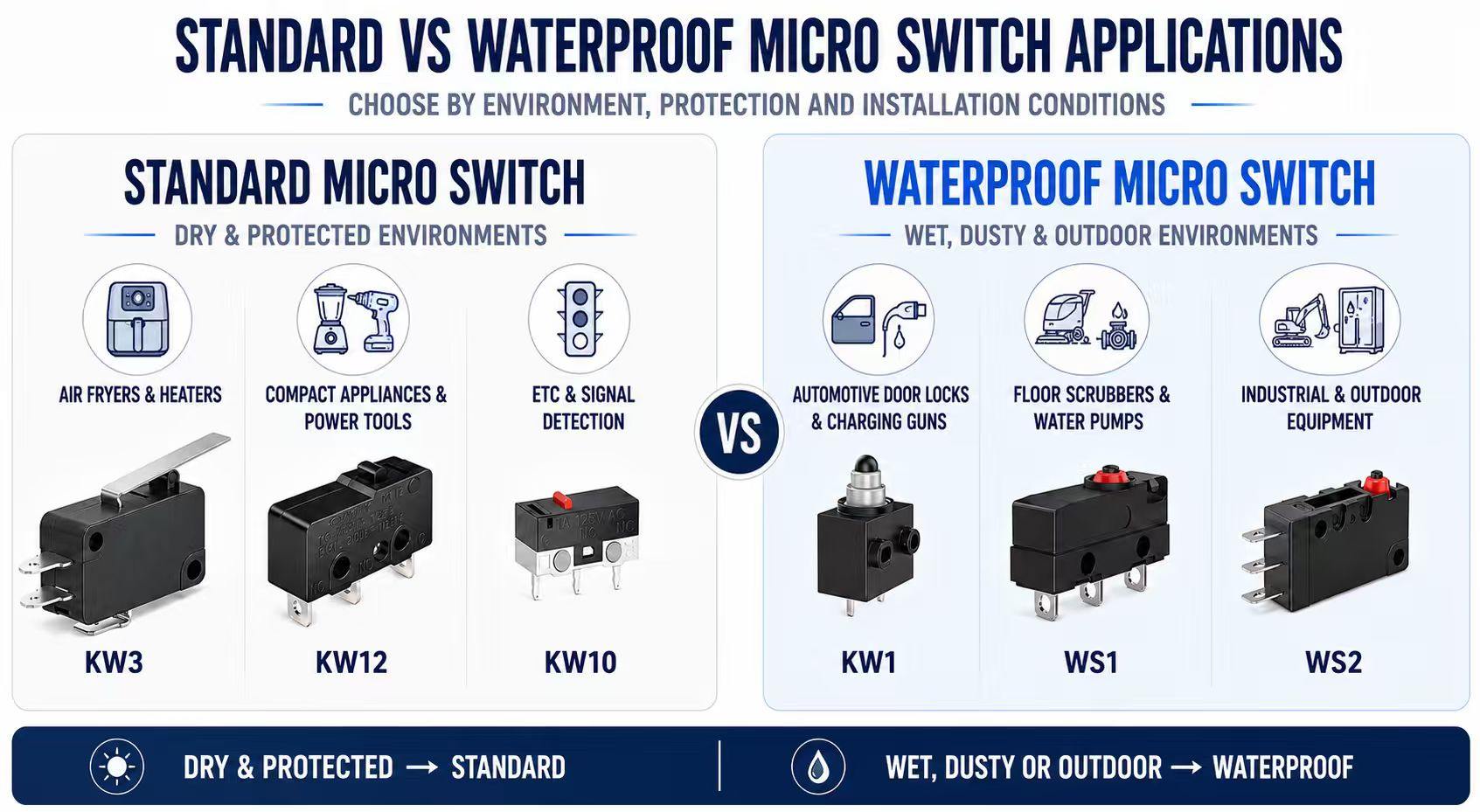
Waterproof micro switch applications are not limited to outdoor use. A switch inside a product may still face condensation, grease, wash water, or dust.
Automotive and mobility equipment
Door locks, tailgate locks, seat mechanisms, charging connectors, brake-light switches, and position sensors may face moisture, dust, vibration, and temperature changes. Compact or subminiature IP67 switches are suitable where installation space is limited.
Appliances, cleaning equipment, and industrial equipment
Dishwashers, washing machines, ice makers, floor scrubbers, robotic cleaners, pumps, access-control equipment, and small machinery often require door detection, safety interlocking, position feedback, or limit control.
KANGERLE offers waterproof series including KW1, KW2, KW7, WS1, and WS2, covering subminiature, medium-size, and higher-load applications. Final selection should still be based on dimensions, rated load, lever type, terminals, and cable configuration.
How to Select the Right Micro Switch
Check the actual operating conditions before deciding between a standard and waterproof type:
- Will the switch face water, condensation, dust, oil, or cleaning fluid?
- What voltage and current will pass through the contacts?
- Is the load resistive, inductive, or a low-level signal?
- How much actuator travel is available?
- Is a plunger, lever, or roller lever better?
- Are PCB pins, solder terminals, quick-connect tabs, or wires required?
- How often will the switch cycle?
- Does the finished assembly need IP67 protection?
In simple terms, a standard micro switch is usually enough inside a dry, enclosed housing. For locations near leakage paths, vehicle bodies, cleaning areas, or dusty moving mechanisms, a waterproof micro switch should receive priority.
KANGERLE Quick Selection Guide
| Requirement | Serie | Main Feature | Typical Applications |
| Large size, high current | KW3 | Up to 21A | Air fryers, heaters, washing-machine door control |
| Limited space, higher current | KW12 | Smaller than KW3, up to 10A | Small appliances, power tools, sterilizers |
| Low-current signal detection | KW10 | 0.1–3A | ETC devices, toys, signal detection |
| Compact waterproof detection | KW1, KW7 | Small size, IP67 options | Automotive locks, tailgates, charging connectors |
| Medium waterproof control | KW2, WS1 | Multiple lever, terminal, and cable options | Pumps, floor scrubbers, brake-light switches |
| Larger waterproof applications | WS2 | For larger installation spaces and loads | Industrial and cleaning equipment |
The table is intended only for preliminary selection. Current, IP rating, dimensions, life, and certifications should be confirmed using the latest datasheet.
Quick selection by application
For air-fryer door control, KW3 is usually considered first. For compact appliances requiring relatively high current, compare KW12. For ETC or low-level signal detection, KW10 may be suitable. Automotive locks and charging connectors should prioritize waterproof series such as KW1, KW2, or KW7. Floor scrubbers, pumps, and ice makers normally require waterproof switches because of condensation, cleaning liquids, and cable-sealing requirements.
Replacing a standard switch with a waterproof type
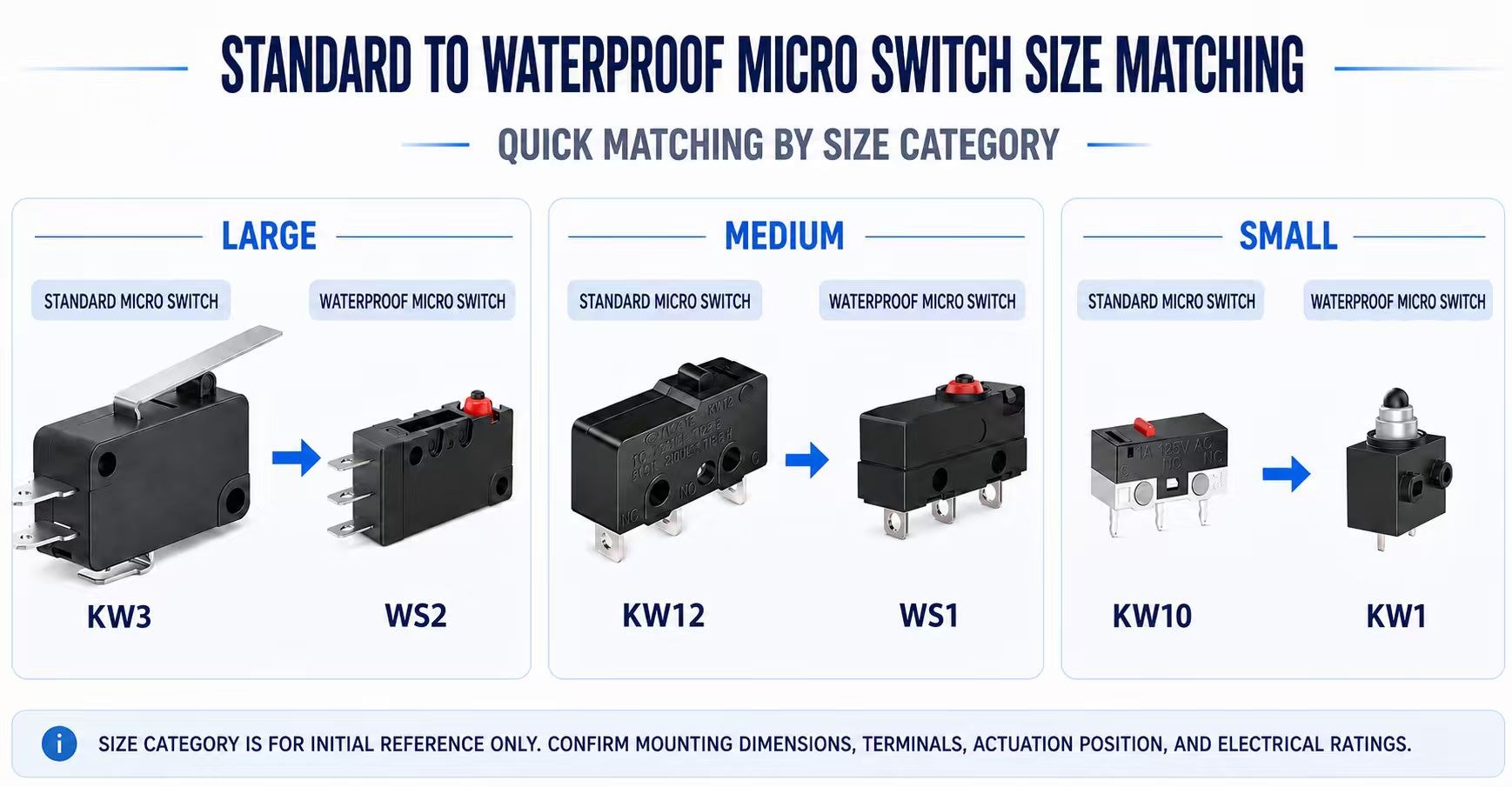
A preliminary size-based comparison can be made as follows:
- KW3 → WS2: both are larger-size series. WS2 can be considered when waterproofing is required, but WS2 supports up to 10A while KW3 supports up to 21A.
- KW12 → WS1: both are medium-size series, and both support up to 10A.
- KW10 → KW1: both are compact series. For signal or position detection requiring added waterproof protection, KW1 may be considered. Both are rated at 0.1A in this comparison.
These relationships are only preliminary references and do not mean the switches are directly interchangeable. Dimensions, mounting-hole spacing, actuator position, travel, operating force, terminals, cable direction, voltage, current, and load type must all be checked.
Choosing Levers, Terminals, and Cable Outlets
Common actuator options include buttons or plungers for direct actuation, straight levers for sliders, bent levers for adjusted trigger height, and roller levers for cams, guide rails, and reciprocating mechanisms.
Common connection options include PCB terminals, solder terminals, quick-connect tabs, and sealed or molded cables. Regardless of configuration, operating position, release position, overtravel, and preload should be checked to prevent excessive long-term pressure.
Common Selection Mistakes
Typical mistakes include choosing only by rated current, assuming waterproof switches always carry more current, selecting only by physical size, applying excessive lever preload, sealing only the switch body while leaving connectors unprotected, and treating IP67 as universal waterproof protection.
High-pressure washing, detergents, steam, oil, or long-term immersion require additional verification.
Information to Provide Before Requesting a Quotation
Customers should provide the operating environment, voltage, current, load type, available installation space, mounting dimensions, operating direction and travel, required operating force, actuator type, terminal or cable requirements, IP protection requirements, expected operating life, sample quantity, estimated annual volume, and planned mass-production schedule.
KANGERLE Customization and Selection Support
ZHEJIANG KANGERLE ELECTRONICS CO. LTD began its operations in Wenzhou in the early 1990s, providing switching components for appliances, automobiles, industry, and electronics. This company not only provides basic and waterproof micro switches but also provides detector switches, rocker switches, tactile switches, sliding switches, push button switches, and connectors. Also, KANGERLE offers OEM and ODM projects involving actuators, terminal configuration, wire configuration, electrical requirements, mounting arrangements, and size. Thus helping manufacturers to compare standard switches and IP67 switches on one single project.
Abschluss
Standard and waterproof micro switches both provide rapid contact switching, but they solve different problems. Standard switches are better suited to dry, protected equipment interiors and generally offer broader load options, simpler structures, easier installation, and lower cost. Waterproof switches are more appropriate for environments exposed to moisture, dust, splashes, or contamination.
Correct selection requires environmental protection, electrical load, and mechanical operation to be matched together. Choosing IP67 without an actual waterproofing requirement may increase size and cost, while using an unsealed switch in a wet mechanism may cause unstable signals, contact failure, and reduced equipment life.
Häufig gestellte Fragen
What is the main difference between standard and waterproof micro switches?
Their operating principle is essentially the same. The main difference is the sealing of the housing and cable or terminal area. Standard switches suit dry environments protected by the equipment enclosure, while waterproof switches provide better resistance to moisture and dust.
Where are waterproof micro switches commonly used?
They are widely applied in car positions detection, appliance door interlock, cleaning devices, charging connections, pumps, outdoor control, and machines subjected to condensing, splashing, dusty or dirty environment.
How can I choose one type over the other?
Begin with the real environment first. For switches staying dry and well-protected, the conventional one will usually do just fine. For those that can be moistened or dusty, you need also to look at IP class, sealing technique, actuator, terminals/wiring, electrical load, stroke, and lifetime.
Will an IP67 waterproof micro switch work in high-pressure wash?
No, not necessarily. The IP67 protects from dust and temporary immersing; it is different from the high-pressure water-jet-proof rating. Further testing is needed for high-pressure wash and detergent or long-term immersing.
Is a waterproof micro switch always rated for more current than the non-waterproof one?
No. Waterproof protection and rated electrical load are independent specifications. Some small waterproof switches are mainly used for signal detection, while larger standard switches may support considerably higher current.