
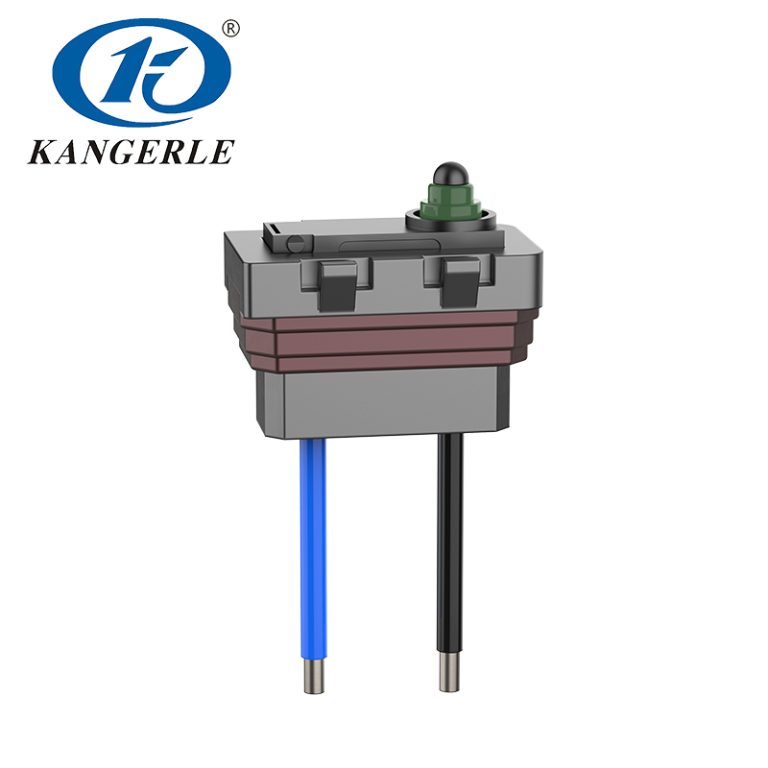
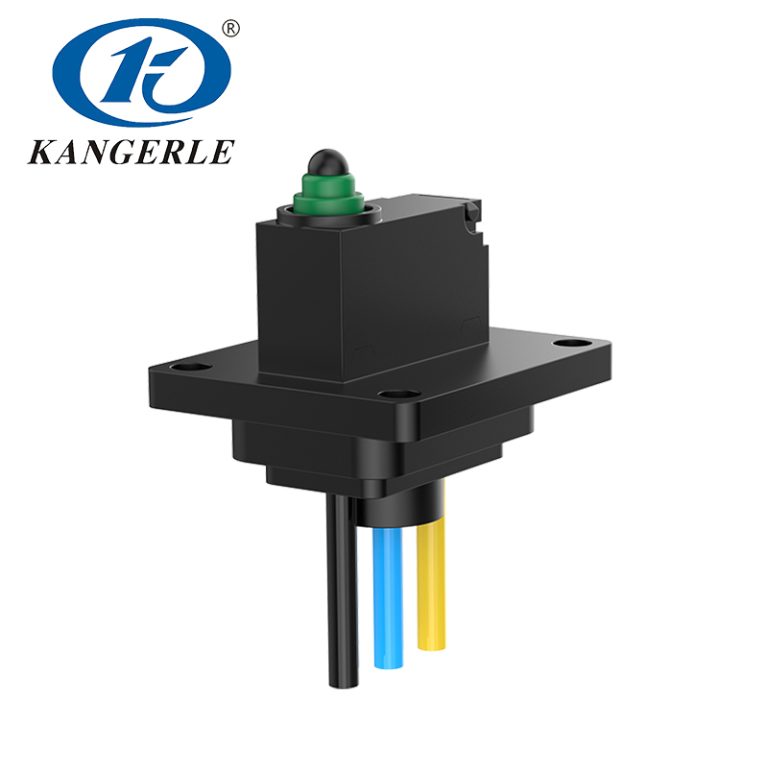
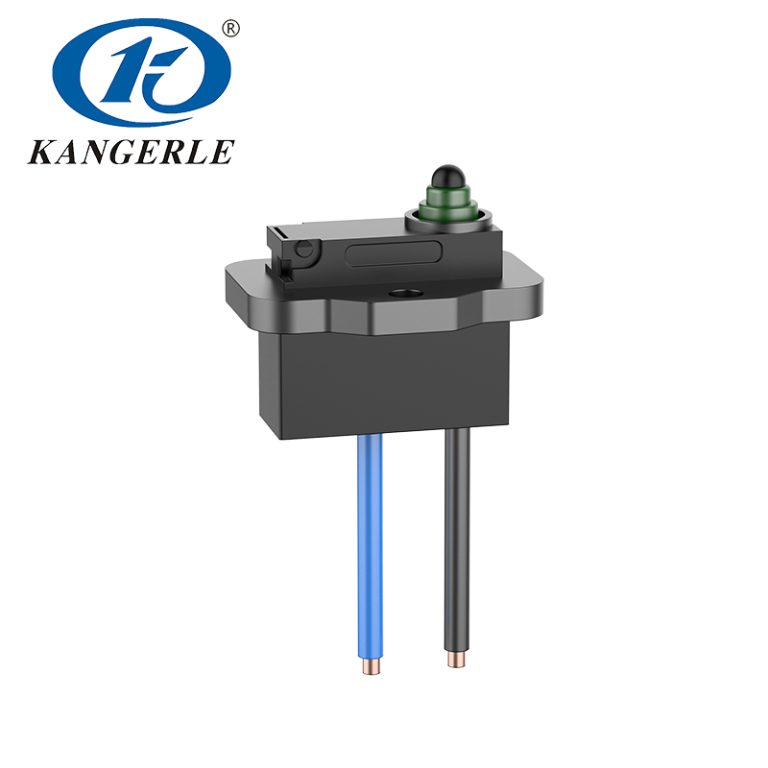

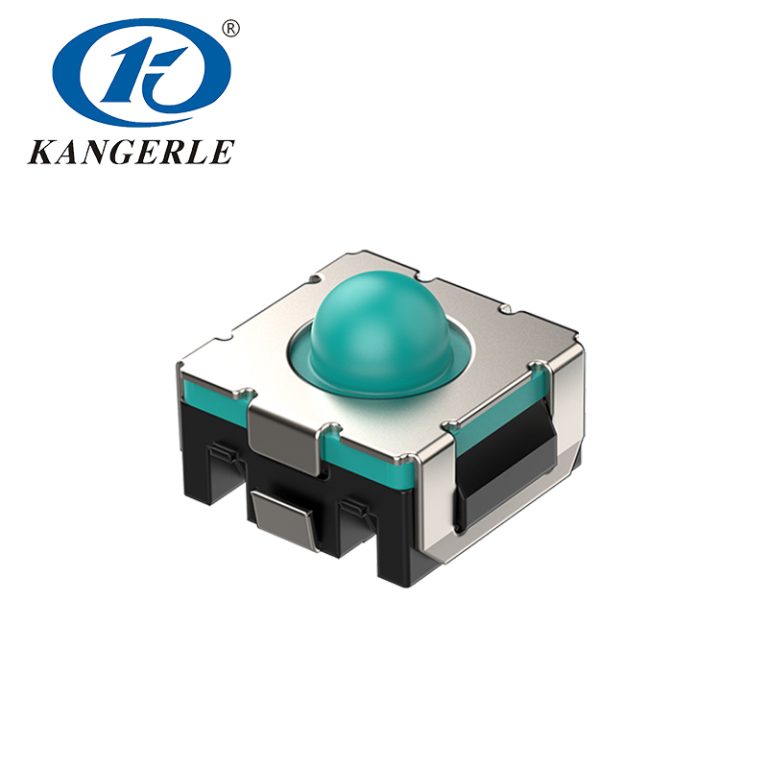
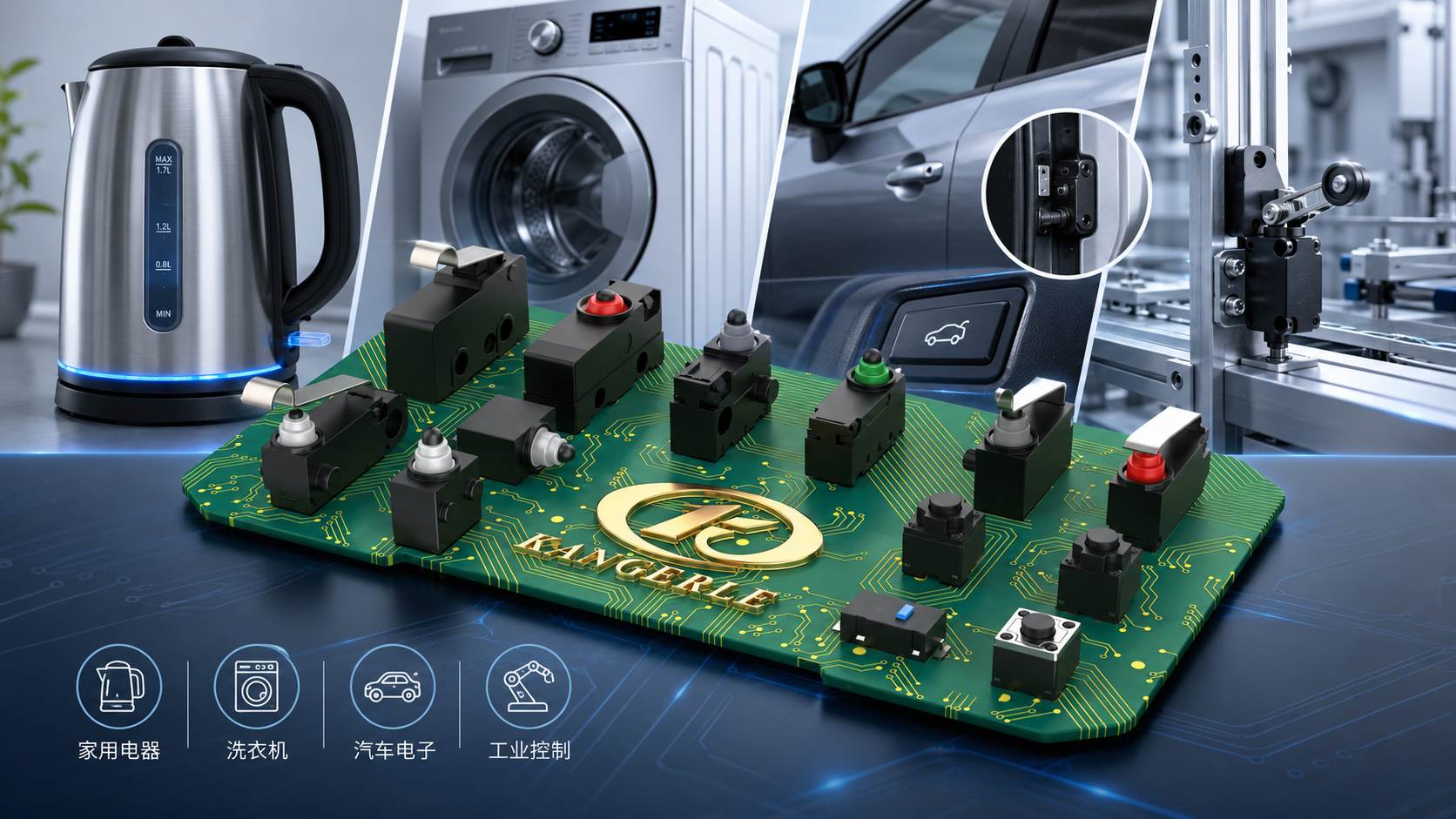
A snap action switch is a small part, but it often decides whether a machine responds cleanly or fails at the moment of use. In a kettle lid, a gas stove, a water heater, a tire inflator, an ice machine, or an industrial limit control point, the switch has to turn a small mechanical movement into a stable electrical signal.
That is why the snap action switch is still widely used in equipment design. It is compact, fast, cost-effective, and easy to build into many structures. More importantly, it gives engineers a clear switching point instead of a slow, uncertain contact movement.
What Is a Snap Action Switch?
Before selecting a snap action micro switch, it helps to know what makes this device different from an ordinary mechanical switch.
Basic Working Idea
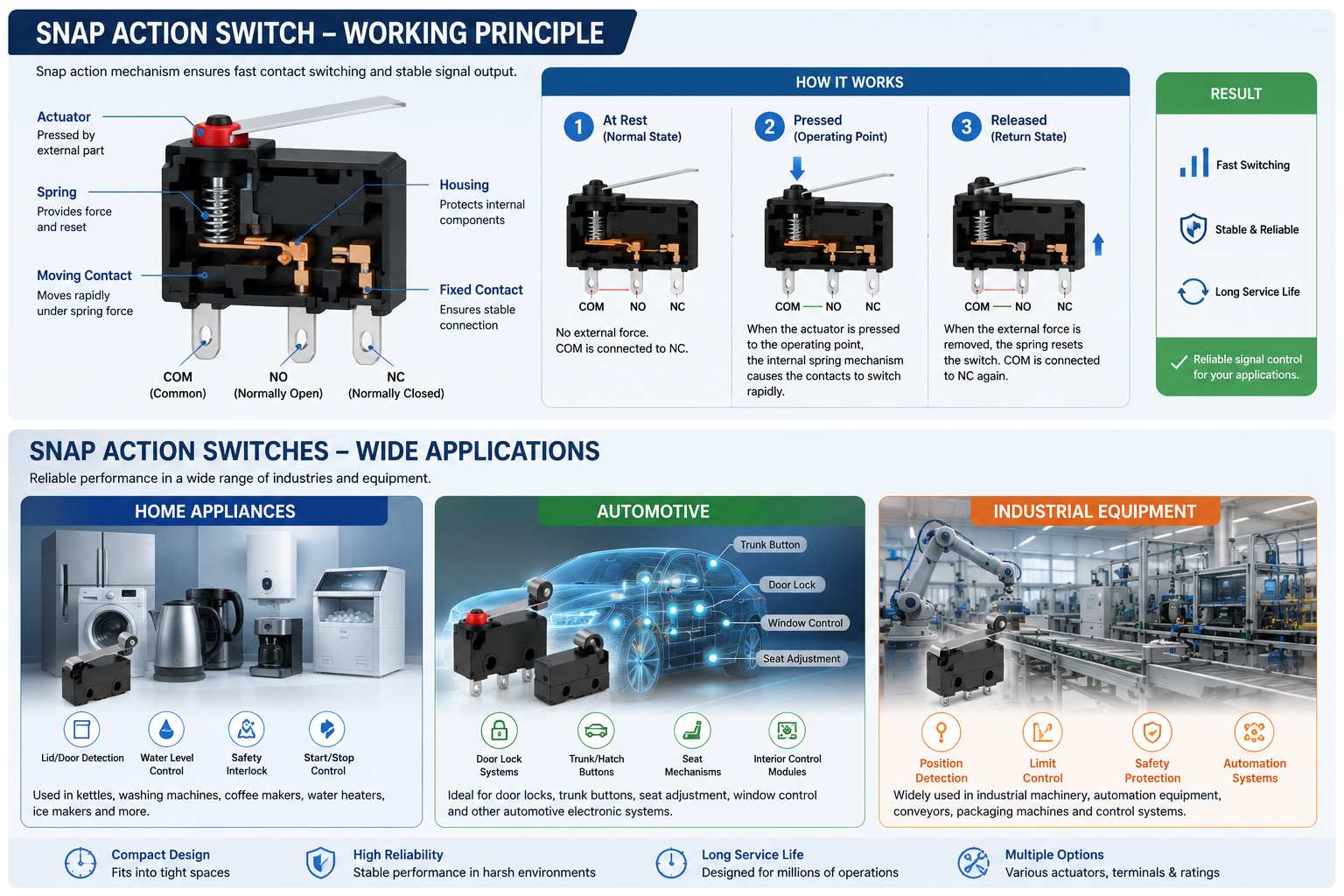
A snap action switch is a mechanical switch that opens or closes a circuit through a fast internal contact movement. External force acts on an actuator, such as a plunger, straight lever, hinge lever, roller lever, or simulated roller hinge lever. Once the actuator reaches the operating point, the internal spring mechanism moves the contact quickly from one state to another.
This quick movement is the reason for the term “snap action.” The value is not only the clicking feel. The real value is fast, repeatable circuit control.
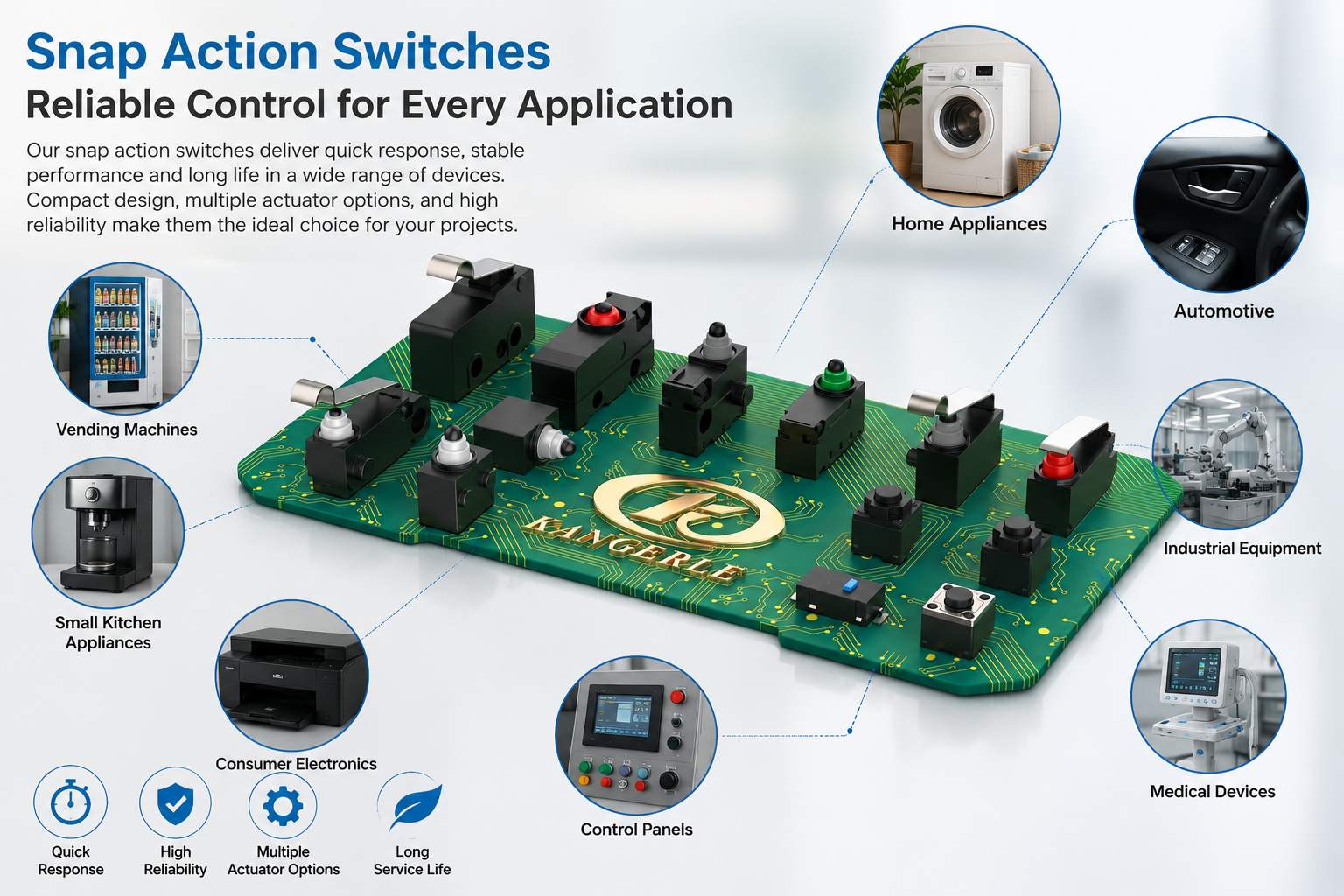
In many product catalogs, the term micro switch is used for small snap action switches. A snap action micro switch is common in appliances, vehicles, control panels, vending equipment, door locks, power tools, and industrial devices where small travel and clear signal output matter.
Why Fast Contact Movement Matters
Slow contact movement can cause unstable signals, contact bounce, heat, or early wear under certain loads. A snap action switch reduces that risk by separating the speed of the contact from the speed of the user’s hand or moving part.
For example, a cam in a small appliance may move slowly. A door latch may press the lever at an angle. A floating part in a water-related device may rise unevenly. The switch still needs to give a clear on/off signal. Snap action helps make that possible.
How Does a Snap Action Micro Switch Work?
A snap action switch looks simple from the outside, but the internal relationship between force, travel, and contact state is the key to proper use.
From Mechanical Force to Electrical Signal
The process usually follows three steps:
- A moving part presses the actuator.
- The actuator transfers force to the internal spring and contact system.
- At the operating point, the contact changes state quickly and controls the circuit.
When the external force is removed, the actuator returns to its original position. The switch then resets and prepares for the next cycle. This makes it suitable for repeated movement in control systems.
NO, NC, SPDT and SPST
Circuit form is one of the first details to check during selection. A switch that fits the housing but uses the wrong circuit logic can cause redesign work later.
| Devre Formu | Meaning | Tipik Kullanım |
|---|---|---|
| SPST NO | Normally open, closes when pressed | Start signal, detection signal |
| SPST NC | Normally closed, opens when pressed | Safety cut-off, interlock |
| SPDT | Common terminal switches between two contacts | Flexible control, dual signal logic |
A SPDT micro switch is often chosen when engineers need both normally open and normally closed signal paths. For simpler control, SPST NO or SPST NC may be enough.
Main Types of Snap Action Switches
A snap action switch can be grouped by size, actuator, protection level, terminal type, and current rating. The best choice depends on the product structure, not only the switch name.
By Size
Standard micro switches are used where space is not too tight and higher current capacity may be needed. Miniature snap action switches fit smaller assemblies such as home appliance controls, electronic modules, and compact mechanisms. Subminiature micro switches are useful in narrow spaces where every millimeter matters.
For example, a compact control module may need a small switch with PCB terminals, while a kitchen appliance may use a lever micro switch with quick-connect terminals for easier assembly.
By Actuator Type
The actuator decides how the switch meets the moving part.
| Actuator Type | Best-Fit Situation |
|---|---|
| Plunger | Direct vertical pressing |
| Straight lever | Light force and longer reach |
| Hinge lever | General mechanical triggering |
| Roller lever | Sliding parts, cams, moving rails |
| Simulated roller hinge lever | Compact design with smoother contact movement |
A roller lever micro switch is useful when a moving part slides across the switch. A plunger micro switch is better when the force comes straight down. A simulated roller hinge lever micro switch works well when the design needs a compact shape but still needs smoother actuation than a flat lever.
By Protection Level
Not every switch works in the same environment. A standard micro switch can be suitable for clean indoor equipment. A waterproof micro switch is a better fit for humid, dusty, or splash-prone applications.
Typical examples include:
- water heaters and electric kettles
- outdoor control parts
- cleaning equipment
- automotive door or trunk areas
- industrial equipment exposed to dust or mist
For these cases, sealed structure, terminal protection, temperature range, and long-term contact stability should be checked together.
Key Specifications Buyers Should Check
A snap action switch should never be selected by size alone. The datasheet tells whether the switch can survive the real load, movement, speed, and environment.
Rated Load and Voltage
Rated load is the electrical limit of the switch. A 250VAC micro switch used in an appliance has different duties from a low-voltage signal switch in a control panel. Resistive loads, motor loads, and inductive loads can behave differently when contacts open and close.
For many projects, checking only “current” is not enough. Voltage type, load type, inrush current, temperature, and operating frequency also matter.
Operating Force and Travel
Operating force decides how much pressure is needed to trigger the switch. If the force is too high, a light plastic part may bend or fail to actuate. If the force is too low, vibration or loose assembly may cause false triggering.
Operating travel should match the mechanical structure. A switch needs enough movement to actuate, but the product design should avoid overtravel that can stress the lever or housing.
Terminal and Mounting Style
Common terminal options include solder terminals, quick-connect terminals, and PCB terminals. Each one fits a different assembly process.
Quick-connect terminals are common in appliance wiring. Solder terminals are used where firm wired connections are needed. PCB terminals fit compact electronic assemblies where the switch is mounted directly to the board.
Mechanical Life and Electrical Life
Mechanical life refers to switching cycles without electrical load. Electrical life refers to cycles under rated electrical load. These two values are not the same.
A switch may survive a very high number of mechanical operations, but contact life can drop when the load is heavy or the circuit creates arcing. High-frequency applications should check both numbers before final approval.
Common Applications of Snap Action Switches
The reason snap action switches remain popular is simple: they solve real mechanical control problems in many industries.
Ev Aletleri
In home appliances, a snap action micro switch may work as a lid switch, door switch, water level control switch, anti-tilt switch, or start/stop signal switch.
In an electric kettle, the switch may help detect a mechanical position or control power through a linked structure. In a disinfection cabinet, it may support door status detection. In a meat grinder or juice extractor, it can help connect a safety structure with circuit control. In an ice machine or water heater, stable switching is important because moisture, temperature, and repeated use are common.
Automotive and Vehicle Parts
Automotive applications need compact switches with stable signal output. A switch in a trunk button, door control unit, seat mechanism, or interior module may face vibration, dust, temperature change, and repeated pressing.
For these parts, buyers often care about operating feel, travel consistency, contact resistance, and supply stability. Waterproof or sealed micro switches may be needed where moisture exposure is possible.
Industrial Equipment and Limit Control
A limit micro switch is common in machines that need position feedback. It can detect when a moving part reaches an end point and send a signal to stop, reverse, or protect the mechanism.
Typical scenes include small conveyors, lifting platforms, packaging machines, vending machines, and access control hardware. The switch does not need to be large, but it needs to repeat the same action thousands or millions of times without signal drift.
Consumer Electronics and Control Panels
Small electronic devices often use compact micro switches where tactile response and space-saving structure matter. These may include mouse buttons, printer mechanisms, compact control panels, and small locking structures.
In these cases, the switch should match the product’s touch feel, travel space, soldering method, and long-term use pattern.
How to Choose the Right Snap Action Switch?
A practical selection process reduces sample waste and shortens approval time.
Start With the Application
The first question is not “Which model is cheapest?” It should be “What job does the switch perform?”
A buyer should define:
- load current and voltage
- AC or DC circuit
- actuator direction
- available installation space
- required operating force
- terminal method
- expected cycle life
- dust, moisture, or heat exposure
- required certification
Once these details are clear, the choice between a miniature snap action switch, waterproof micro switch, high current micro switch, or SPDT micro switch becomes much easier.
Match the Switch to the Moving Part
Many switch failures come from poor mechanical matching. A lever that is hit from the wrong angle can bend. A plunger pressed too far can wear early. A roller lever used with a rough cam may create noise and unstable action.
Good design gives the switch enough actuation travel without forcing it beyond its rated movement. The moving part should press smoothly, release fully, and avoid side load where possible.
ZHEJIANG KANGERLE ELECTRONICS CO. LTD, Anahtar Tedarikçisi olarak
ZHEJIANG KANGERLE ELEKTRONİK ŞTİ. LTD. is a switches supplier and manufacturer based in Wenzhou, China. The company focuses on micro switches, detector switches, limit switches, rocker switches, slide switches, tact switches, and push button switches for home appliances, security products, automotive parts, medical devices, industrial equipment, consumer electronics, communication devices, and computer-related products.
Its product range includes standard micro switches, subminiature micro switches, waterproof micro switches, IP67 micro switches, high current waterproof micro switches, home appliance switches, car switches, tact switches, rocker switches, slide switches, and connectors.
For projects that cannot use a standard catalog item, KANGERLE supports OEM/ODM customization. Materials, dimensions, operating force, operating travel, current requirements, terminal forms, lever styles, and special environment needs can be discussed during development. The process can include mold design, mold making, free sample testing, and mass production.
The company has quality management system certifications and product certifications covering common market requirements. Its monthly production capacity of more than 50 million pieces also gives buyers a stronger base for volume programs where delivery stability matters.
Çözüm
A snap action switch is still one of the most practical solutions for rapid mechanical switching. It turns small movement into clear circuit control, fits compact product structures, and supports many application needs across home appliances, automotive parts, industrial equipment, and consumer electronics.
The right snap action micro switch should match the load, actuator path, operating force, terminal style, protection level, and cycle life of the final product. When these details are checked early, the switch becomes more than a small component. It becomes a stable control point inside the whole device.
For buyers looking for a micro switch manufacturer or switches supplier, KANGERLE offers a broad product range and customization support for projects that need standard models, modified structures, or application-specific switch solutions.
Sıkça Sorulan Sorular
What is a snap action switch used for?
A snap action switch is used for position detection, limit control, safety interlock, door detection, start/stop control, and mechanical-to-electrical signal conversion. Common uses include home appliances, automotive parts, industrial machines, vending equipment, and control panels.
Is a snap action switch the same as a micro switch?
Many micro switches use a snap action mechanism, so the two terms often overlap. “Snap action switch” describes the fast contact movement, while “micro switch” usually refers to the compact switch product used in real devices.
How do I choose a snap action micro switch?
Check the rated load, voltage, circuit form, actuator type, operating force, travel, terminal style, protection level, and expected cycle life. The switch should also match the movement direction and space of the final assembly.
When should a waterproof micro switch be selected?
A waterproof micro switch should be selected when the device may face moisture, splashing, dust, condensation, or outdoor exposure. Water heaters, electric kettles, automotive parts, cleaning equipment, and outdoor control units are common examples.
What is the benefit of a SPDT micro switch?
A SPDT micro switch gives one common terminal and two output paths. It can switch between normally open and normally closed circuits, making it useful when a design needs more flexible signal control.