

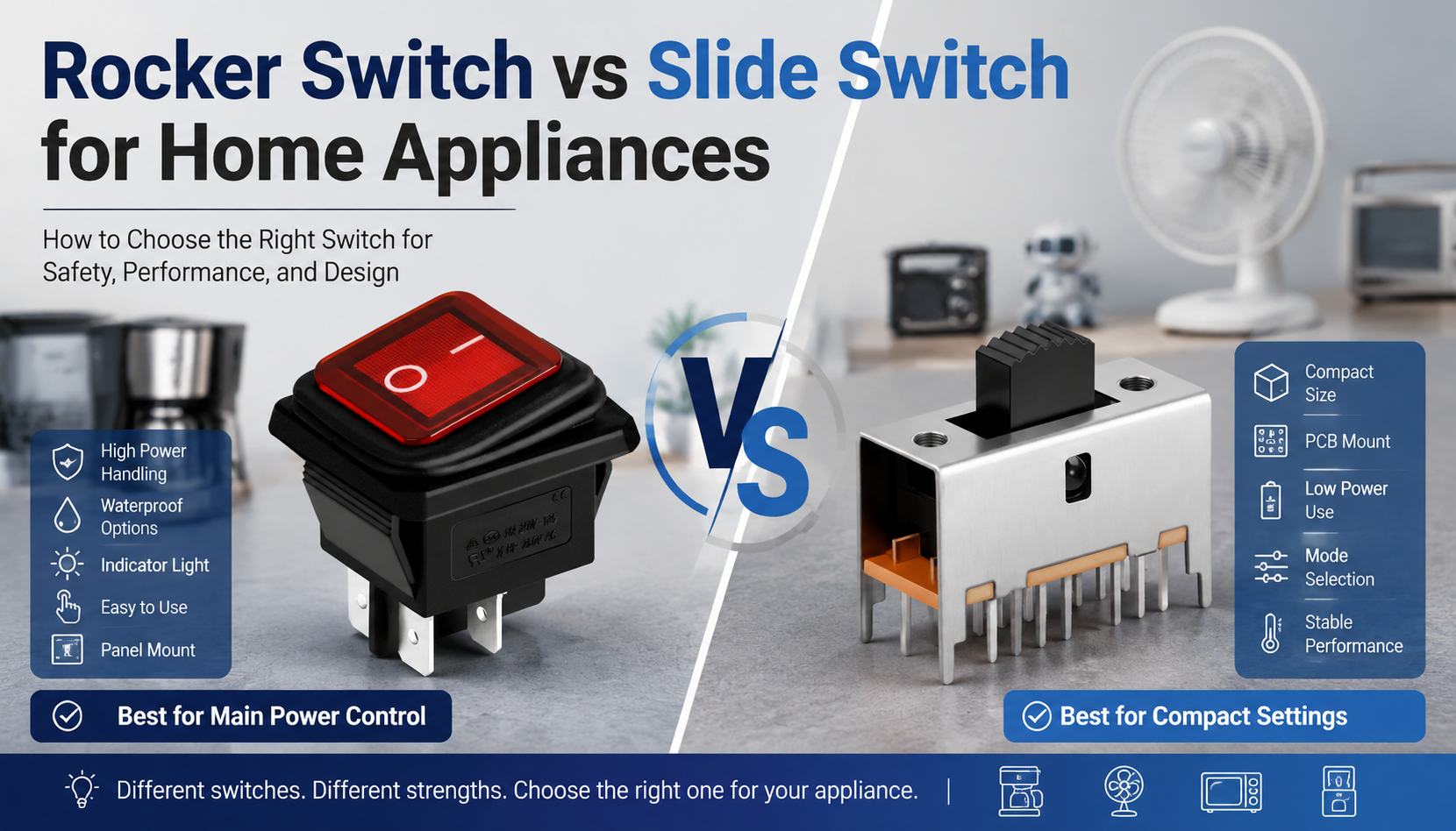
Picking a switch for a household device seems easy at first. However, things get complex when you think about electrical load, panel room, moisture, and how the switch feels to use. Both a rocker switch and a slide switch can handle ON/OFF tasks or select circuits, but they are made for different goals. Their main physical difference is the actuator. A rocker tilts back and forth, while a slide switch moves along a straight path.
For designers and buyers, the right choice depends on which part fits the product’s electrical needs, mounting style, and size. In many tools that plug into a wall, a rocker switch is the go-to for power. Meanwhile, a mini slide switch usually works better for small, low-power gadgets.
What Is a Rocker Switch?
A rocker switch flips a circuit when you press one side of its tilting button. As one side goes down, the other side pops up. This gives the user clear physical and visual proof that the switch moved. You will often see these as panel-mounted electrical switches on kitchen tools, power gear, and control boards where a clear ON/OFF button is needed.
Why Rocker Switches Work Well in Appliances
Engineers often pick a rocker power switch for machines that pull a lot of electricity or need a tough handle. Common uses include water dispensers, ovens, hair dryers, drills, and power supplies.
Key benefits include:
- A wide button that is very easy to push
- Simple snap-in mounting for appliance frames
- Many circuit types like SPST, SPDT, DPST, and DPDT
- Built-in lights to show if the power is on
- Waterproof rocker switch versions for wet areas
- Ability to handle more current than tiny PCB parts
Because they come in panel-mount, weather-resistant, and glowing styles, they fit many different appliance designs. For kitchen tools that deal with steam or spills, a waterproof rocker switch is much safer than a basic open switch.
What Is a Slide Switch?
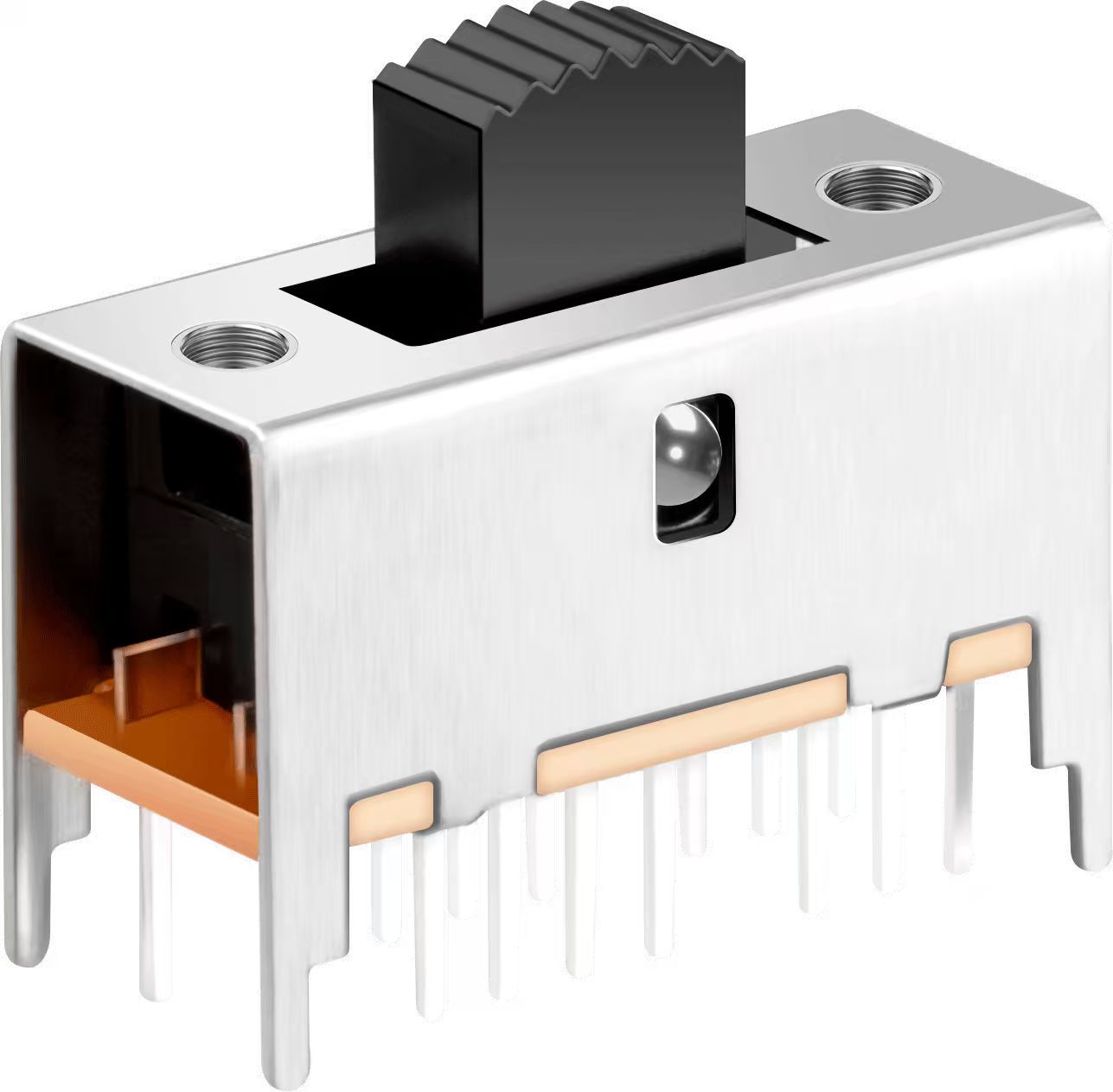
A slide switch works by moving a tiny knob along a short track. Most of these stay put until you push them again. Depending on how it is wired, it can turn power on and off or act as a mode selector. These are popular when space is tight and the power demand is low.
Their small size makes slide switches a standard choice for parts soldered onto circuit boards.
Where a Mini Slide Switch Makes Sense
A mini slide switch is perfect when saving space is more important than having a big button. You can find them in small fans, radios, toys, cameras, and security sensors.
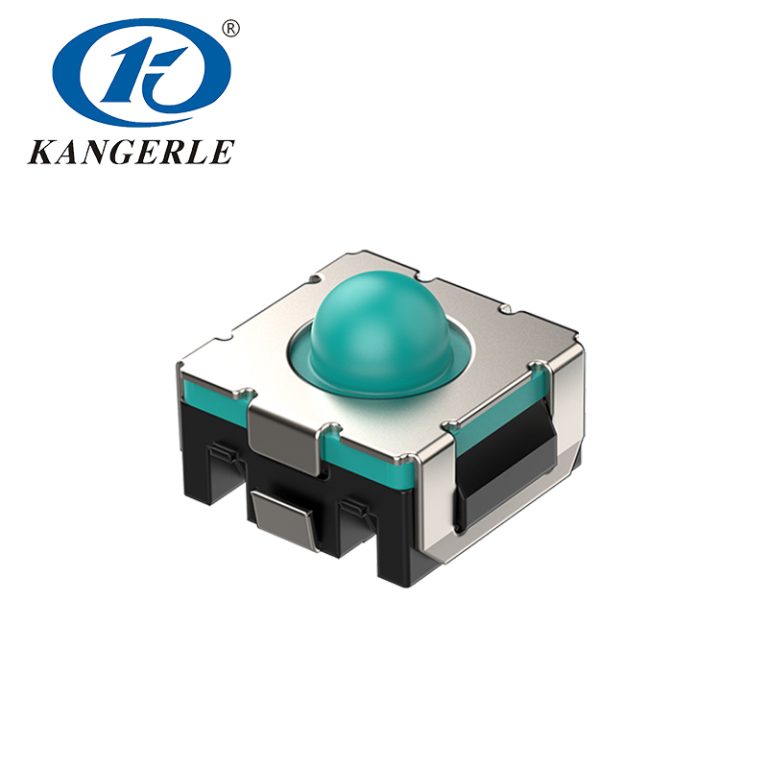
The SS43D01G5 slide switch is a great example. It is rated for 50 mA at 12 V DC and comes in SPDT or SPST versions. It lasts for at least 10,000 uses and works in temperatures from -25°C up to 85°C. These specs are ideal for small, low-current tasks.
Rocker Switch vs Slide Switch: Key Differences
The biggest difference is more than just how they move. Their shapes usually tell you what kind of job they do. Slide switches are picked based on current, voltage, and how they pin to a board. Rocker switches are mostly used as the main face of a control panel.
| คุณสมบัติ | สวิตช์โยก | สวิตช์เลื่อน |
| Operation | Press one side down | Slide a knob in a track |
| Typical mounting | Panel mount | PCB or tiny panel holes |
| User interface | Large and easy to see | Small and hidden |
| Common role | Main power button | Setting or mode selection |
| Electrical load | Can handle high current | Usually for low power |
| Environmental options | Waterproof types exist | Varies by model |
| Best fit | Main user power control | Small electronic settings |
This matters when designing the outer shell. A rocker serves as the main interface, while a PCB slide switch saves room inside the device.
Which Switch Is Better for Home Appliances?
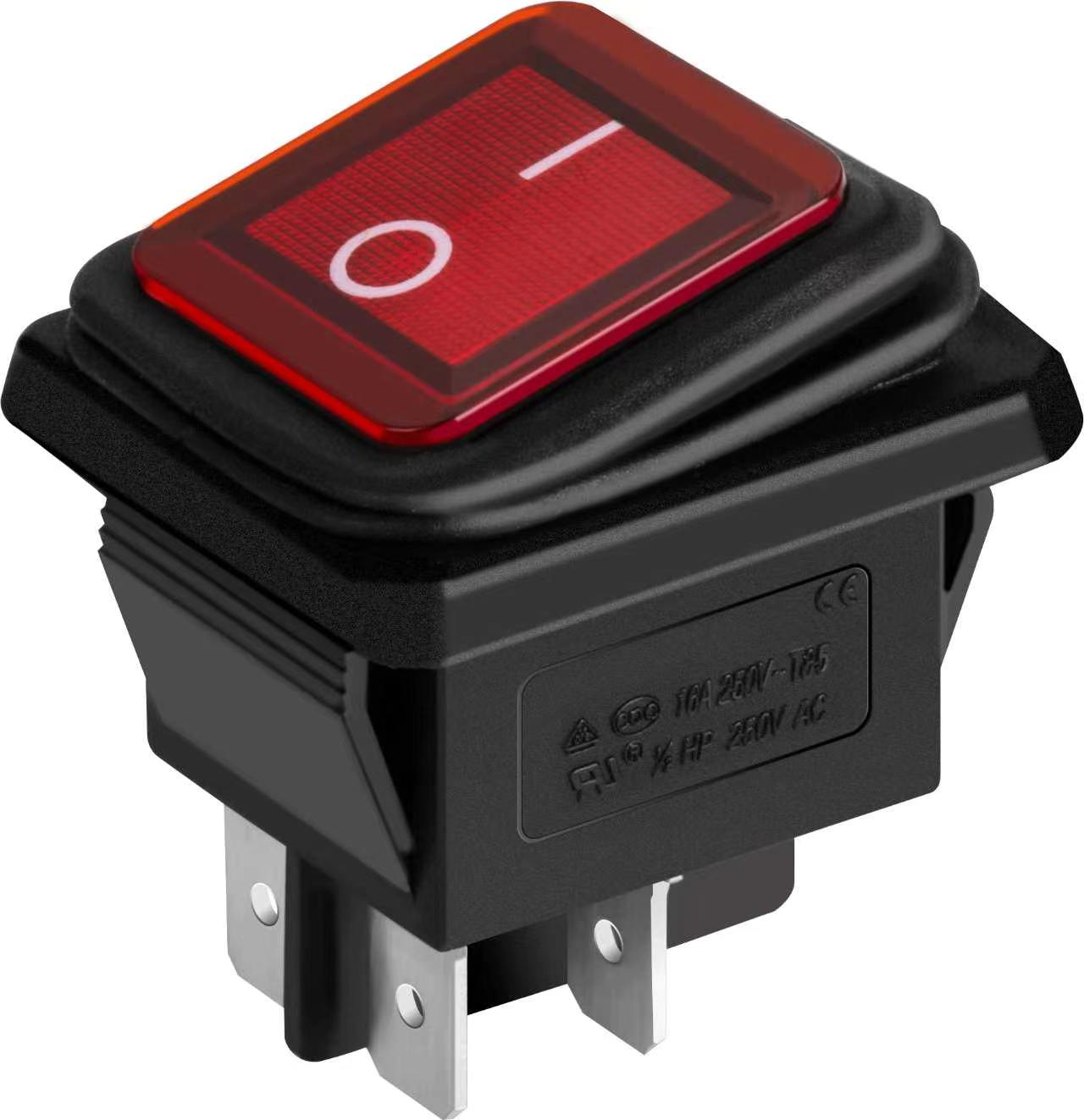
For most home gear, a rocker switch is the best bet for the main power. It is easy to use and handles wall-outlet power levels well. A slide switch is better for secondary tasks.
Choose a Rocker Switch When
A rocker switch is the top choice if:
- You need to turn the whole appliance on or off
- The button needs to be big and easy to find
- The part must clip into an outer panel
- You want a light to show the device is running
- The machine might get wet or dusty
- The circuit carries a heavy electrical load
A waterproof rocker switch like the KCD2-11F Series is perfect for controls on the outside of a machine. This series is part of KANGERLE’s waterproof rocker switch line, built to stay safe in tough environments. Water coolers and cleaning tools are perfect examples where this protection is needed.
Choose a Slide Switch When
A slide switch is the better pick if:
- There is very little room on the circuit board
- The power level is quite low
- The switch changes a setting rather than the main power
- You need the switch to stay in a specific mode
- You want a thin, low-profile look
Think of a hair dryer. It might use a rocker for the main power and a small SPDT slide switch to change the heat setting. One device can easily use both.
How to Choose an Appliance Power Switch
Always pick based on electrical needs first. The look and shape should come second.
Match Voltage, Current, and Load Type
Look at the voltage and current ratings. Don’t just look at watts. Motors and heaters create extra stress when they start up. Switches used for high-power gear must be built to handle these surges without burning out.
Check Circuit Configuration
SPST is the standard for simple ON/OFF. SPDT can switch between two paths. DPST and DPDT control two lines at once. Make sure the pin count matches your wiring plan.
Compare Panel Mount and PCB Mount Designs
A panel mount rocker switch is best for a button that people touch every day. A PCB slide switch is better for internal parts or settings tucked behind a small slot. Always double-check the cutout size and terminal types before you start production.
Consider Moisture, Dust, and Temperature
Appliances in kitchens or bathrooms face steam and spills. A waterproof electrical switch helps stop damage. If the tool is used near a heater or motor, make sure the switch can handle the heat.
ZHEJIANG KANGERLE ELECTRONICS CO. LTD as a Switch Supplier
บริษัท เจ้อเจียงคังเกอร์เล่อ อิเล็กทรอนิกส์ จำกัด builds switches and parts for cars, home tools, security gear, and electronics. Their catalog features rocker switches, slide switches, micro switches, detector switches, tact switches, and push button switches. Based in Wenzhou since the early 1990s, the firm has over two decades of experience in this field.
The factory follows ISO 9001:2015 and IATF 16949 standards. Their products hold many labels like UL, TUV, CE, CB, CQC, and RoHS. With a huge output, they make over 50 million pieces every month.
They also offer OEM/ODM services. This means they can change the size, material, or push force to fit your specific needs. They handle everything from mold design to final mass production, which is helpful if a standard part doesn’t quite fit your box.
บทสรุป
When comparing a rocker switch vs slide switch, the best one depends on the job. For a main power button that is easy to see and tough against water, a rocker switch is the winner. For tiny gadgets or changing modes on a circuit board, a mini slide switch is the smarter choice. Focus on the electricity and the environment first, then pick the style that fits.
คำถามที่พบบ่อย
Should one prefer a rocker switch to a slide switch for household devices?
Yes, when it comes to powering up the device. Rocker switches are more user-friendly and can cope with higher power ratings. Slide switches work great for small internal operations or when low power is required.
How does a rocker switch differ from a slide switch?
A rocker switches its state by tilting, whereas a slide switch slides a lever on a slot. Rocker switches are usually bigger and located outside the device, and slide switches are usually mounted on a board.
Is a slide switch usable as a switch for appliances?
It depends on whether its specifications are compatible with the power load. A lot of slide switches are designed for low voltage DC and cannot take the heavy power load from the wall socket.
When should a waterproof rocker switch be used?
Apply this switch if the item will operate where water, steam or dust will present. It is crucial to ensure safety while operating kitchen and bathroom equipment.
What should consumers look at before ordering their own switch?
Considerations such as voltage, current, circuit type and mounting should be taken into account. Also, you have to pay attention to operating temperature, switching cycle and safety certifications required in your market.