

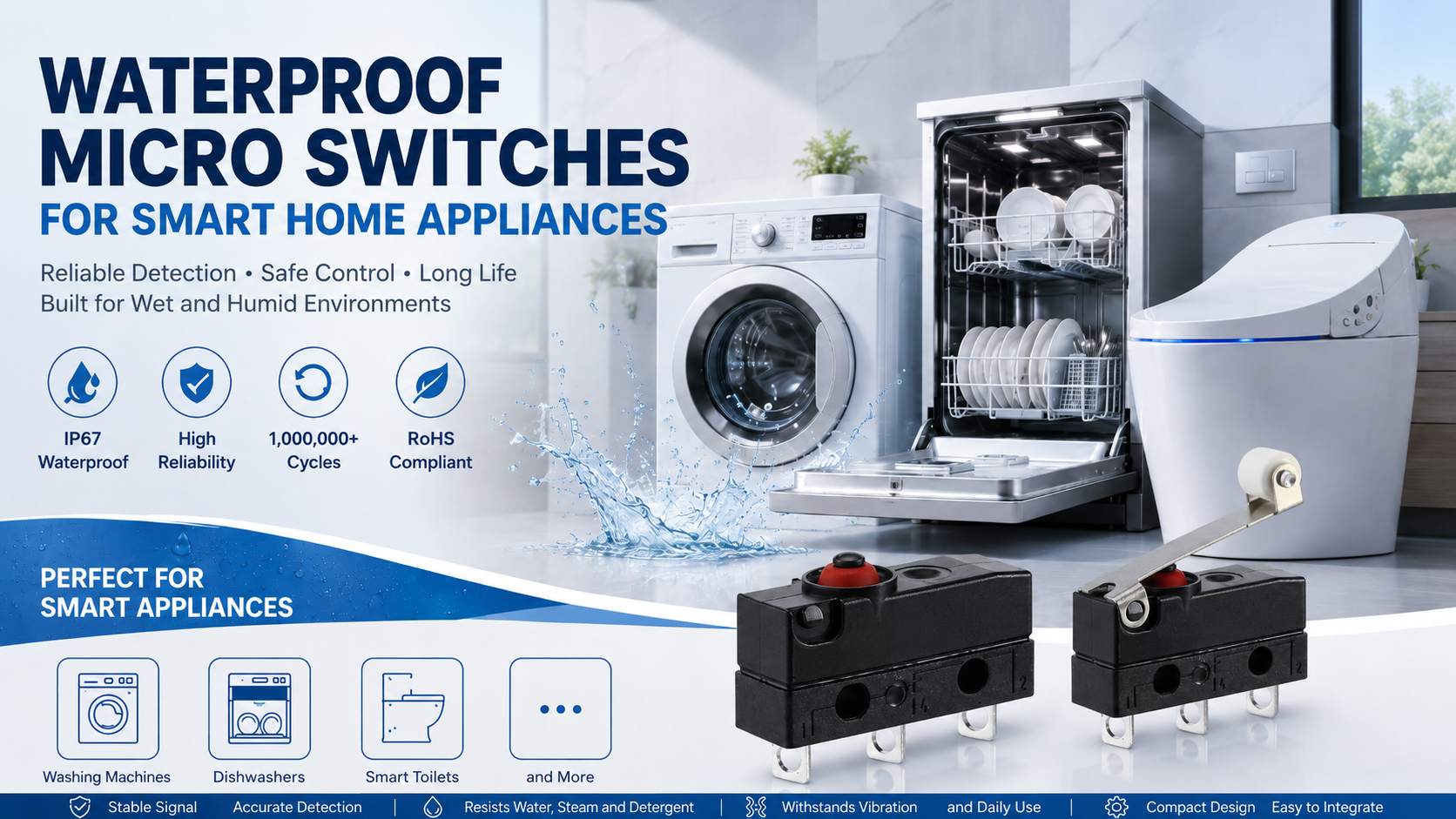
Smart home appliances look simple from the outside, but inside a washer, dishwasher, or smart toilet, small switching parts often decide whether the product starts safely, stops at the right time, and gives a stable user experience. A miniature waterproof micro switch may only confirm that a lid is closed, a door latch is locked, or a seat has moved into position. Still, the control board depends on that clean signal before the next action begins.
For appliance engineers and sourcing teams, the key question is not only “Does the switch work?” It is “Will it keep working after steam, detergent, splash water, vibration, and daily use?” That is where a sealed micro switch, and in some control areas a waterproof tact switch 6×6 series, becomes valuable.
Why Waterproof Switching Matters in Smart Appliances
Water and electronics meet more often than users notice. In a washer, condensation forms near the door lock. In a dishwasher, hot vapor moves through the cabinet each cycle. In a smart toilet, water flow, heating, seat movement, flushing, and button control are packed into a narrow housing.
A waterproof micro switch helps an appliance read mechanical movement without exposing the contact system to moisture. An unstable signal can cause real product issues: a washer may refuse to spin, a dishwasher may stop mid-cycle, or a toilet seat system may fail to detect lid position.
A compact waterproof switch for home appliances is usually chosen because it:
- Fits into a small latch, hinge, cover, or actuator structure
- Sends a clear on/off signal to the control board
- Reduces risk in wet, dusty, or detergent-rich spaces
- Supports repeated operation over long service periods
What a Miniature Waterproof Micro Switch Does
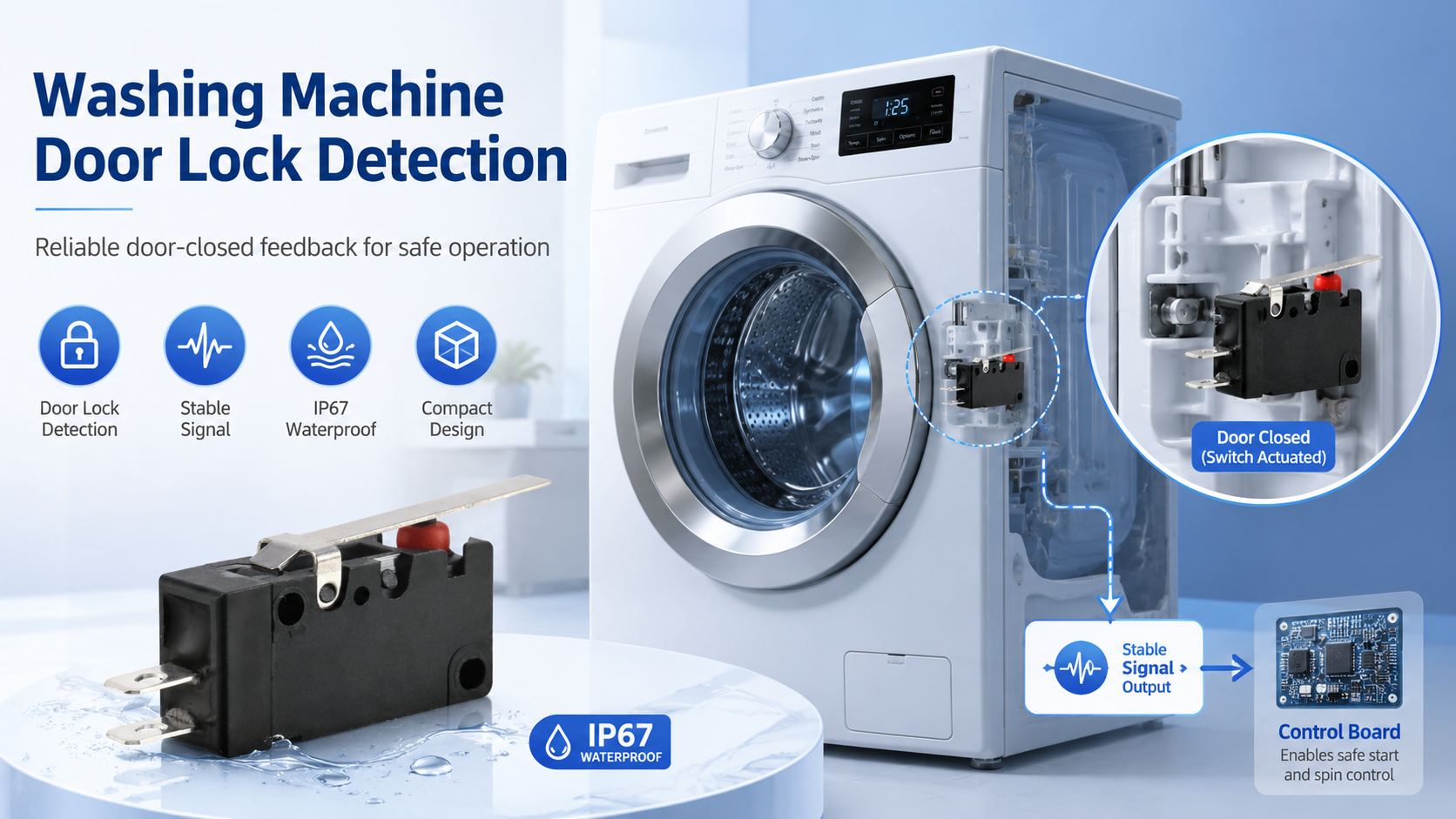
A miniature waterproof micro switch is a small snap-action switch built to detect position or movement. When a lever, plunger, or actuator is pressed, the internal contact changes state and sends an electrical signal. In smart appliances, that signal can tell the system that a door is closed, a drawer is seated, a lid is down, or a moving part has reached its target point.
The miniature size matters because appliance interiors are crowded. Designers may need to place a switch behind a washer lid hinge, inside a dishwasher latch, near a smart toilet seat pivot, or beside a compact plastic cam. The waterproof structure matters just as much. An IP67 micro switch, when wired and sealed as designed, is made for wet and dusty operating areas.
Key Selection Points
| Selection point | Why it matters in appliance design |
| Protection level | Resists moisture, splash, detergent mist, and dust |
| Actuator type | Matches a lever, latch, cam, lid, or hinge |
| Circuit form | Supports SPDT, SPST-NO, or SPST-NC control logic |
| Force opérationnelle | Affects trigger feel and mechanical stress |
| Terminal style | Fits PCB, lead wire, or custom assembly layouts |
| Durée de vie mécanique | Supports repeated daily operation |
Washer Applications: Lid, Door, Water, and Motion Feedback
A micro switch for washer systems often works quietly in the background. In a top-load unit, it may detect whether the lid has reached the closed position. In a front-load washer, it may be part of the door lock or latch feedback structure. In other layouts, it can support water level, drain, or detergent drawer position feedback.
A smart washer has more software logic than a basic machine, but the controller still needs physical confirmation. Before spin starts, the lid or door must be safely closed. Before water enters, the system may need confirmation from a drawer, cover, or valve-related part.
An IP67 micro switch for washing machine applications is useful near damp zones. Detergent residue, water vapor, and vibration can shorten the life of an unsealed switch. A miniature waterproof micro switch with a suitable lever can sit close to a moving plastic part and send a reliable switching signal with very little travel.
Good washer switch selection should account for latch travel, operating force after plastic aging, spin vibration, foam or condensation exposure, and available wiring space.
Dishwasher Applications: Door Detection and Steam Areas
A dishwasher micro switch is commonly linked to door detection, lock confirmation, and water-related safety feedback. When the door closes, the control board needs to know whether washing can start. If the latch is not fully engaged, the spray system should not run. A waterproof micro switch for dishwasher door detection can help provide that confirmation.
The dishwasher environment is tough for small components. Heat, humidity, detergent, rinse aid, and repeated door movement all work together. During a hot cycle, steam can move toward the latch area. During loading and unloading, users may close the door gently one day and firmly the next.
What Engineers Usually Check
A dishwasher switch position should be reviewed with the full latch stack-up: plastic tolerance, spring force, door alignment, seal compression, and long-term wear. If the actuator is pressed too lightly, the signal may become unstable. If it is over-traveled, mechanical stress can shorten service life.
Smart Toilet Applications: Seat, Lid, Flush, and Buttons
A smart toilet micro switch works where moisture and electronics are close. Common areas include seat position detection, lid open/close detection, flush mechanism feedback, and nozzle or cover position sensing. A sealed micro switch for smart toilet seat detection can help the control system know whether a moving part has reached its correct position before heating, flushing, deodorizing, or auto-lid functions continue.
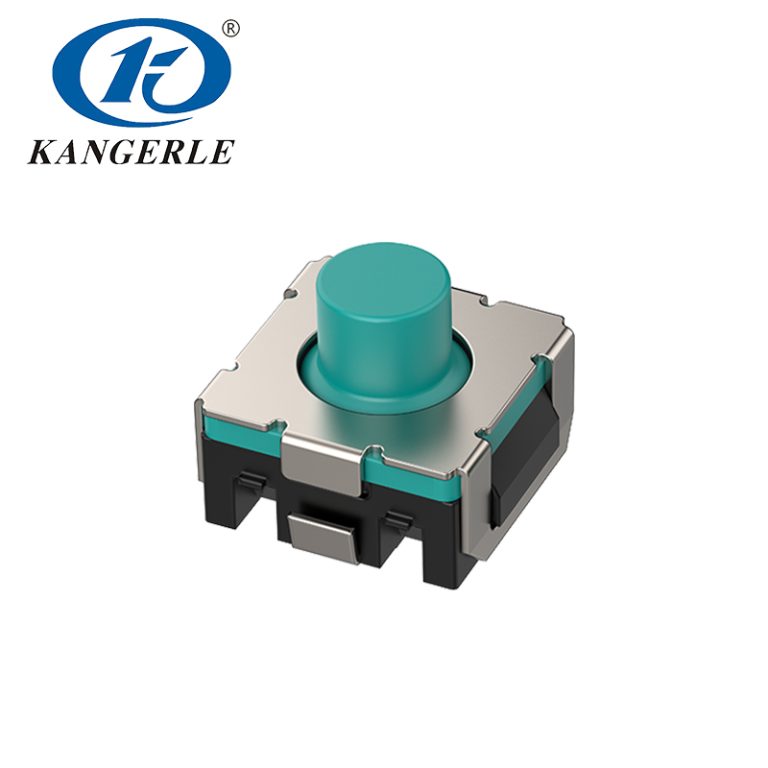
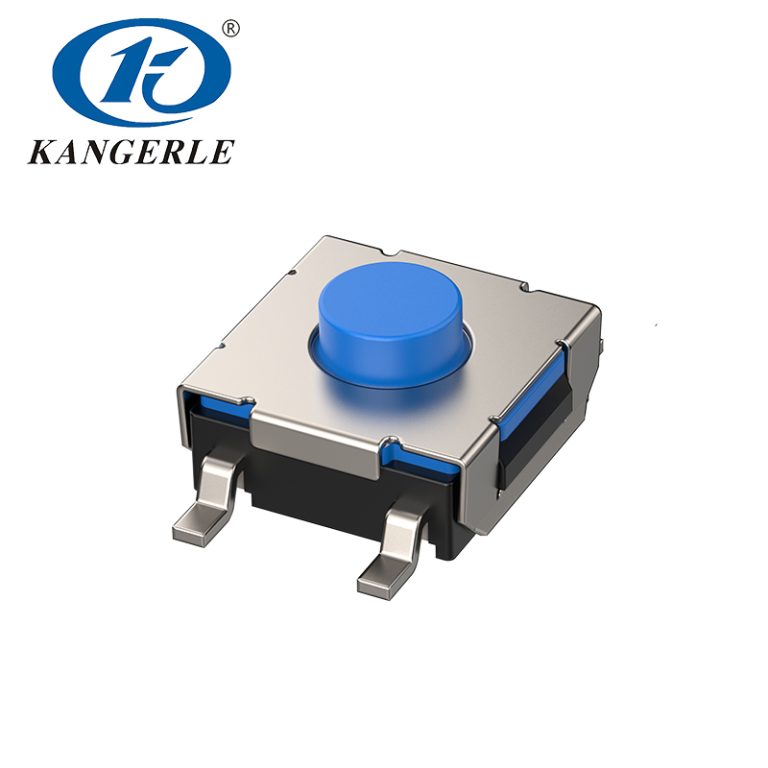
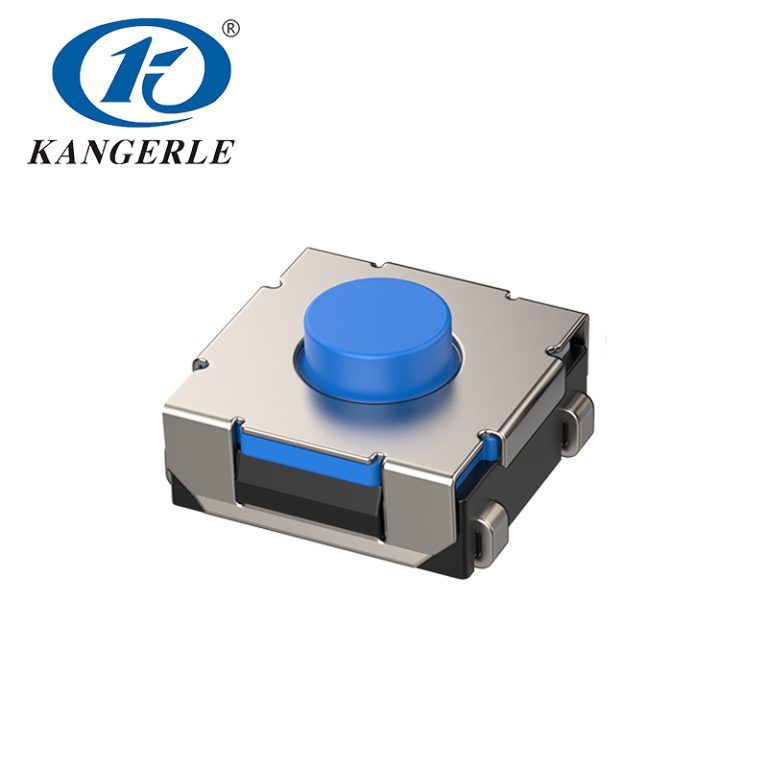
Space is limited around the seat hinge and control module. A miniature waterproof micro switch can fit near a cam or hinge part and react to short, repeatable movement. For a side control button or small user panel, a waterproof tactile switch may be a better match. The waterproof tact switch 6×6 series is designed for small-current push-button use and gives clear tactile feedback when pressed. The micro switch detects mechanical position; the tact switch supports user input.
WS1 Waterproof Micro Switch for Compact Wet-Area Designs
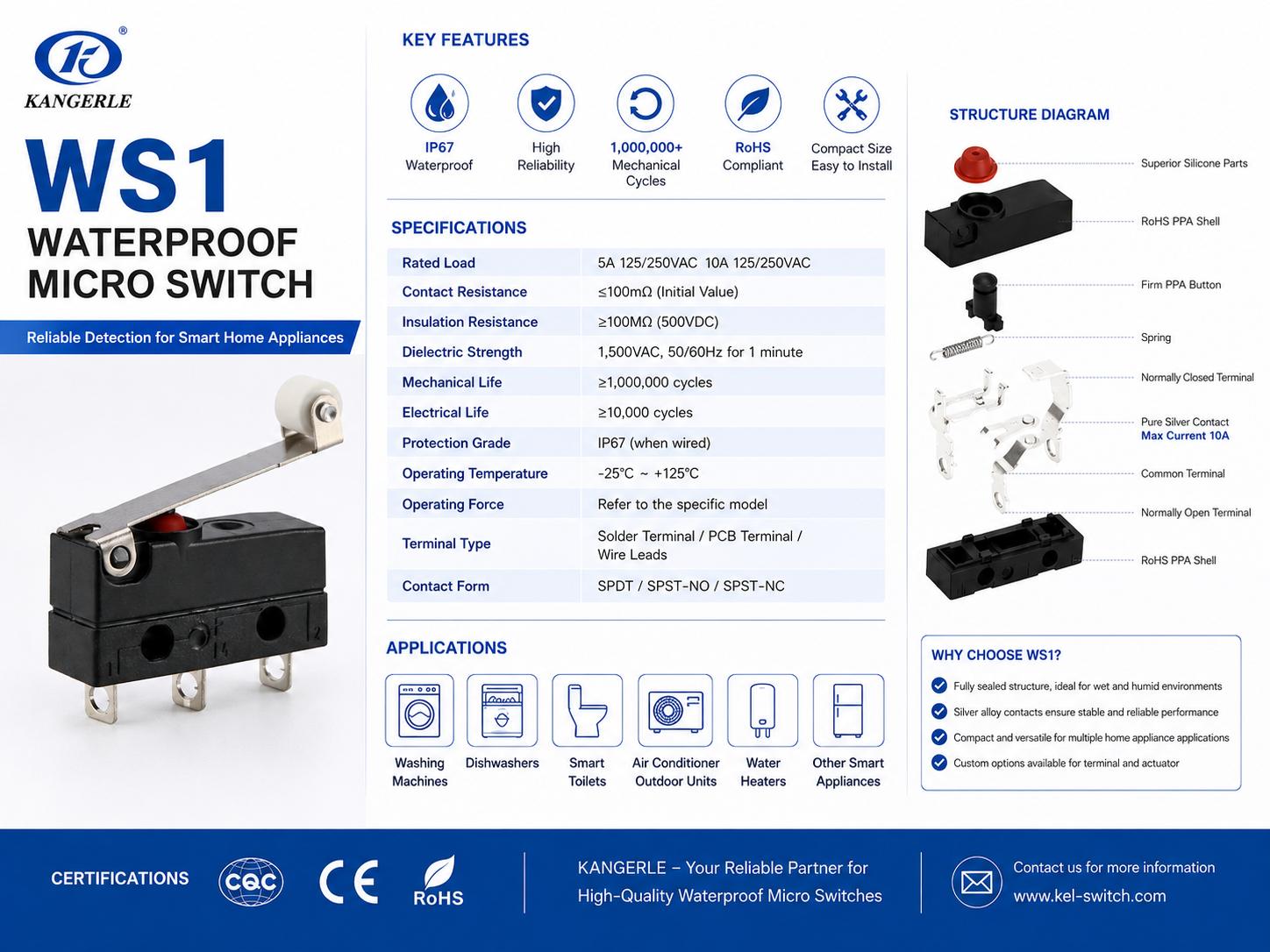
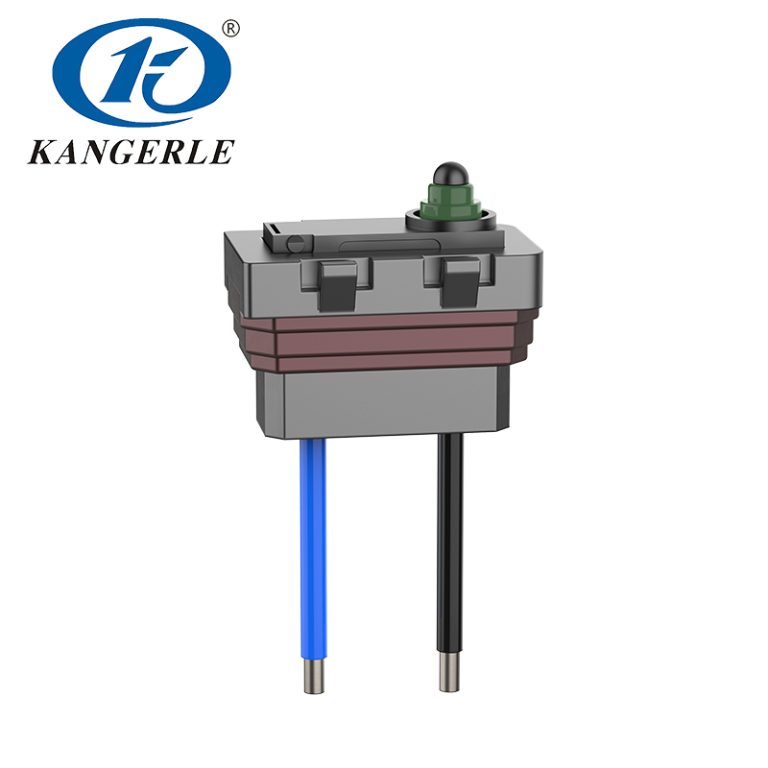
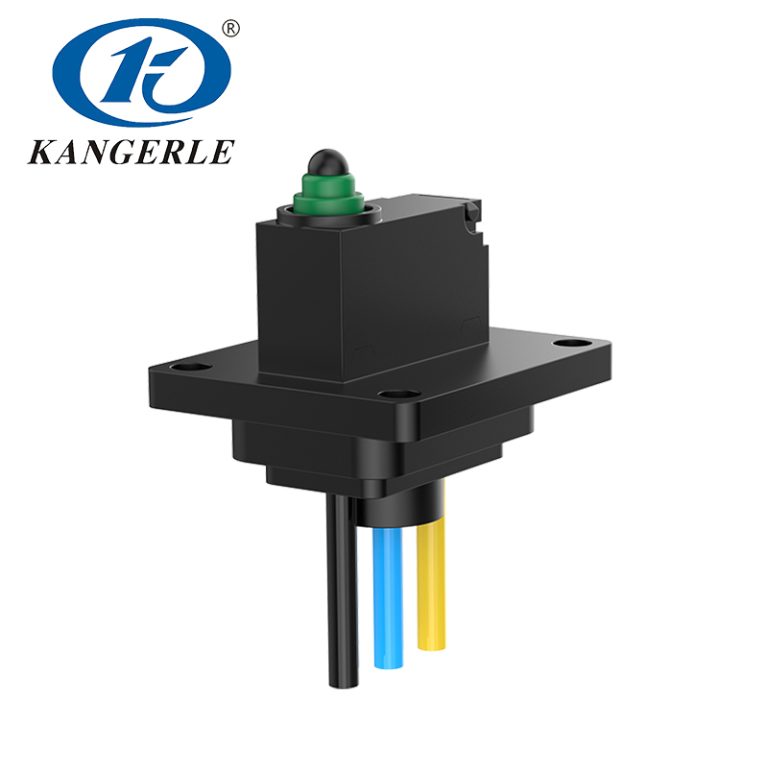
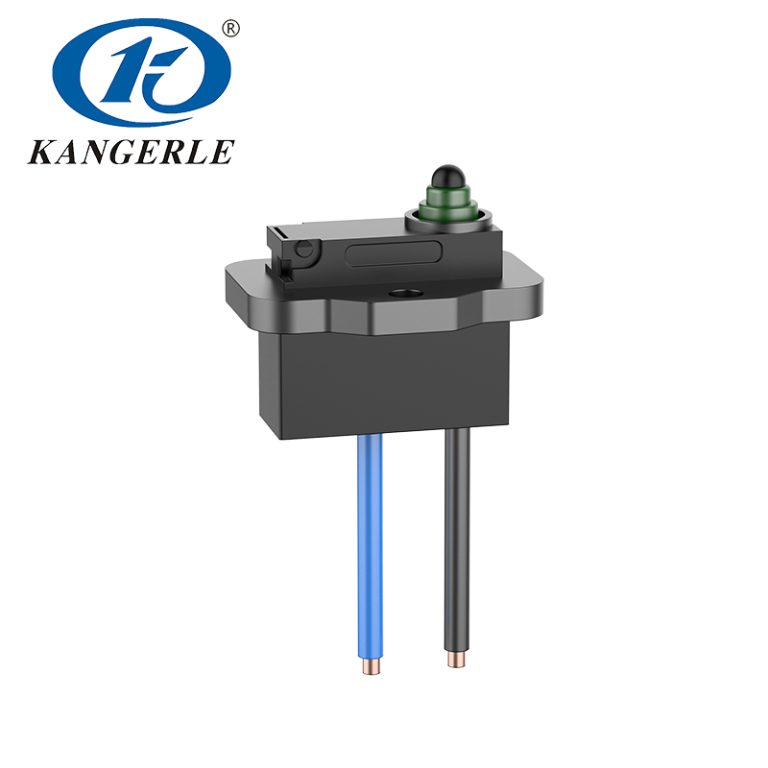
The WS1 waterproof micro switch is a practical option for appliance projects that need a small sealed switch with flexible configuration choices. The WS1-10A-2D structure uses 3 PCB terminals and a straight metal lever, and the series supports SPDT, SPST-NO, and SPST-NC models. This helps design teams match the switch to different control-board logic without changing the whole mechanical concept.
Key specifications include a rated load of 5/10A at 125/250V AC, regular operating force up to 350gf, contact resistance up to 500mΩ, insulation resistance of at least 100MΩ at DC500V, and IP67 protection when wired. The listed mechanical life reaches at least 1,000,000 cycles. For washers, dishwashers, and smart toilets, the useful value is the combination of size, sealing, and actuator choice.
Waterproof Tact Switch 6×6 Series for User Controls
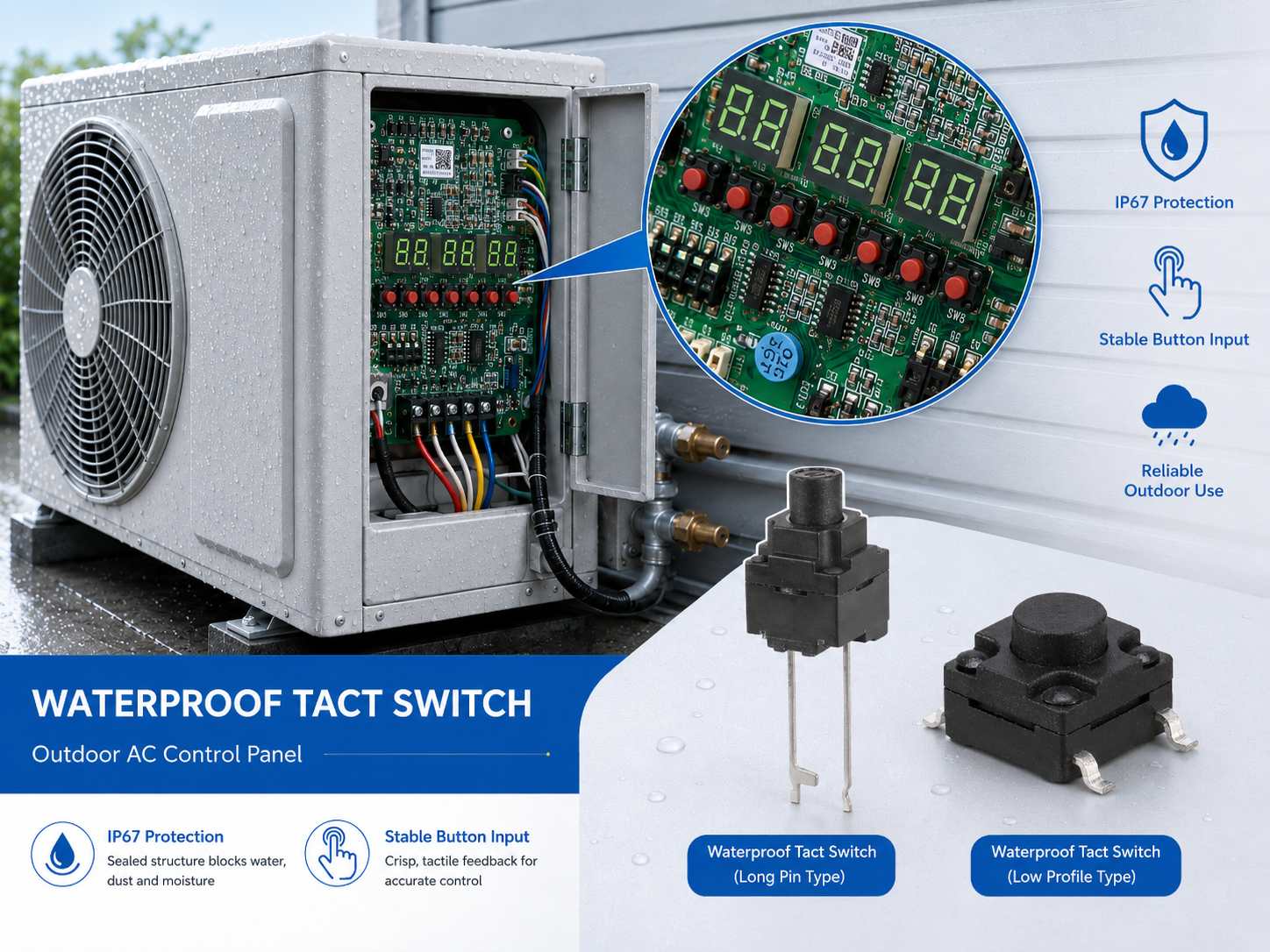
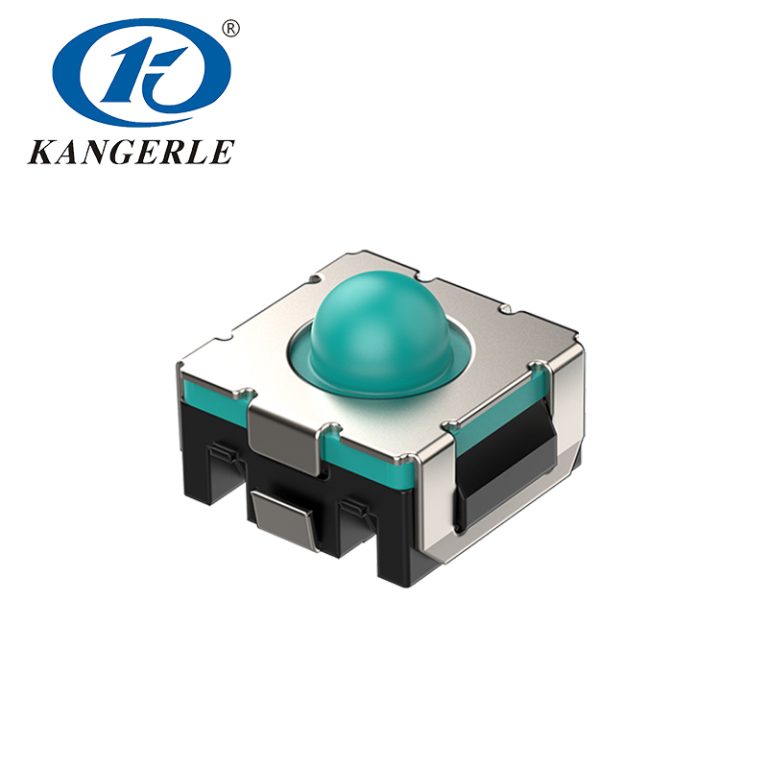
While a waterproof micro switch is often the better choice for position detection, a waterproof tact switch 6×6 series fits many low-current control panel tasks. It allows a small current to pass through and gives tactile feedback when pressed.
The waterproof tact switch 6×6 series has a rated load of 50mA DC12V, operating force options such as 120±30gf and 200±30gf, SPST NO or SPST NC circuit choices, IP67 protection when wired, electrical life of at least 100,000 cycles, mechanical life of at least 300,000 cycles, and RoHS certification. In a smart washer or smart toilet, it may sit behind a function button, reset button, flush button, or service panel.
À propos de Zhejiang Kangerle Electronics Co., Ltd.
Zhejiang Kangerle Electronics Co., Ltd. is a switch supplier based in Wenzhou, with manufacturing experience dating back to the early 1990s. Its product range covers micro switches, waterproof micro switches, detector switches, limit switches, rocker switches, slide switches, tact switches, push button switches, and connectors for household appliances, security products, automotive parts, communication equipment, medical devices, industrial equipment, and consumer electronics.
The company supports standard models, OEM waterproof micro switch projects, and ODM micro switch solutions. Custom work may involve materials, dimensions, operating force, operating travel, current requirements, mold design, sample testing, and mass production. Quality systems and certifications such as ISO9001:2015, IATF16949, CB, CE, CQC, TUV, UL, and RoHS support projects where stable supply and repeatable performance matter.
Conclusion
A miniature waterproof micro switch is small, but in a smart washer, dishwasher, or smart toilet, it can affect safety logic, user experience, and long-term reliability. The WS1 waterproof micro switch supports compact position detection, while the waterproof tact switch 6×6 series can serve low-current user control panels. For appliance manufacturers, early switch selection and real mechanism testing can reduce later design changes.
FAQ
What is a miniature waterproof micro switch used for?
A miniature waterproof micro switch is used for position detection, door or lid feedback, safety interlock signals, and mechanical state confirmation in appliances and equipment exposed to moisture or dust.
Is an IP67 micro switch suitable for a washing machine?
Yes. An IP67 micro switch can be suitable for washing machine areas exposed to condensation, detergent mist, or splash risk, such as lid detection, door latch feedback, and related mechanical sensing points.
What is the difference between a waterproof micro switch and a waterproof tact switch?
A waterproof micro switch is usually used to detect mechanical movement or position. A waterproof tact switch is commonly used as a small-current push button for user input, such as a control panel or function button.