

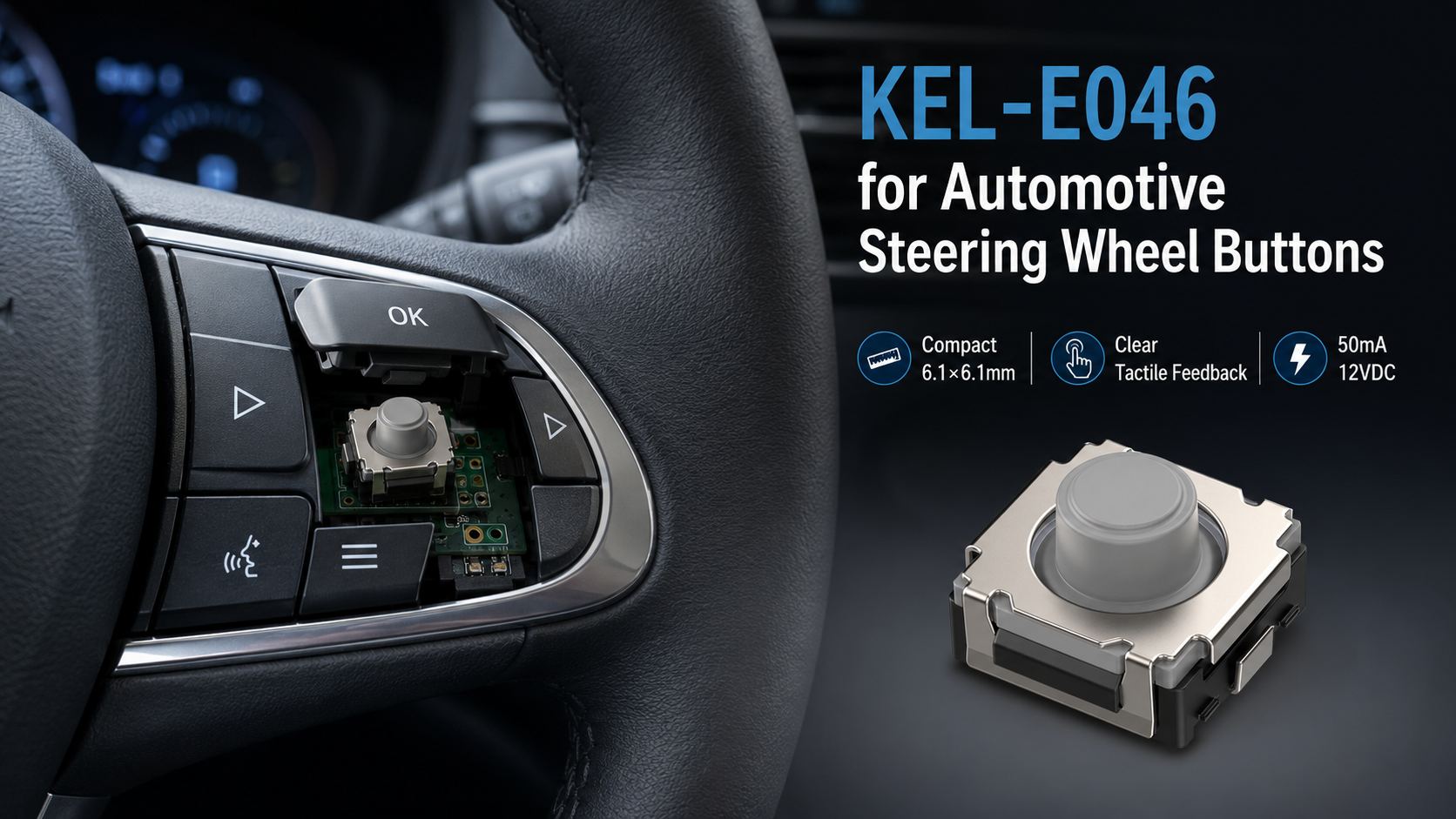
Car steering wheel buttons look simple from the outside, but the switch under each button carries a serious job. A driver may press volume, cruise control, phone, voice assistant, ADAS, menu, or heating controls without looking away from the road. The button has to respond with a clear feel, avoid accidental activation, and keep a stable signal after thousands of daily presses.
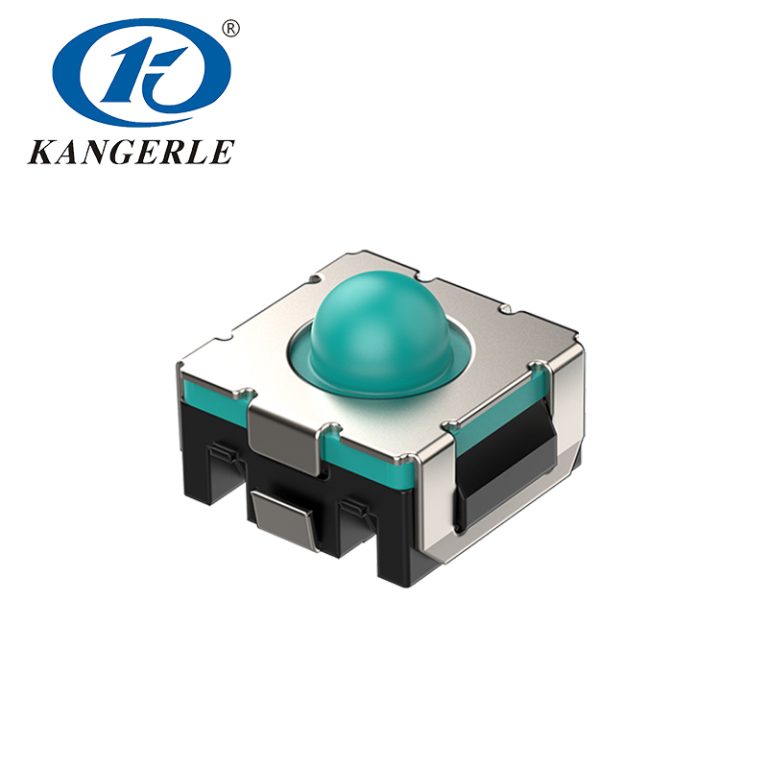
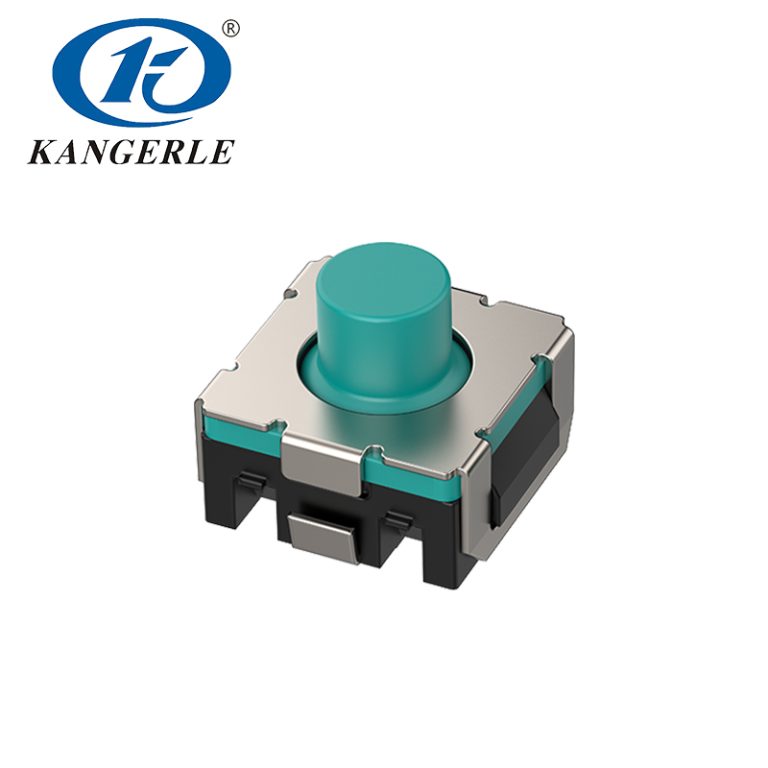
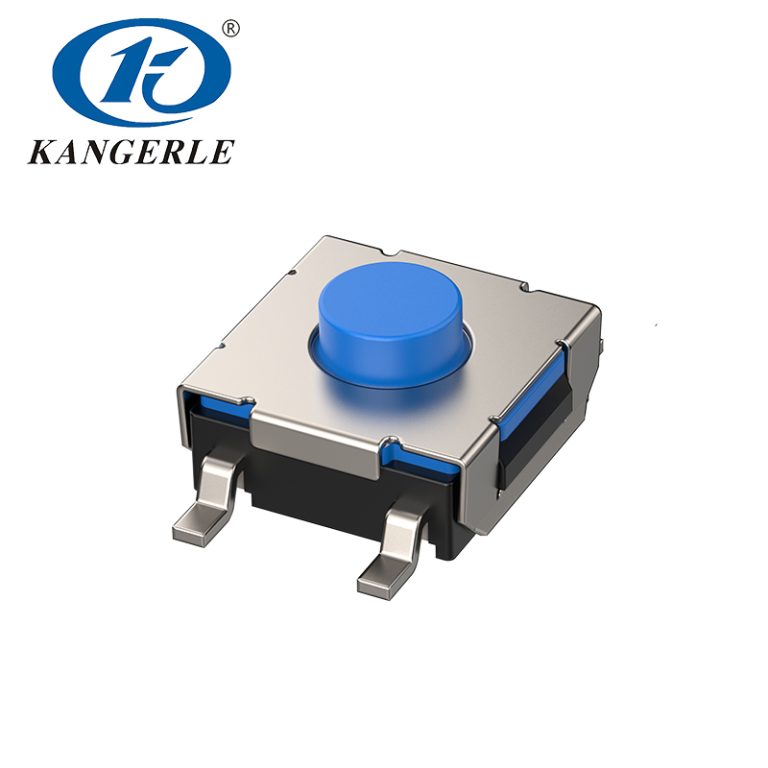
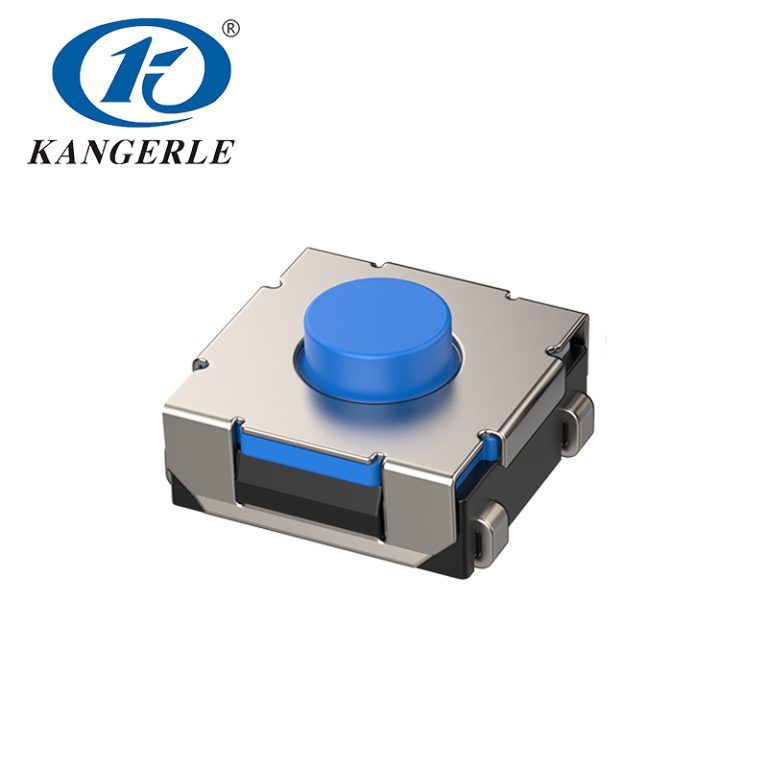
For steering wheel control modules, a well-matched automotive tact switch is not chosen only by size. Engineers and sourcing teams usually check operating force, travel distance, contact resistance, insulation resistance, withstand voltage, tactile feel, sealing, life cycle, PCB layout, actuator height, supply stability, and replacement risk. Taktilschalter KEL-E046 from ZHEJIANG KANGERLE ELECTRONICS CO. LTD belongs to the KEL-E Series and is designed as a high-durability miniature tactile switch for electronic control systems. Its official product data lists a 50mA DC12V rated load, 0.7mm travel distance, three optional operating forces of 180gf, 300gf, and 380gf, ≤500mΩ contact resistance, ≥100MΩ insulation resistance, 250V 50HZ 1min withstand voltage, and 100,000-200,000 cycles mechanical life.
Why Do Steering Wheel Buttons Still Need Tactile Switches?
Modern vehicles use larger displays and more software, but physical steering wheel controls remain important because they give the driver a direct thumb response. The switch must work in a small space, under a plastic button cap, on a PCB inside the steering wheel module.
Clear Feedback Without Driver Distraction
A steering wheel button should not feel vague. When the driver presses “volume up” or “answer call,” the finger expects a small click or resistance change. That feedback confirms the operation before the driver checks the screen or display.
KEL-E046 is useful in this type of module because its 0.7mm travel distance supports a short and consistent button stroke. The product also provides three operating force options, 180gf, 300gf, and 380gf, allowing engineers to match the button feel with different steering wheel designs. A lighter force can suit frequently used menu or audio keys, while a higher force can help reduce accidental input on functions that require a firmer press.
Stable Signal in Low-Current Vehicle Circuits
Most steering wheel switches work as low-current signal inputs rather than high-power switching components. The ECU or control module reads a short momentary signal, then triggers the related function.
.KEL-E046 is rated at 50mA DC12V, which fits many low-current automotive button signal circuits. Its contact resistance of ≤500mΩ, insulation resistance of ≥100MΩ, and 250V 50HZ 1min withstand voltage support stable electrical behavior in steering wheel buttons, central control panels, dome lights or reading lights, power window switches, and trunk release buttons.
Where KEL-E046 Fits in a Steering Wheel Button Module
A steering wheel control module usually includes button caps, rubber pads or plastic plungers, a PCB, lighting parts in some designs, and one or more tact switches. The switch must match the button feel and the mechanical stack-up.
Common Button Groups in the Steering Wheel
KEL-E046 can be considered for several common steering wheel control areas:
- Audio buttons: volume, mute, track selection
- Phone buttons: answer, end call, voice assistant
- Cruise and ADAS buttons: set, resume, distance control
- Menu buttons: up, down, left, right, confirm
- Heating or comfort buttons in higher-trim vehicles
These buttons are pressed many times during a vehicle’s service life. A poor switch can cause double input, weak feedback, no response, or unstable contact. For module makers, the cost of a weak button is not only the switch price. It can lead to rework, customer complaints, and replacement of the whole steering wheel switch assembly.
Beyond steering wheel buttons, the official application range of KEL-E046 also includes central control panels, dome lights or reading lights, power window switches, and trunk release buttons. This makes the model useful for automotive interior control designs that need a compact tact switch with similar electrical and mechanical requirements.
What Should Engineers Check Before Selecting a Steering Wheel Tact Switch?
The right tact switch for car steering wheel buttons should be checked against both electrical and mechanical requirements. The table below aligns the KEL-E046 data with the official product information and datasheet drawing.
| Design Point | What It Means in Steering Wheel Buttons | KEL-E046 Position |
|---|---|---|
| Einsatzkräfte | Thumb feel and accidental press control | 180gf, 300gf, 380gf optional |
| Reisedistanz | Button stroke and click timing | 0.7mm |
| Nennlast | Low-current vehicle signal input | 50 mA DC12V |
| Kontaktwiderstand | Signal stability after repeated pressing | ≤500 mΩ |
| Isolationswiderstand | Electrical separation and safety margin | ≥100 MΩ |
| Mechanische Lebensdauer | Long-term button durability | 100,000-200,000 cycles |
| Application range | Reuse across vehicle interior controls | Steering wheel buttons, central control panel, dome light or reading light, power window switch, trunk release button |
| Spannungsfestigkeit | Electrical strength check | 250 V, 50 Hz, 1 Minute |
| Packing | Batch supply and SMT production planning | Tape & Reel, 1,000pcs/reel |
A tact switch is small, but it affects how the whole button feels. In steering wheel projects, even a 0.2mm mismatch in actuator height or a major force difference can change the end-user experience. KEL-E046’s datasheet drawing shows a compact 6mm-class body, including 6.20±0.20mm and 6.10±0.20mm body dimensions, 6.50±0.20mm overall width, 4.00±0.20mm total height, and a φ3.00mm actuator. That is why force, travel, actuator contact point, PCB position, and cap design should be reviewed together.
KEL-E046 vs Panasonic EVPBD/EVP0B Series
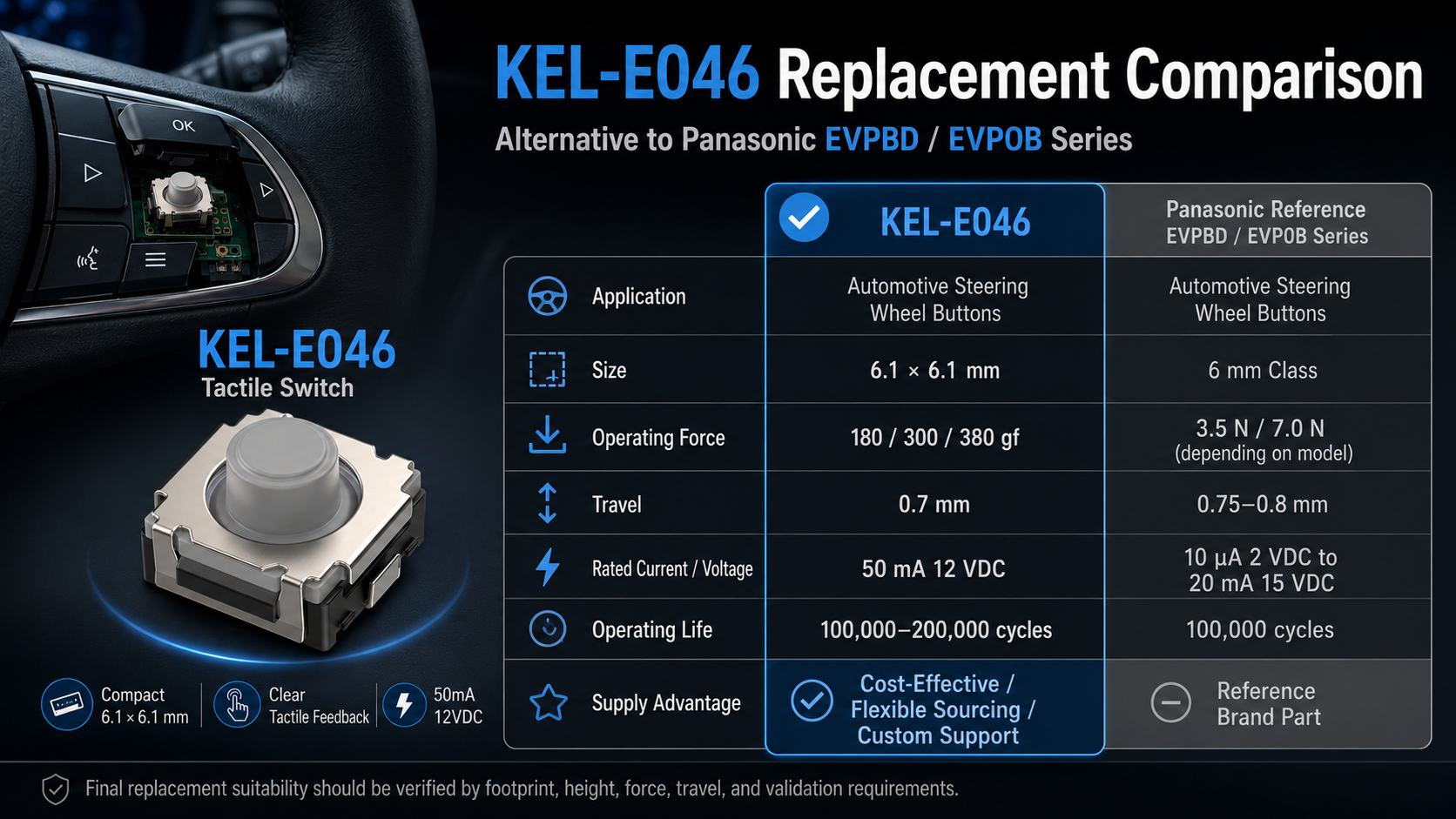
Many automotive switch projects begin with a well-known reference part. Panasonic EVPBD and EVP0B series are common middle-travel tactile switch references for steering-switch designs. KEL-E046 should be treated as a replacement candidate only when the target design matches its official KEL-E046 data: KEL-E Series, 350±50gf operating force, 0.75±0.10mm travel, 50mA DC12V rated load, IP67 sealing, and 200,000-cycle mechanical life.
Functional Replacement Comparison
Tact Switch KEL-E046 can be evaluated as a functional replacement candidate for Panasonic EVPBD/EVP0B series in matching steering wheel button designs after normal engineering checks for PCB footprint, actuator height, soldering method, force requirement, travel, and validation standards. Its role in the circuit is a momentary signal input with tactile feedback for vehicle control buttons.
| Artikel | Kangerle Taktschalter KEL-E046 | Praktische Bedeutung |
| Product series | KEL-E Series | Confirms the official product family |
| Anwendung | Automotive steering wheel buttons and other vehicle interior controls | Matches automotive button use direction |
| Einsatzkräfte | 180/300/380gf | Gives different force options for different button feel requirements |
| Reisen | 0.7mm | Supports short tactile button action |
| Mechanische Lebensdauer | 100,000-200,000 cycles | Suitable for frequent-use control buttons after project validation |
| Rating | 50 mA DC12V | Suitable for low-current signal circuits |
| Kontaktwiderstand | ≤500 mΩ | Unterstützt eine stabile Signalübertragung |
| Isolationswiderstand | ≥100 MΩ | Supports electrical separation |
| Spannungsfestigkeit | 250 V, 50 Hz, 1 Minute | Useful for electrical safety review |
| Packing | Tape & Reel, 1,000pcs/reel | Suitable for batch production planning |
For buyers who are replacing Panasonic EVPBD/EVP0B series due to price pressure, long lead time, or second-source planning, KEL-E046 is a practical alternative. It covers the same core function in a steering wheel button: a stable momentary input, a clear tactile response, and a compact switch body for PCB-mounted vehicle controls.
Vorteile der ZHEJIANG KANGERLE ELECTRONICS CO. LTD.
ZHEJIANG KANGERLE ELECTRONICS CO. LTD focuses on micro switches, detector switches, limit switches, rocker switches, slide switches, tact switches, and push button switches. Its products are used in automotive parts, home appliances, security products, medical devices, industrial equipment, and consumer electronics.
Why KEL-E046 Is Practical for OEM and Aftermarket Projects
KANGERLE ELECTRONICS has long-term switch manufacturing experience, engineering support, and large-scale production capacity. For automotive steering wheel button suppliers, this matters because switch selection is rarely a one-time purchase. A button module may need samples, drawing confirmation, force testing, trial production, and batch delivery.
KANGERLE ELECTRONICS Tact Switch KEL-E046 is practical for automotive button projects because the model offers a defined KEL-E Series platform, 50mA DC12V rated load, 0.7mm travel distance, 180/300/380gf operating force options, ≤500mΩ contact resistance, ≥100MΩ insulation resistance, 250V 50HZ 1min withstand voltage, 100,000-200,000 cycles mechanical life, and Tape & Reel packing with 1,000pcs per reel.
For automotive button suppliers, these points can support:
- Force selection for different steering wheel button feels
- Low-current signal input design
- Batch SMT production planning through Tape & Reel packing
- Application expansion across steering wheel buttons, central control panels, dome lights or reading lights, power window switches, and trunk release buttons
- Second-source review when the existing switch design requires a validated alternative
For new vehicle programs, KEL-E046 can be reviewed as an automotive tact switch option for steering wheel and interior control buttons. For existing modules, it can be tested as a replacement candidate only after the mechanical and electrical match is confirmed.
Design Notes for Steering Wheel Button Engineers
A switch that looks similar on paper still needs careful design review. A small mismatch may affect the button cap position, click timing, or soldering process.
Mechanische Passung
The engineering team should check total switch height, actuator contact area, button cap plunger position, and available PCB space. If the button cap presses the switch off-center, the click may feel uneven. If the actuator is too high or too low, the button may feel too stiff, too loose, or fail to return cleanly.
Because KEL-E046 provides 180gf, 300gf, and 380gf force options, the selected version should be matched with the cap structure, rubber pad design, and expected user feel. The 0.7mm travel distance should also be checked against the full button stack-up before tooling confirmation.
Electrical Fit
The circuit should be checked for rated voltage, current, debounce setting, contact resistance tolerance, and expected signal reading. KEL-E046’s 50mA DC12V rating fits low-current control signal applications, but the final decision should match the actual circuit design. Engineers should also review the ≤500mΩ contact resistance, ≥100MΩ insulation resistance, and 250V 50HZ 1min withstand voltage against project specifications.
Durability Testing
A steering wheel button can be pressed many times in daily driving. Useful validation may include:
- Repeated press life testing
- Temperature cycling
- Humidity exposure
- Dust and water resistance checks for the complete module
- Button cap alignment checks
- Solder joint inspection after vibration testing
These tests help confirm that the switch and the full steering wheel button assembly work as one system. Since the official mechanical life range is 100,000-200,000 cycles, the selected validation target should be confirmed according to the exact version and project requirement.
Abschluss
Kangerle Taktschalter KEL-E046 is a practical option for automotive steering wheel buttons and other vehicle interior controls because it offers a 50mA DC12V rated load, 0.7mm travel distance, 180/300/380gf operating force options, ≤500mΩ contact resistance, ≥100MΩ insulation resistance, 250V 50HZ 1min withstand voltage, and 100,000-200,000 cycles mechanical life.
For steering wheel switch modules, it can serve audio buttons, phone buttons, cruise control buttons, ADAS controls, and menu keys. For sourcing teams, it also gives a practical way to reduce dependence on big-brand parts. In matching designs, Tact Switch KEL-E046 can fully replace Panasonic EVPBD/EVP0B series function while giving buyers shorter lead time, lower price, and customization support from KANGERLE ELECTRONICS.
Häufig gestellte Fragen
What operating force options does KEL-E046 offer?
KEL-E046 offers three operating force options: 180gf, 300gf, and 380gf. This allows engineers to choose a lighter, medium, or firmer button feel according to the steering wheel button structure and target user experience.
What is the travel distance of KEL-E046?
The travel distance of KEL-E046 is 0.7mm. This short travel supports compact tactile button designs used in steering wheel controls and other automotive interior switches.
Is KEL-E046 suitable for automotive steering wheel buttons?
Yes. Its application includes Automotive Steering Wheel Buttons. It also includes Central Control Panel, Dome Light or Reading Light, Power Window Switch, and Trunk Release Button applications.
Can KEL-E046 replace Panasonic EVPBD/EVP0B Series?
KEL-E046 can be evaluated as a replacement or second-source candidate when its 50mA DC12V rating, 0.7mm travel, 180/300/380gf force options, contact resistance, insulation resistance, withstand voltage, footprint, height, soldering method, and mechanical life match the original design.