
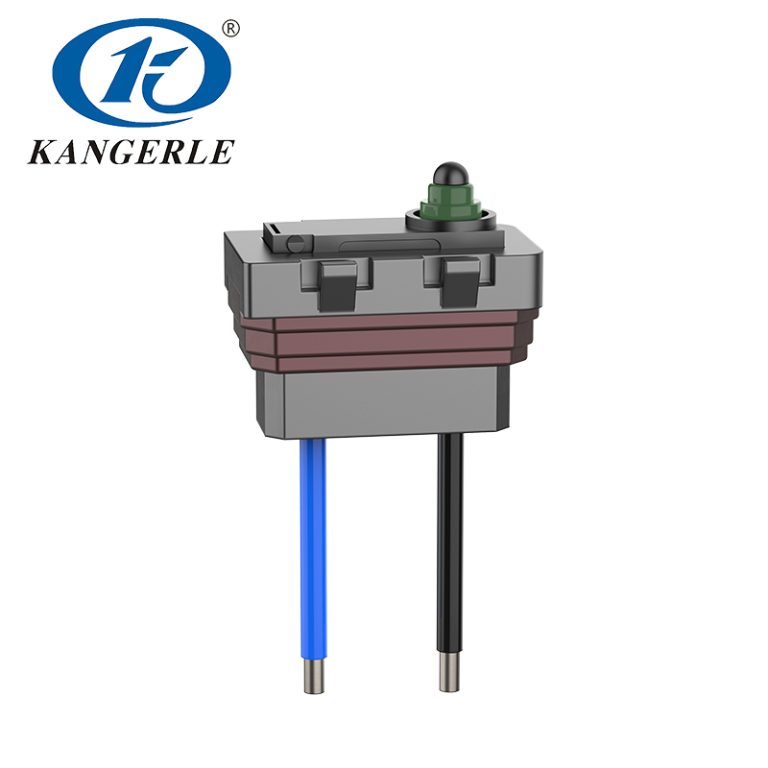
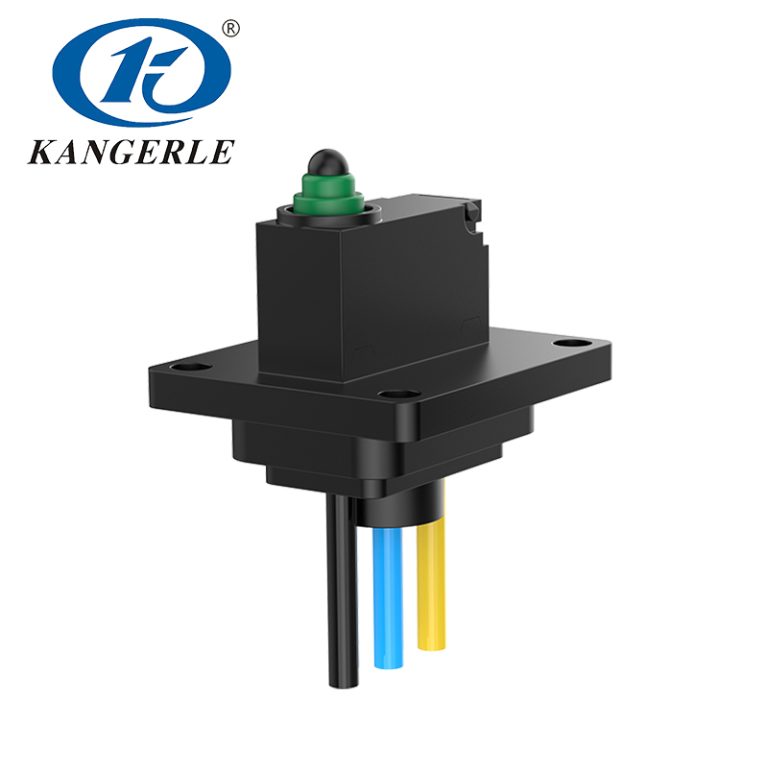
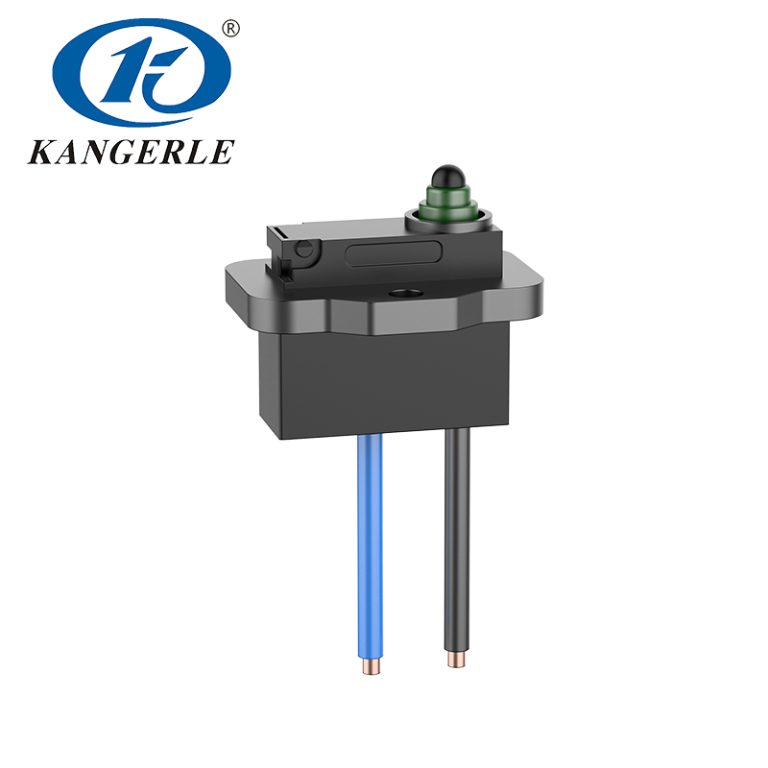

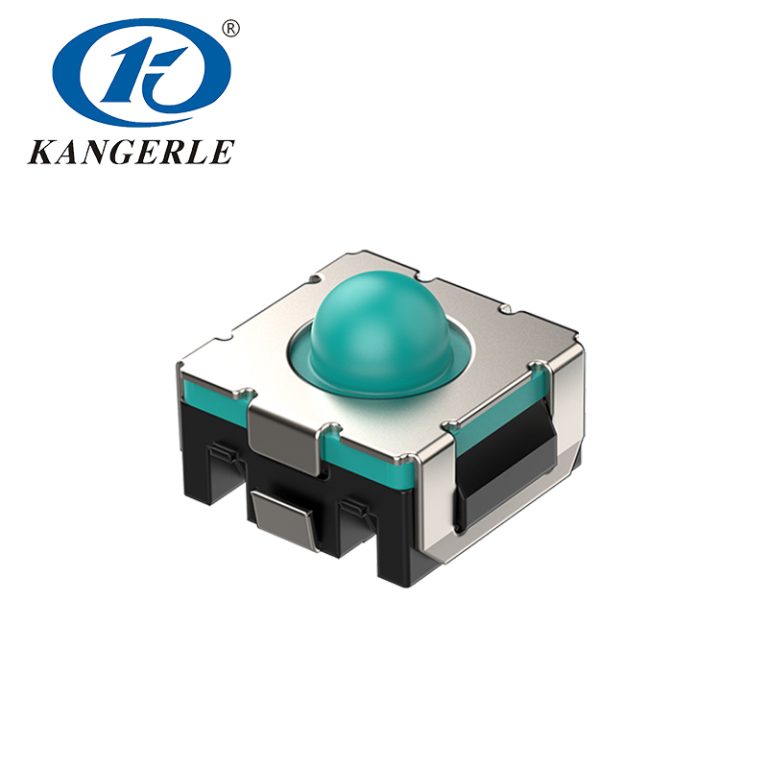
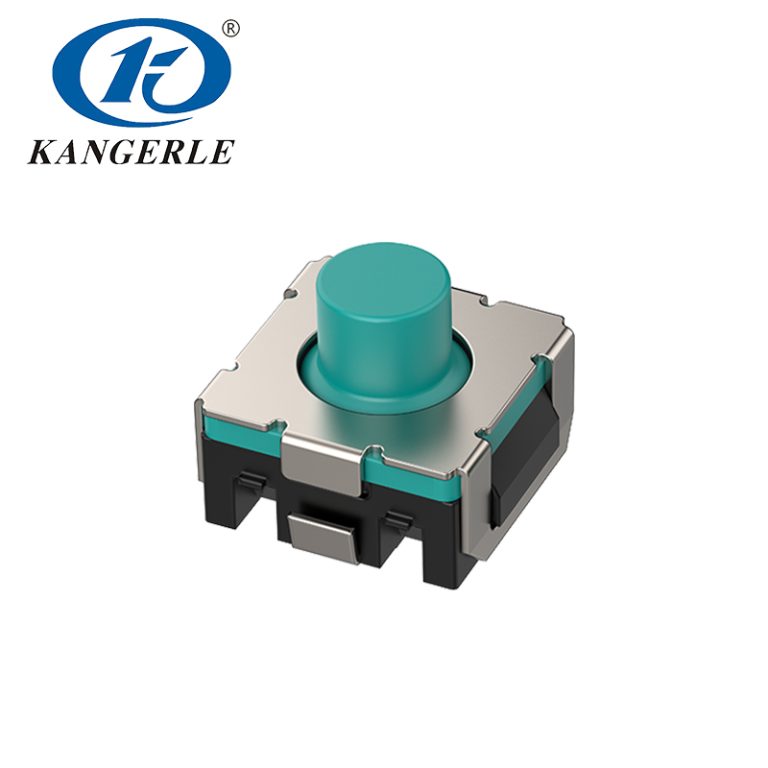
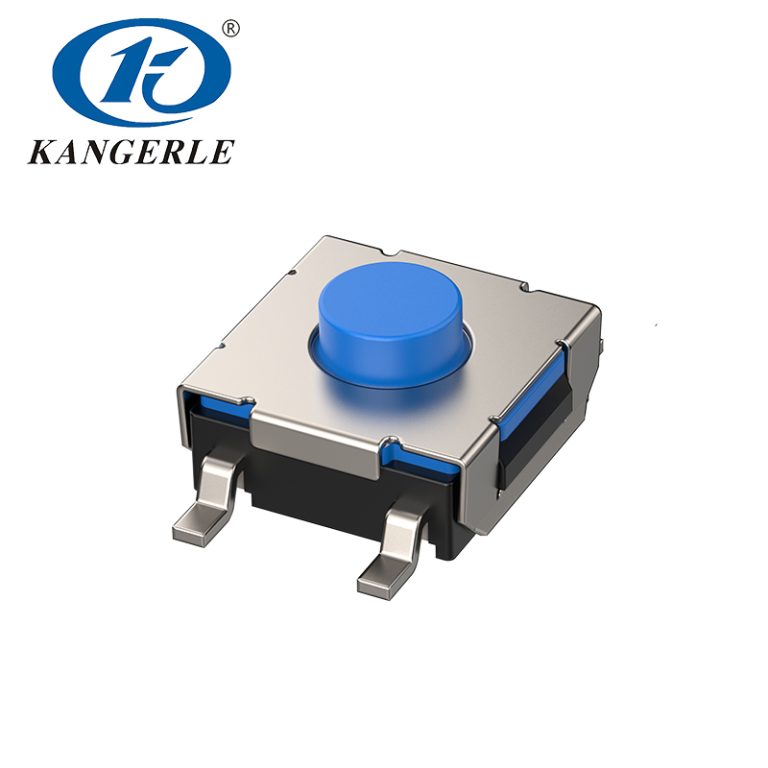
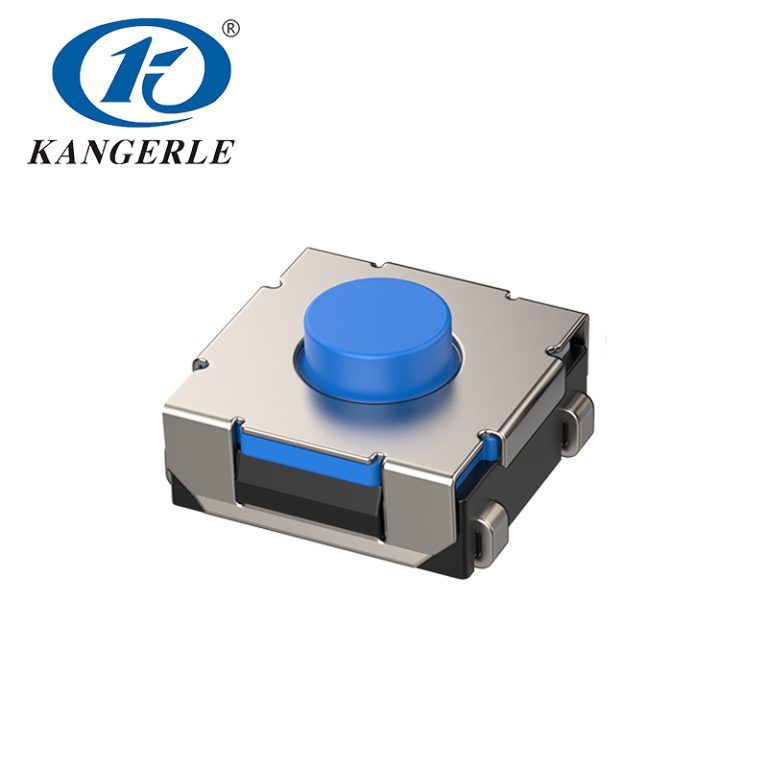
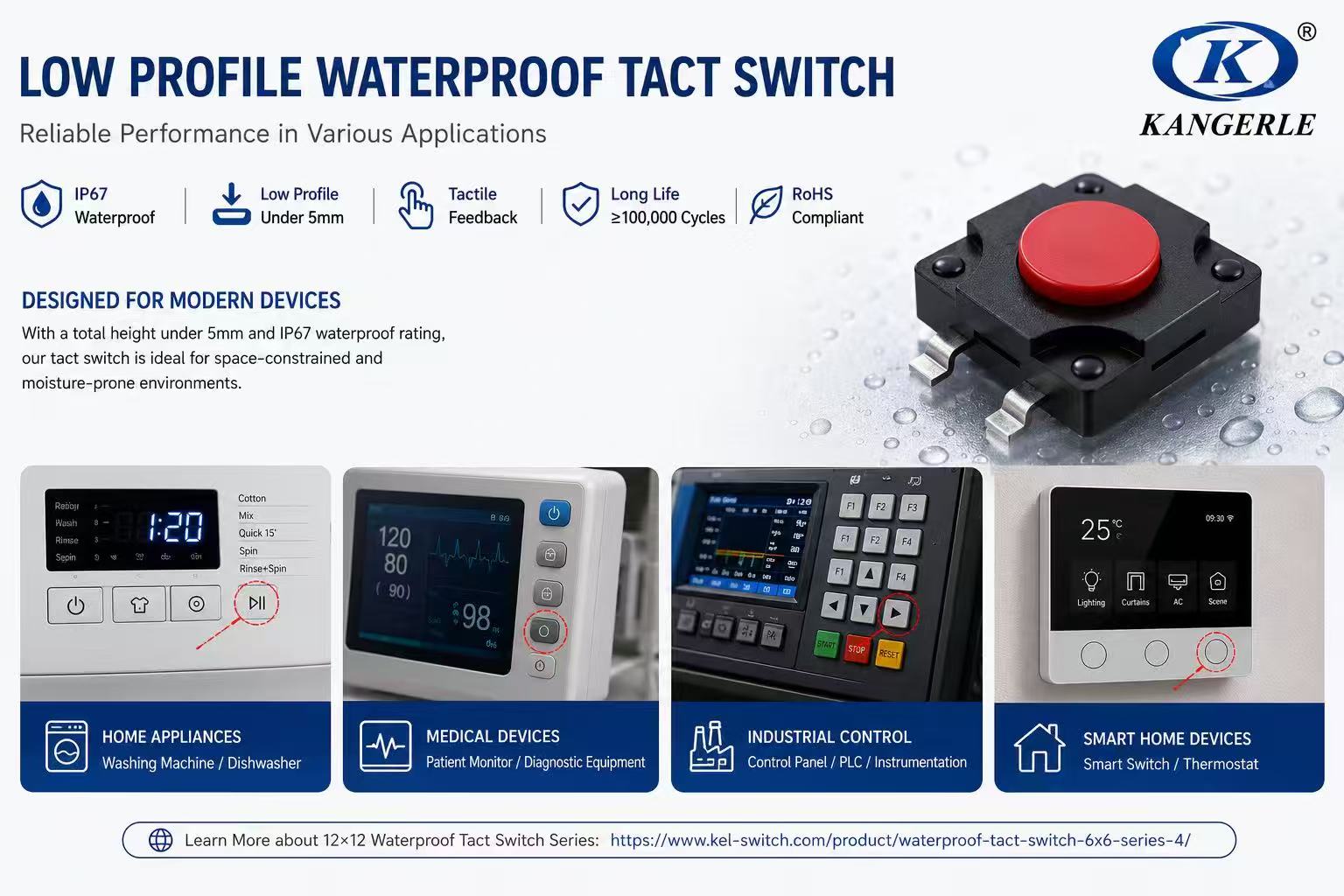
The term low profile waterproof micro switch may describe either a snap-action sensing switch or a PCB-mounted waterproof tactile switch. For user controls with a total height of 5 mm or less, the tactile type is usually the practical choice.
A suitable part must match the footprint, actuator height, force, circuit, mounting process, and enclosure. Waterproof performance also depends on the finished assembly.
What Does “5 mm or Less” Mean?
A 5mm height tactile switch sounds straightforward, but drawings use different reference points. The critical value is the full height from the PCB surface to the actuator top.
Measure the Complete Stack
The mechanical stack includes the PCB surface, switch body, actuator, external button, panel thickness, and assembly tolerance. A 3.4 mm body can still exceed a 5 mm limit after a raised stem is added.
Check the H dimension on the exact model drawing. Then allow a small clearance between the actuator and the enclosure button. The button should press the switch only during use. Constant pressure can alter the feel, cause false input, or shorten service life.
Tactile Switch or Traditional Micro Switch?
A low-profile waterproof tactile switch is a momentary PCB input. Pressing the actuator gives a clear tactile response and changes the circuit while the button is held. Most versions use SPST-NO, while selected models may use SPST-NC.
A traditional waterproof micro switch uses a plunger or lever for door detection, interlocks, valve positions, and motor limits. It is not a direct substitute for a 6×6 waterproof tact switch below a keypad.
Key Specifications for Selection
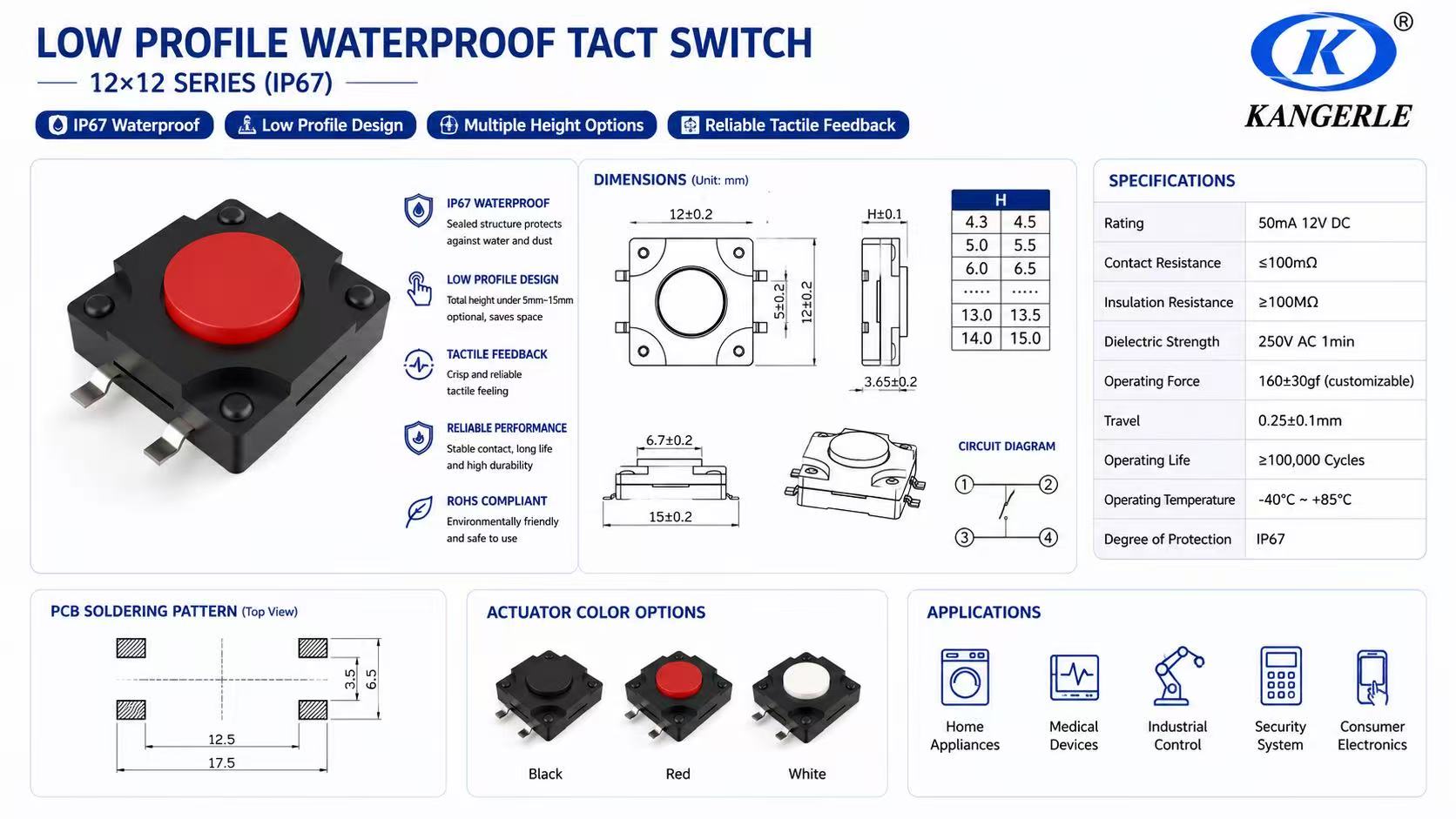
Height is the first filter, but force, terminals, and sealing method also matter.
| Item | What to check | Why it matters |
| Overall height | PCB surface to actuator top | Prevents keycap preload |
| Mounting | SMD or through-hole | Affects assembly and retention |
| Operating force | Light or firm tactile load | Changes feel and false-press risk |
| Circuit | SPST-NO or SPST-NC | Must match the control logic |
| IP rating | Rating and test condition | Defines dust and liquid protection |
| Life rating | Electrical and mechanical cycles | Indicates durability |
Match SMD or Through-Hole to Production
An SMD waterproof tactile switch supports automated placement and reflow production. Tape-and-reel packaging helps maintain orientation in volume assembly. A through-hole waterproof tactile switch offers stronger mechanical anchoring and may suit buttons that receive repeated direct force.
Board layout, production volume, expected force, and enclosure structure should guide the choice.
Check Force, Load, and Life Together
KANGERLE series data lists a 50 mA, 12 V DC rated load, operating force options of 120±30 gf and 200±30 gf, and a -40°C to 85°C operating range. Electrical life is listed at no less than 100,000 cycles, with mechanical life at no less than 300,000 cycles.
Lighter force suits frequent menu input, while firmer force can reduce accidental operation. Test the final cap and panel because the housing changes the feel.
KANGERLE Low-Profile Waterproof Tact Switch Options
KANGERLE offers two compact waterproof tact switch formats for control panels exposed to dust, splashes, or regular cleaning. Both series carry an IP67 rating under the specified wiring condition, while their footprints suit different mechanical layouts.
waterproof tact switch 12×12 series
The waterproof tact switch 12×12 series provides a broad pressing surface for appliance panels, fitness equipment, medical instruments, and controls used with gloves. SMD and DIP versions are available with several actuator heights and red or black buttons. The larger body works well with a wide keycap, while tape-and-reel SMD packaging supports automated placement.
waterproof tact switch 6×6 series
The waterproof tact switch 6×6 series fits dense PCBs, handheld electronics, remote controls, and narrow key clusters. SMD and through-hole layouts support different assembly methods, and multiple height options help fit thin housings. Selected versions offer SPST-NO or SPST-NC circuits, with operating-force choices for lighter or firmer feedback.
Across the 6×6 and 12×12 series, options include SMD and DIP structures, different actuator heights, and red or black buttons. IP67 protection is listed under the specified wiring condition. Series data also gives contact resistance up to 500 mΩ and RoHS compliance.
Installation Tips for Reliable Waterproof Performance
A sealed tactile switch can still perform poorly when solder joints, enclosure openings, or keycap geometry are wrong.
Use the Exact PCB Drawing
Do not copy a generic 6×6 footprint. Pin spacing, support tabs, terminal shape, and actuator center can vary.
- Use the recommended pad or hole pattern.
- Keep tall parts and coating clear of the switch body.
- Confirm pick-and-place orientation for SMD models.
- Follow the model-specific soldering profile.
- Inspect for tilted bodies, weak joints, and residue near the seal.
For through-hole parts, solder the specified support pins to resist repeated button force.
Keep the Actuator Centered
The enclosure button should press near the actuator center and move vertically. Side loading can produce a rough click and stress the cover or solder joints.
Leave a small free gap when the button is not pressed. Include PCB flatness, housing shrinkage, screw torque, adhesive thickness, and molding variation in the tolerance review. A prototype may bind after the housing screws are tightened.
Treat IP67 as Part of the Whole Enclosure
An IP67 tactile switch does not make the complete device IP67. Water may still enter around the button opening, housing seam, cable gland, display window, or connector.
An outdoor keypad should guide rain away from the button area. A dishwasher panel may need a membrane, gasket, drainage path, or barrier above the PCB. Test the finished unit for ingress and key response.
Typical Applications
Low-profile waterproof tact switches are used where a small user control may face moisture, dust, or frequent wiping. In a washing machine, they can sit behind program and temperature keys near a damp front panel. Outdoor access keypads need sealed inputs that continue working after rain and airborne dirt. Handheld radios and workshop remotes benefit from compact 6×6 switches beneath molded rubber buttons. Larger 12×12 parts suit fitness-machine consoles, medical equipment controls, and appliance service panels where operators need a wider pressing target. They are also used in coffee machines, security products, audiovisual equipment, toys, and communication devices with limited PCB space.
ZHEJIANG KANGERLE ELECTRONICS CO. LTD
Founded in 1993 in Wenzhou, ZHEJIANG KANGERLE ELECTRONICS CO. LTD is a switches supplier for appliance, automotive, security, communication, industrial, medical, and consumer-electronics projects. Its range includes waterproof micro switches, tact switches, detector switches, rocker switches, slide switches, push button switches, and connectors.
The company operates an approximately 20,000-square-meter facility and reports monthly production above 50 million pieces. Its quality systems include ISO 9001:2015 and IATF 16949:2016. OEM and ODM work can cover molds, materials, dimensions, operating force, travel, current, and special-use conditions. Samples can be evaluated before mass production.
Conclusion
A low profile waterproof micro switch under 5 mm should be selected by complete stack height, not body size alone. Package width, mounting style, force, circuit, actuator alignment, and enclosure sealing all affect the result.
For a new project, provide the target H dimension, PCB footprint, mounting style, operating force, circuit, environment, and expected volume. A drawing review and sample test can catch mechanical problems before tooling or mass production.
FAQs
Is a waterproof tactile switch the same as a waterproof micro switch?
No. A tactile switch is a short-stroke, momentary PCB input. A snap-action micro switch normally uses a plunger or lever for sensing and interlocks.
Does IP67 mean the whole device is waterproof?
No. IP67 applies to the tested component under stated conditions. The finished enclosure still needs sealed openings, suitable connectors, drainage, and assembly testing.
Is SMD better than through-hole for a low-profile waterproof switch?
SMD suits automated assembly and compact layouts. Through-hole mounting gives stronger mechanical retention. The right choice depends on production method, button force, and board design.
How can a designer confirm that a switch stays below 5 mm?
Use the drawing’s PCB-to-actuator H dimension, then check cap clearance and assembly tolerance. Do not rely only on the plastic body height.