
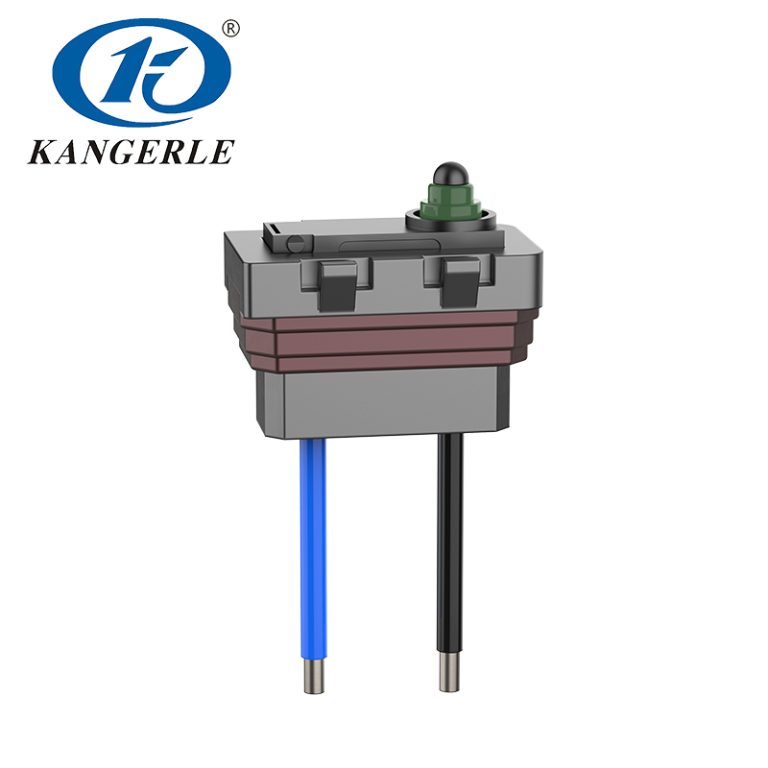
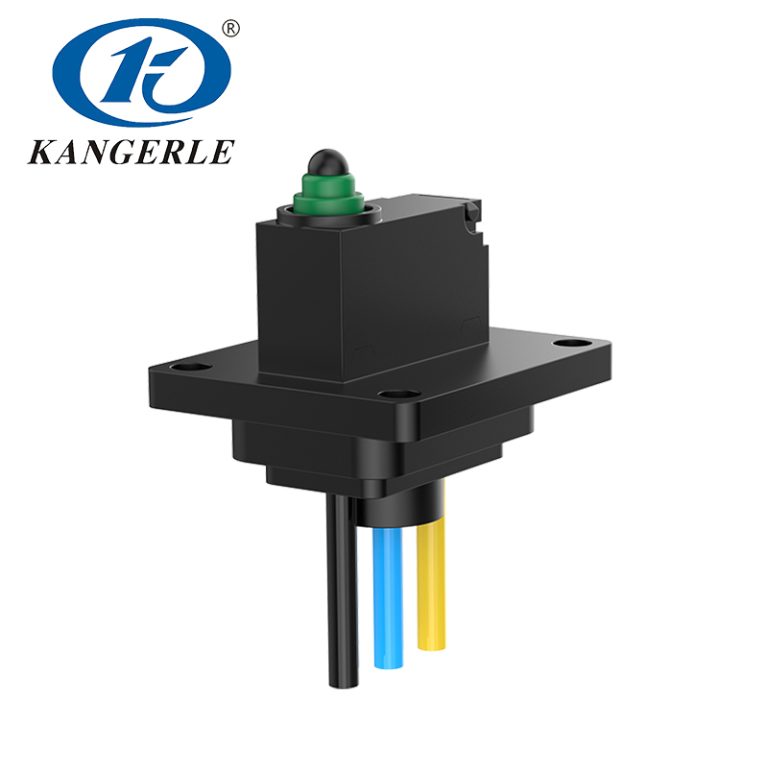
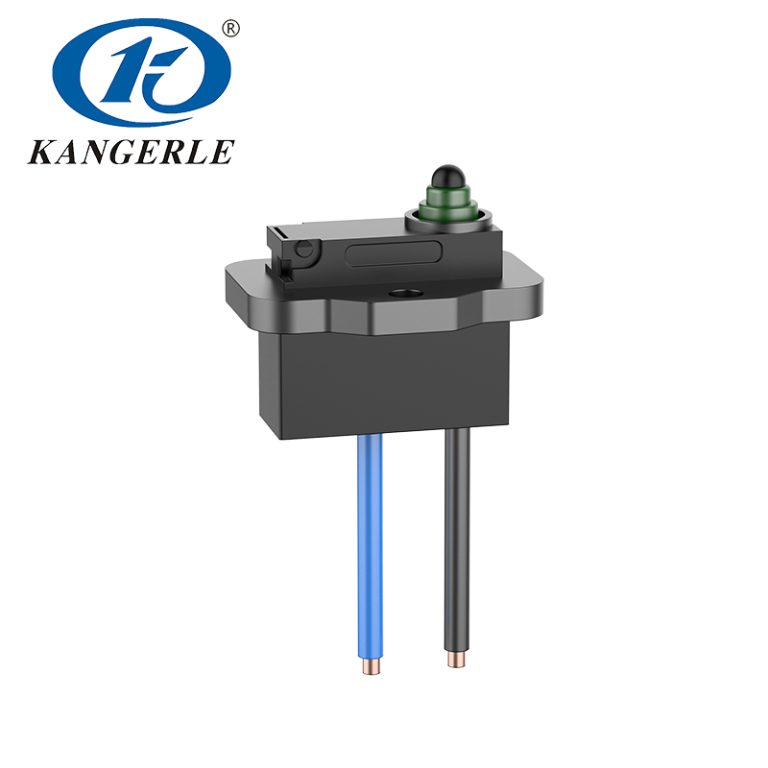

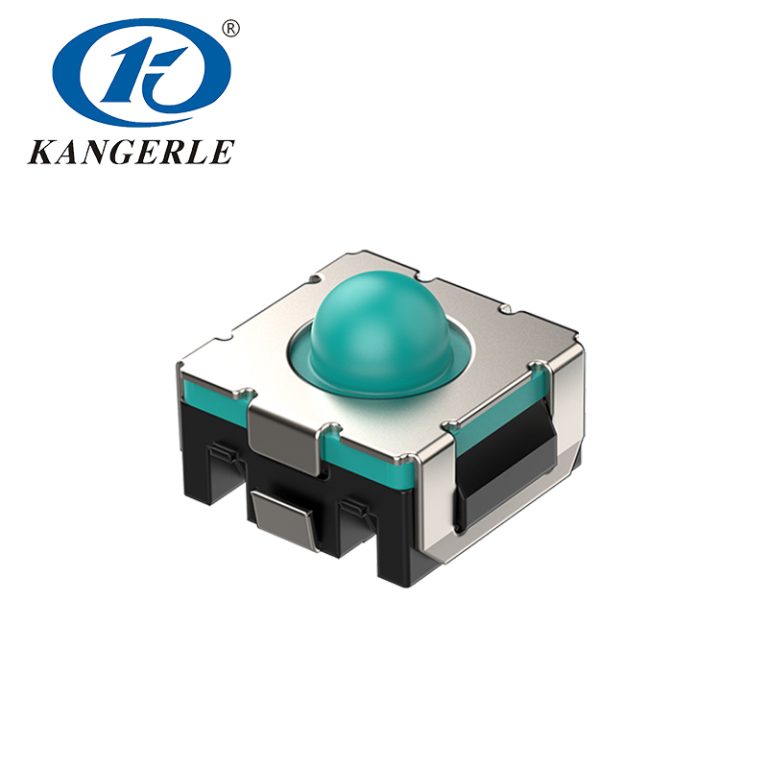
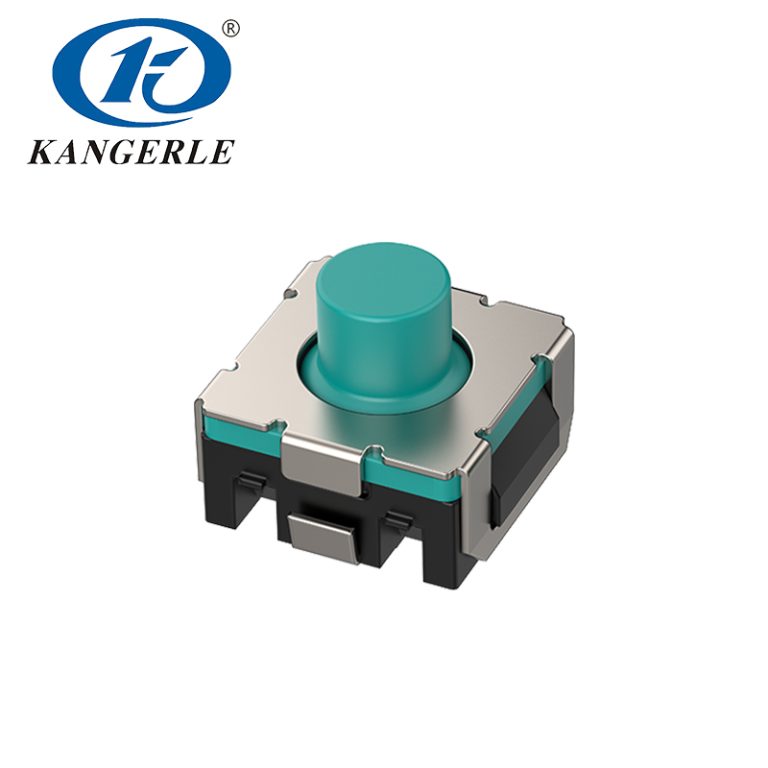
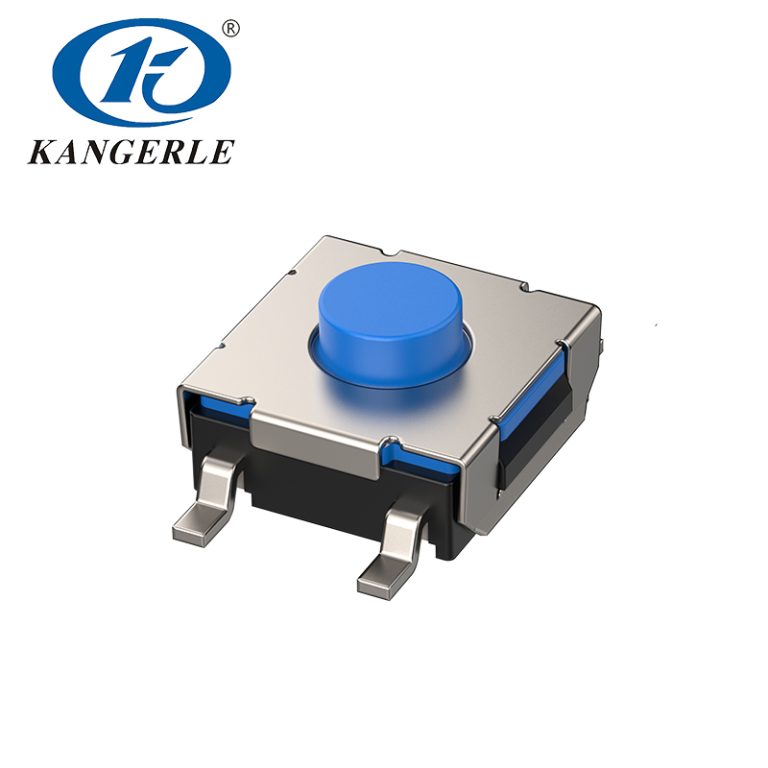
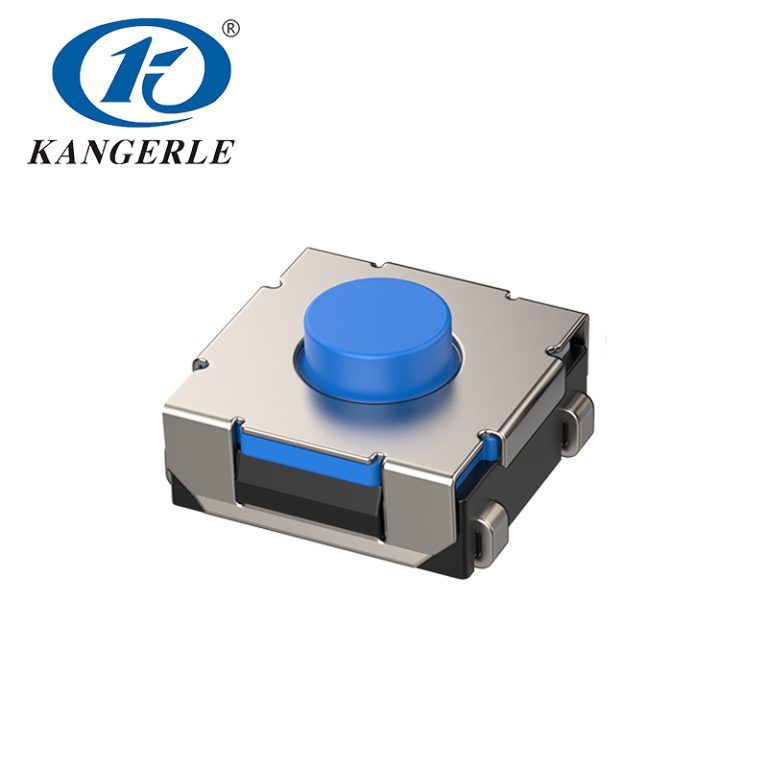
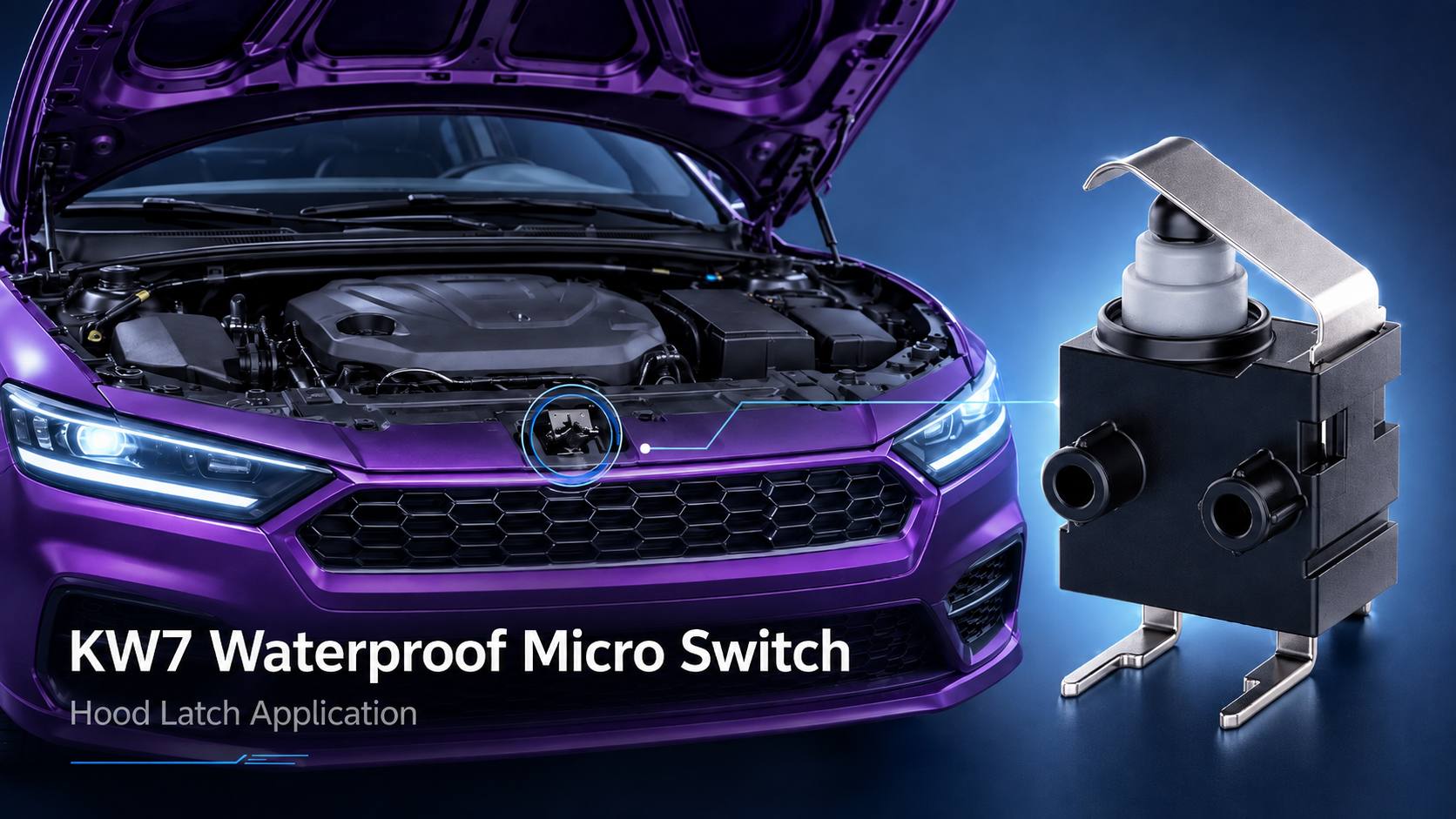
Suitable for Automotive Engine-Hood Latches, Front Hood Latches, and Other Low-Current Position-Sensing Applications
Why Does an Automotive Hood Latch Need a Waterproof Micro Switch?
An automotive hood latch may appear to be mainly mechanical, but in a modern vehicle the control system also needs a stable electrical signal to determine whether the hood is fully closed. This signal can be sent to the body control module, instrument panel, or anti-theft alarm system.
The area around the hood latch is repeatedly exposed to rain, car-wash spray, road dust, engine-compartment temperature changes, vibration, and the impact of repeated hood closing. As a result, ordinary switches may develop unstable signals, moisture-contaminated contacts, or a shorter service life. The KW7 waterproof micro switch uses a compact, sealed construction suited to low-current position sensing inside space-constrained automotive latch assemblies.
How a Hood Latch Micro Switch Works
When the hood reaches the latched position, a cam, link, slider, or latch plate inside the latch assembly presses the switch actuator. The contact state changes, sending a low-current signal to the controller through the wiring harness. When the hood is released, the contact state changes again.
Switch placement is critical. If the switch actuates too early, the system may report the hood as “closed” before it is fully latched. If it actuates too late, the signal may not switch correctly. Selection therefore cannot be based on rated current alone; operating travel, operating force, mounting position, repeatability, and mechanism tolerances must also be confirmed.
Selection note: Reliable hood latch detection depends on matching the switch, latch actuation mechanism, wiring harness, and control logic as a complete system—not on any single electrical specification.
Why Is the KW7 Well Suited to Automotive Hood Latches?
Automotive hood latch switches are typically located close to metal components, grease, splash water, and dust, while also being subjected to continuous vibration. The KW7 combines IP67 sealing with a low-power contact design for use in automotive status-detection circuits.
Key KW7 Specifications
| غرض | KW7-1B-1E-B1 Reference Specifications |
| الحمل المقدر | 0.1A 12V DC |
| تكوين جهات الاتصال | SPST-NC or SPST-NO (normally closed/normally open options) |
| Protection Rating | IP67 |
| درجة حرارة التشغيل | من -40 درجة مئوية إلى 85 درجة مئوية |
| قوة العمليات | 300 gf max. |
| الحياة الكهربائية | At least 100,000 operations |
| Applicable Circuits | Low-current status detection; not for directly driving high-current loads such as motors or lamps |
How to Choose a KW7 Model and Actuator Configuration
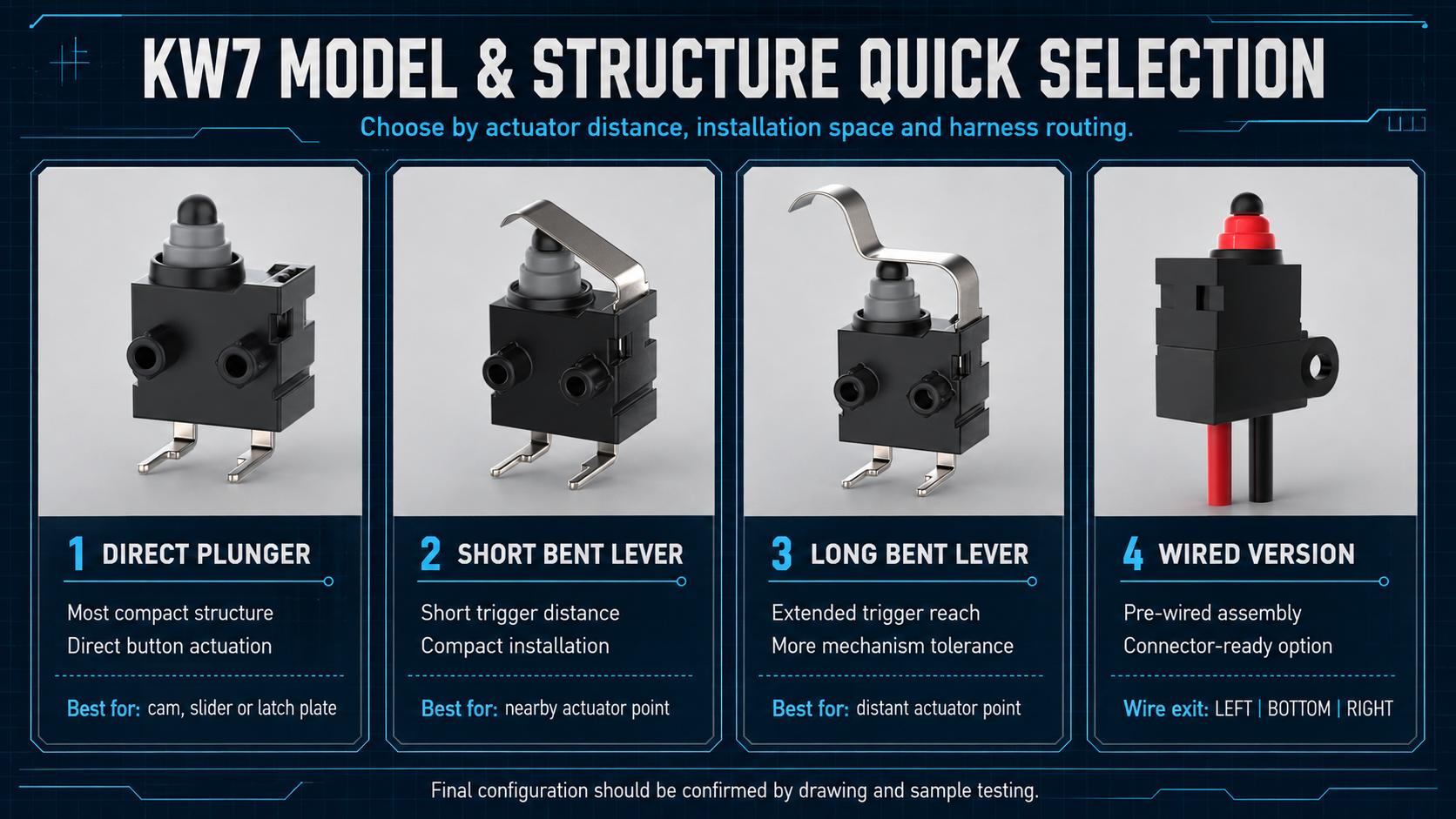
Depending on the latch actuation point and harness layout, the KW7 can be supplied without a lever, with a short bent lever, with a long bent lever, or in a pre-wired configuration. Before selecting a version, confirm the distance between the actuator and switch, allowable travel, direction of operation, available mounting space, and wire exit location.
| Configuration | Product Image | Configuration Features | Selection Guidance |
| KW7 Without Lever | 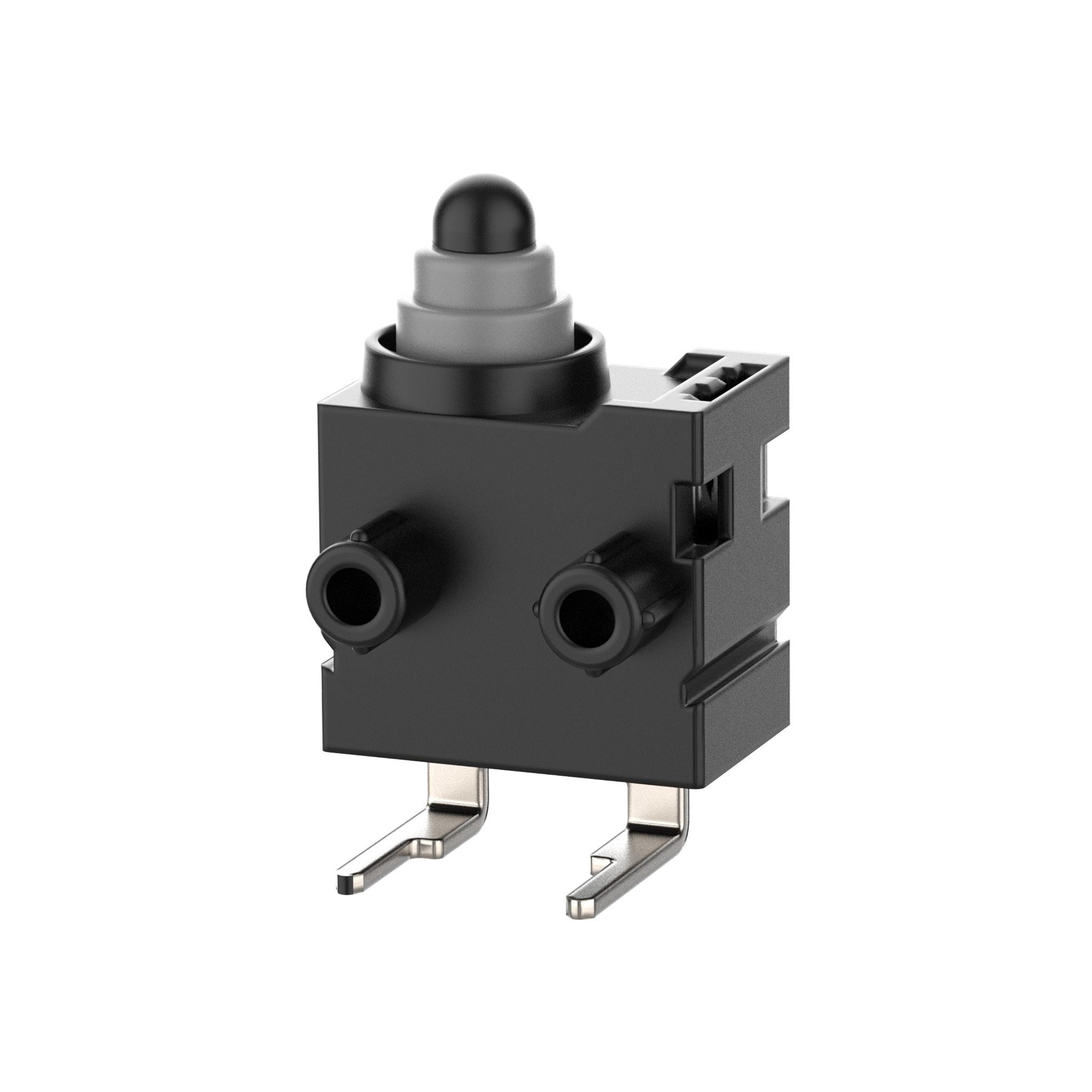 |
Button actuated directly; compact construction | Suitable where a cam, slider, or latch plate can press the button directly and consistently |
| KW7 With Short Bent Lever | 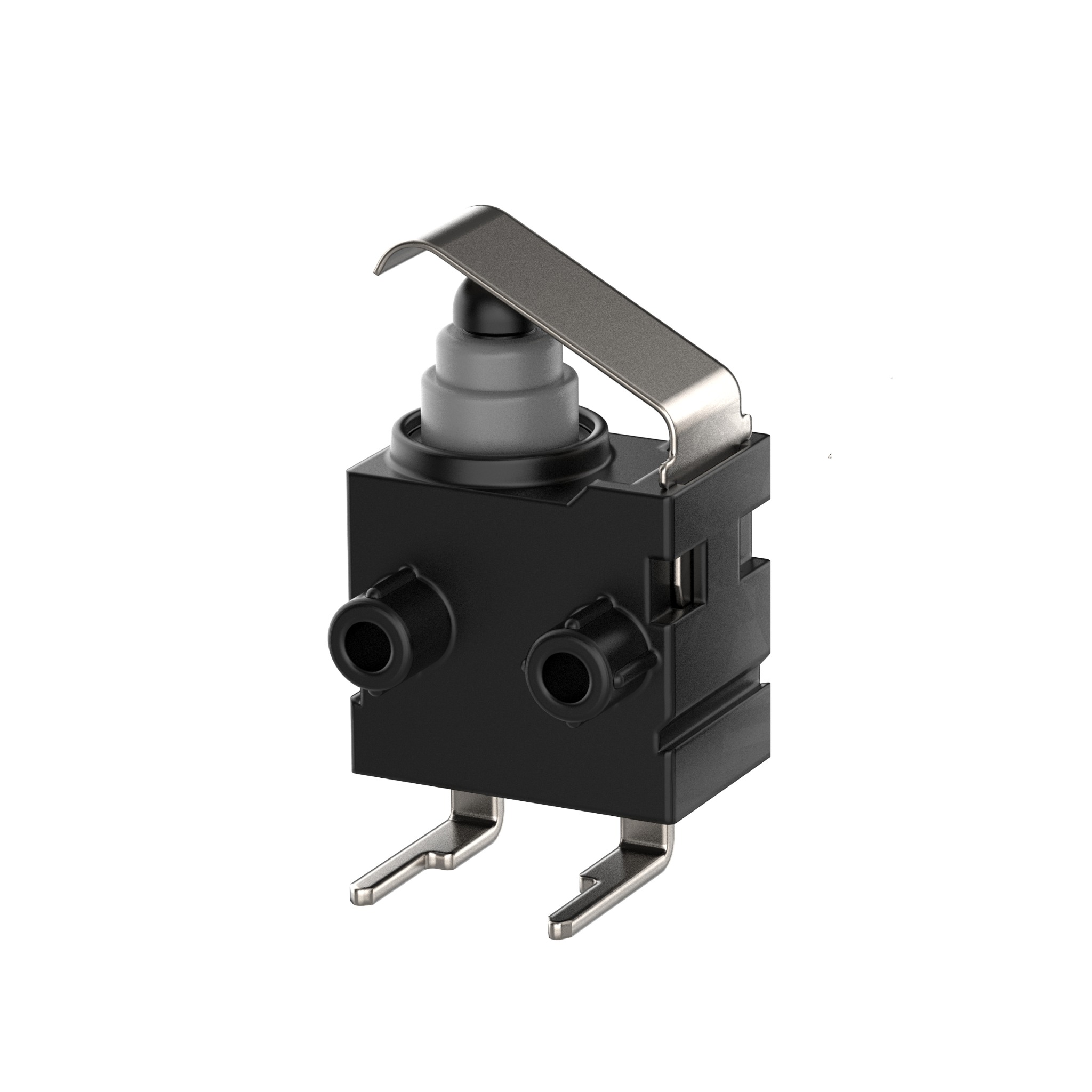 |
Short bent lever transmits force while balancing actuation reach and compact installation | Suitable when the actuation point is close to the switch and space inside the latch is limited |
| KW7 With Long Bent Lever | 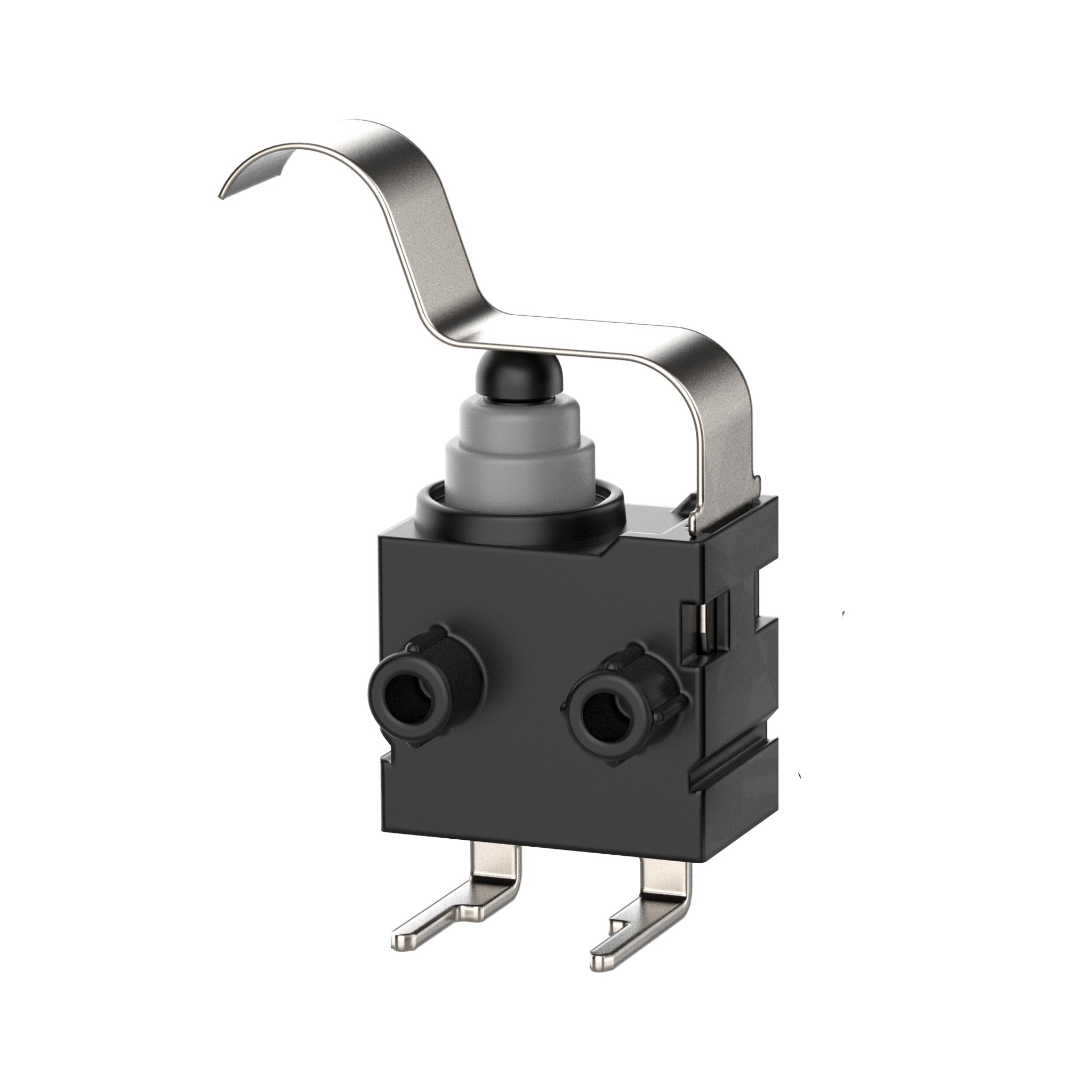 |
Actuation point extends outward, providing a wider mechanism-matching range | Suitable when the drive point is farther from the switch or more mechanism allowance is needed |
| Pre-Wired KW7 | 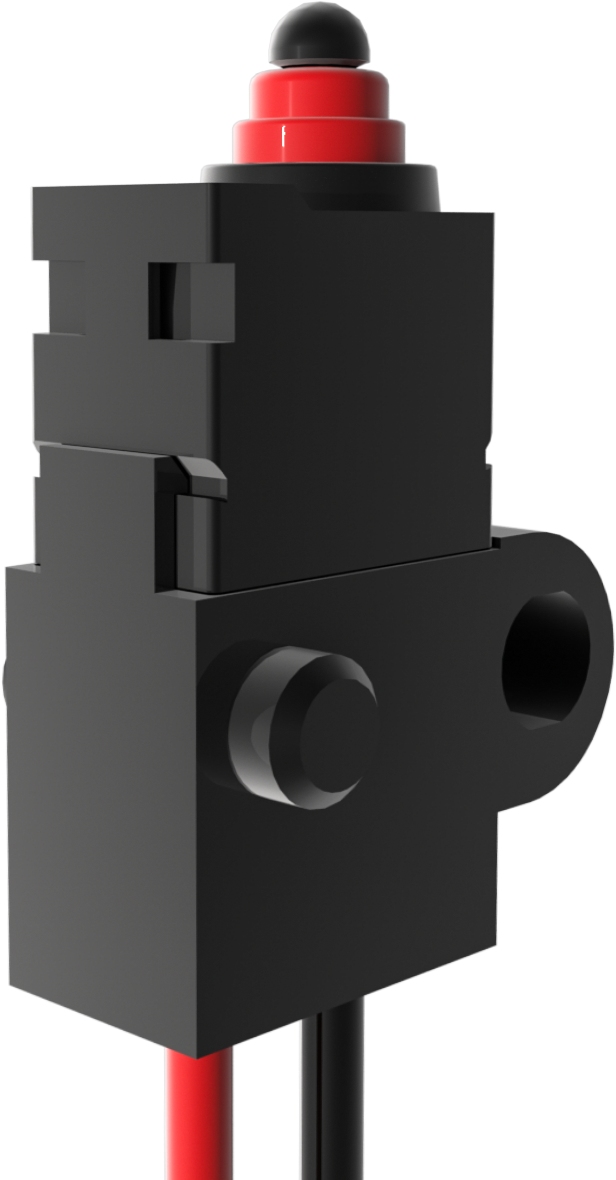 |
Wires exit directly; left, bottom, and right exits are available | Suitable when a preassembled harness and connector are required, or when direct use of PCB terminals is impractical |
Selection note: The lever design affects operating travel and operating force. Final selection should be based on drawings approved by both parties and confirmed through sample installation, operating-travel testing, and life testing.
How to Choose the Wire Exit Direction for a Pre-Wired KW7
The pre-wired KW7 is available with left, bottom, or right wire exits. These options help the harness clear the latch body, screws, and other mechanisms while reducing unnecessary bends.
| Wire Exit Direction | Configuration Description | Suitable Routing Arrangement |
| Left Exit | Wires exit from the left side of the switch | Harness channel or connector is located to the left of the switch |
| Bottom Exit | Wires exit from the bottom of the switch | Space is available below, or the harness must run downward into the body or latch |
| Right Exit | Wires exit from the right side of the switch | Harness channel or connector is located to the right of the switch |
Left and right are defined from the front view of the switch and the drawings approved by both parties. Wire specification, length, color, end connector, and terminal treatment can be evaluated for customization to suit project requirements.
What Can Be Customized in the Wiring Harness and Connector?
For an automotive latch project, the switch and wiring harness must be matched as a system. Based on the customer’s drawings and assembly requirements, Kangerle can evaluate the following wiring-harness and connector customizations:
- Wire type and gauge: Conductor size and insulation material can be evaluated against current, temperature, flex-resistance, and project-standard requirements.
- Wire length and tolerance: Determined by the switch mounting location, routing path, fixing points, and assembly allowance.
- Wire color: Different colors can distinguish signal wires, return wires, or different contact assignments.
- End connector: Compatibility can be evaluated for the connector brand, housing part number, terminals, and seals specified by the customer.
- End treatment: Crimped terminals, stripped ends, tin dipping, or other treatments that simplify customer assembly can be evaluated.
Recommended customization information: When requesting a quotation, please provide the connector part number, pin assignments, wire specification and color, length reference points, length tolerance, wire exit direction, and pull-force and sealing requirements.
Key Advantages of the KW7 for Automotive Latch Detection
- IP67-sealed construction helps reduce the effect of dust and brief water ingress on the contact system.
- SPST-NC and SPST-NO contact configurations are available to suit different control logic.
- An operating temperature range of -40°C to 85°C accommodates cold starts, summer parking conditions, and common temperature swings.
- A rated load of 0.1A at 12V DC is suited to low-current signal detection in automotive latches.
- The compact size simplifies the layout of internal latch components, actuators, and wiring harnesses.
During installation, the actuator should receive a smooth, repeatable press stroke without side loading. Strain relief should also be provided at the wire exit and connector, because vibration damage often begins where the harness meets the switch rather than inside the sealed housing.
Hood Latch Mounting Position and Operating Sequence
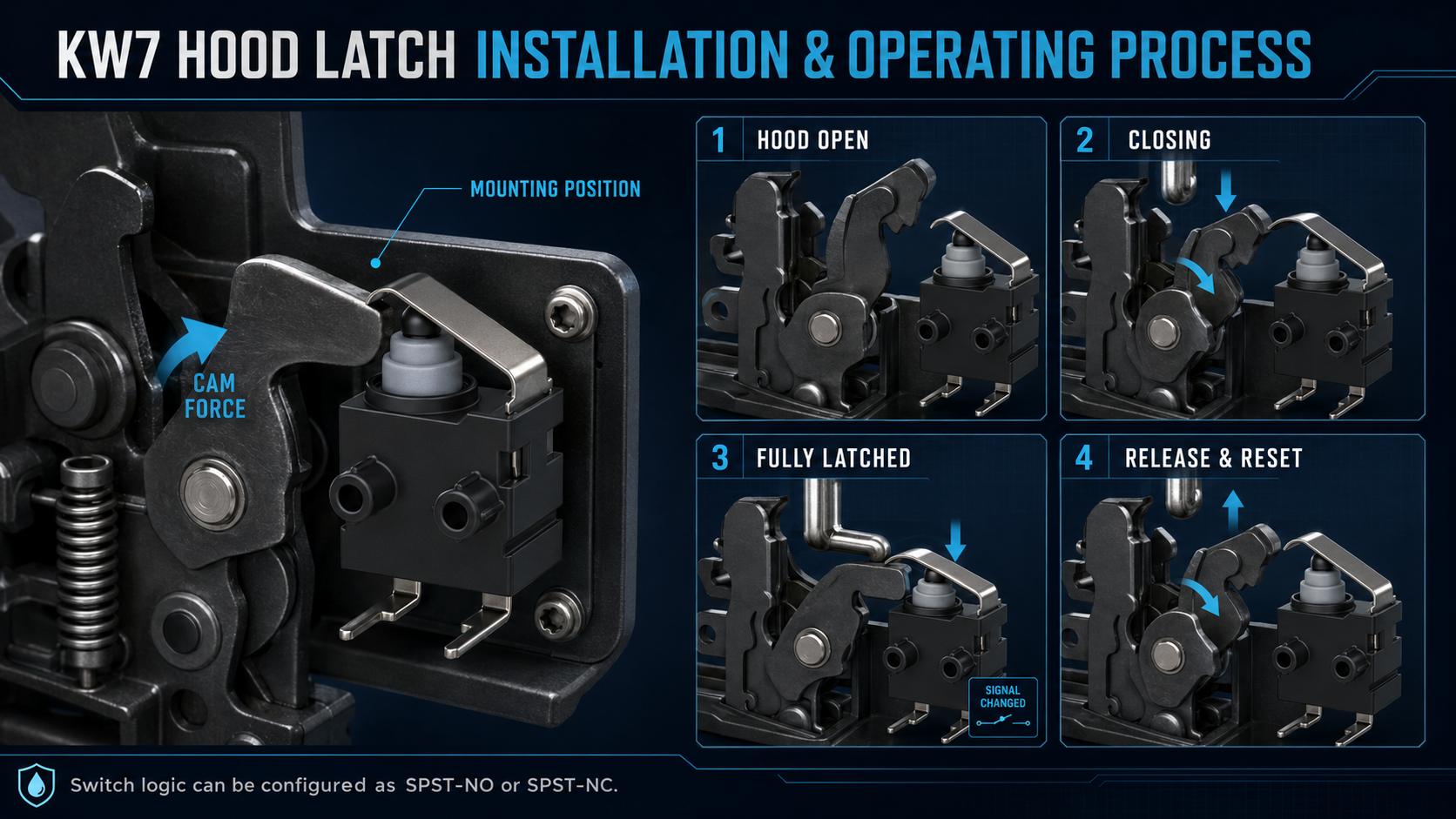
The KW7 is normally mounted at a fixed point inside or on the side of the hood latch assembly and actuated by a cam, slider, link, or latch plate. The switch should be positioned close to the final latching point being monitored so the signal accurately indicates whether the hood has reached the specified position.
The actuator should press the button or lever squarely and smoothly, without lateral rubbing or impact. Allow reasonable overtravel, and route the harness clear of the latch hook, springs, screws, sharp metal edges, and other moving parts.
| Operating Stage | Latch and Actuator State | KW7 State | Vehicle-System Signal |
| 1. Hood Open | Striker has not reached the final latch position; actuator is not pressing the switch | Contacts remain in their initial state | System identifies the hood as open |
| 2. Approaching Closure | Striker enters the latch; cam or slider rotates gradually | Actuator begins to approach the switch | Signal has not yet completed a stable transition |
| 3. Fully Latched | Latch reaches the specified locked position; actuator presses the button or lever | Contacts complete the transition | System identifies the hood as closed or latched |
| 4. Unlocked and Opened | Latch releases; actuator moves away from the switch | Actuator returns; contacts reset | System again identifies the hood as open |
Operating logic: The choice between SPST-NO and SPST-NC should be based on the body controller’s input logic. Whether normally open or normally closed is selected, the latch signal should switch reliably only after the hood reaches its target position.
How to Design a Reliable Hood Latch Detection Point
Selecting an IP67 automotive waterproof micro switch is only the first step. The latch structure, actuation method, harness layout, and control logic form one complete detection system and must be confirmed together during the design stage.
| Design Item | What Must Be Confirmed |
| Actuation Point | Switch changes state only after the hood latch reaches its target locked position |
| Overtravel | Mechanism does not press the actuator beyond its safe travel |
| قوة العمليات | Reliable actuation at high and low temperatures and across tolerance variations |
| Contact Logic | Normally open or normally closed logic matches the body controller input requirements |
| Electrical Load | Actual signal does not exceed the selected KW7 model’s 0.1A, 12V DC rating |
| بيئة التشغيل | Sealing, harness, grease, splash-water path, and connector protection all meet installation requirements |
Sample validation should not be limited to a bench continuity test. Latch tolerances, repeated hood closing, vibration, water ingress, low-temperature operation, harness pulling, and signal stability should also be tested to confirm that operating timing and contact condition remain reliable after long-term use.
Common Hood Latch Micro Switch Failures and Troubleshooting
When a hood latch signal is abnormal, do not simply replace the switch. Check latch operation, mounting position, harness connections, and controller input at the same time to determine whether the fault is mechanical, electrical, or related to sealing.
| Symptom | Possible Cause | Troubleshooting Method | Recommended Action |
| Hood-open warning remains after closing | Shifted mounting position, insufficient travel, mismatched lever design, or poor connector contact | Press the switch manually and check continuity; inspect the latch’s final position and connector terminals | Adjust mounting position and actuation travel; confirm the lever design and contact logic |
| Signal is intermittent or chatters | Insufficient overtravel, side loading, latch vibration, or a loose harness | Operate the latch slowly and observe the signal; gently move the harness and connector to check for intermittency | Increase the stable actuation margin; secure the harness and improve connector locking |
| Signal remains active and does not reset | Switch is continuously overpressed, actuator is jammed, lever is deformed, or the wrong normally open/normally closed logic was selected | Release the latch, check whether the switch resets normally, and verify the contact definition | Remove mechanical interference; rematch the contact logic; replace damaged components |
| Signal is abnormal after rain or car washing | Poor connector sealing, damaged wire exit, or water collecting at a low point in the harness | Inspect seals, the wire exit, and the inside of the connector for water marks or corrosion | Improve connector sealing and routing, prevent water accumulation, and replace the damaged harness |
| Wire or terminal breaks | Insufficient strain relief, bend radius too small, or harness interference with sharp metal edges or moving parts | Inspect the wire root, fixing points, and bends, and measure circuit continuity | Add clips and strain relief, increase the bend radius, and revise the routing path |
| Operation is unstable at high or low temperatures | Insufficient actuation margin; latch, grease, or plastic components are affected by temperature | Compare operating travel, operating force, and signal state at room, high, and low temperatures | Optimize the actuation point and safety margin, and complete installed validation at high and low temperatures |
Recommended troubleshooting sequence: First confirm the contact logic and connector, then inspect latch travel and switch position, and finally repeat water-ingress, vibration, and high-/low-temperature testing. Where vehicle safety or anti-theft logic is involved, a qualified professional should follow the vehicle manufacturer’s repair procedures.
KW7 vs. Panasonic ASQM Series: Reference Comparison
The Panasonic ASQM is a type of sealed, low-current detection switch. The ASQM16A28 referenced in the original text uses normally closed contacts and a simulated roller lever. It has an operating force of 1.5 N, a switching load range of 1mA at 5V DC to 50mA at 16V DC, and an IP67 rating. At the specified test load, its electrical life is at least 300,000 operations.
| Comparison Item | Kangerle KW7 | Panasonic ASQM Reference Model |
| Primary Function | Sealed position detection | Sealed position detection |
| Protection Rating | IP67 | IP67 |
| تكوين جهات الاتصال | SPST-NC / SPST-NO options | ASQM16A28 is NC |
| DC Load | 0.1A 12V DC | 1mA at 5V DC to 50mA at 16V DC |
| درجة حرارة التشغيل | من -40 درجة مئوية إلى 85 درجة مئوية | Reference automotive application range: -40°C to 85°C |
| الحياة الكهربائية | At least 100,000 operations | At least 300,000 operations at the specified test load |
| دعم التخصيص | Can be evaluated against application requirements | Depends on series configuration |
What Should Be Considered When Replacing an ASQM by Function?
The KW7 is not a one-for-one copy of every ASQM part number in dimensions and specifications, but the two can perform the same core function: low-current position detection in a sealed environment. For an automotive hood latch or other vehicle-latch project, the KW7 can serve as a functional alternative to the ASQM if mounting dimensions, actuator travel, contact logic, electrical load, life target, and validation requirements all match.
Important: Any replacement evaluation must be based on the specific part number and project requirements. Before converting an existing ASQM design to the KW7, compare the drawings from both parties and complete sample installation, environmental, and life testing. Direct replacement based only on the series name is not recommended.
Where Else Can the KW7 Be Used in a Vehicle?
A hood latch works on the same logic as other vehicle detection points: once a mechanical component reaches a specified position, the switch changes state and the controller reads the signal. Provided the load, travel, and environmental conditions match, the KW7 can also be used in the following low-power position-sensing applications:
- Automotive steering locks
- Electric-vehicle or motorcycle brake-lever locks
- Stand locks / side-stand position detection
- Under-seat compartment locks, saddle locks, and other compact locking mechanisms
Why Choose Zhejiang Kangerle Electronics?
شركة تشجيانغ كانجيرلي للإلكترونيات المحدودة has more than 20 years of switch-manufacturing experience. Its products include micro switches, waterproof micro switches, detection switches, rocker switches, tactile switches, slide switches, pushbutton switches, and connectors.
For new projects, replacement of discontinued models, or cost-optimization needs, we can evaluate materials, dimensions, operating force, travel, load, tooling, and special environmental requirements against the customer’s latch design, and support sample testing before mass production. Rather than forcing the customer to adapt to a fixed catalog model, a customized solution can be matched more closely to the actual space and actuation geometry of the latch.
ملخص
Although an automotive hood latch micro switch is small, it must continue to determine the latch position accurately despite rain, dust, vibration, temperature changes, and repeated hood closing. The KW7 offers IP67 protection, a rated load of 0.1A at 12V DC, a choice of SPST-NC or SPST-NO contacts, an operating temperature range of -40°C to 85°C, and an electrical life of at least 100,000 operations. It can be used for automotive hood-open detection and other sealed vehicle position-sensing applications.
To replace a Panasonic ASQM or develop a new automotive latch project, provide the existing switch model, mounting drawings, operating travel, contact logic, load, and life requirements. Kangerle can assist with specification matching, sample testing, and customization assessment.
الأسئلة الشائعة (FAQ)
What Does an Automotive Hood Latch M0icro Switch Do?
It detects whether the hood latch mechanism has reached its specified open or closed position and sends the signal to the body controller, instrument panel, anti-theft system, or another vehicle electronic system.
Is the KW7 Suitable for Automotive Use?
The KW7 has an IP67 rating, an operating temperature range of -40°C to 85°C, and a 0.1A 12V DC rated load suitable for low-current detection circuits. It is not suitable for directly controlling high-current motors or lamps.
Can the KW7 Replace the Panasonic ASQM?
The KW7 can serve as a functional alternative to the ASQM when mounting dimensions, actuation method and travel, normally open/normally closed logic, voltage and current, life target, wiring harness, and project validation requirements all match. Drawings must still be checked and testing completed before mass production.
What Should Be Tested Before Using the KW7 in a Hood Latch?
Recommended tests include latch-position repeatability, operating force, overtravel, vibration, water ingress, high and low temperatures, harness stress, connector sealing, and signal stability across different production tolerances.
Can the KW7 Be Customized?
Yes. Kangerle can evaluate dimensions, materials, operating force, travel, current requirements, tooling, and special environmental requirements so the switch can be matched more closely to a specific latch design.